Benefits of Content Management System That Reduce Development Costs and Downtime
Every digital transformation project starts with the same challenge: achieving more while spending less.
The right content management system (CMS) helps you meet that goal by automating workflows, reducing downtime, and improving delivery speed across every channel.
Yet, proving these gains remains the hardest part.
The true benefits of using a content management system only hold weight when tied to metrics, hours saved, costs reduced, and uptime maintained.
This blog explains how IT Managers can translate those efficiencies into measurable ROI, ensuring technology performance is understood and valued at every level of the business.
Key Takeaways
|
The Hidden Cost of Downtime and Development Inefficiency
Every minute a system goes down, productivity stalls. For enterprises, that can mean losses of $5,600 per minute on average.
Yet, downtime isn’t just about outages; it’s also about slow release cycles, manual approvals, and rigid workflows that consume developer hours.
Legacy CMS platforms often rely on outdated architectures, making simple updates require code changes or deployment freezes.
Over time, these inefficiencies compound, eating into project budgets and limiting scalability.
For IT teams managing enterprise web development, outdated CMS structures turn simple updates into time-consuming deployments.
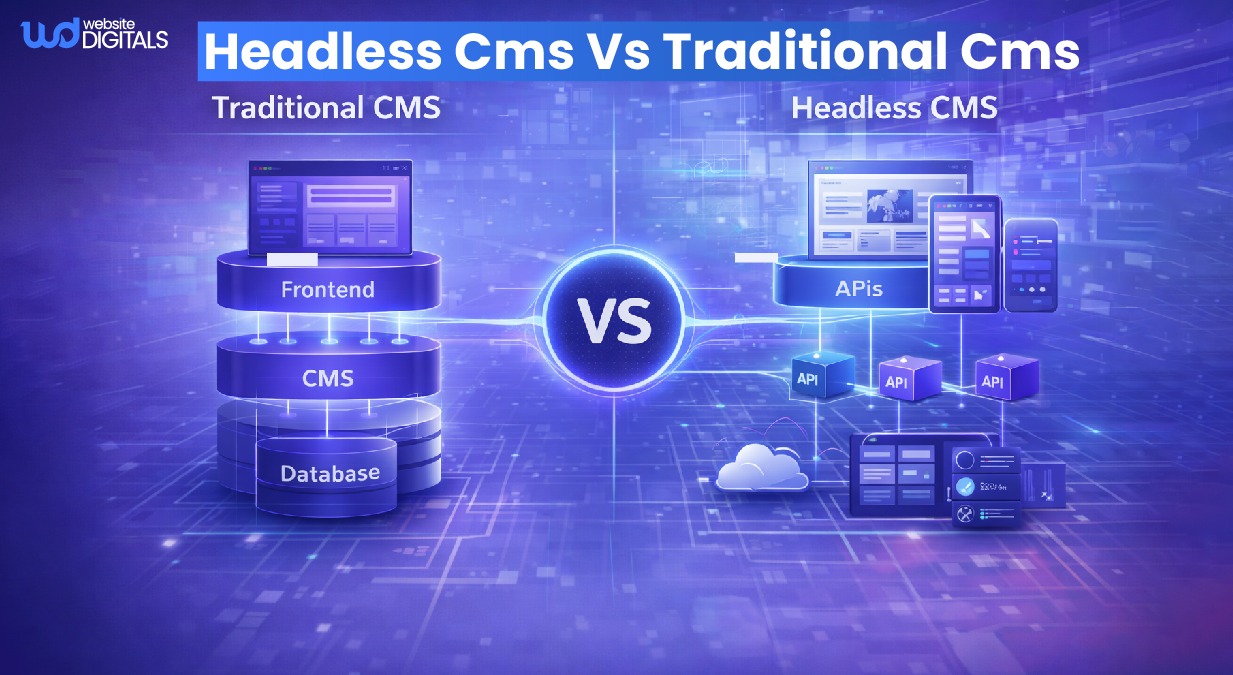
A modern digital experience platform (DXP) or headless CMS helps break this pattern.
The benefits of headless CMS go beyond speed; it enables independent publishing, minimizes deployment risks, and supports multi-channel consistency without adding IT overhead.
How Modern CMS Architecture Streamlines Development and Operations
An efficient CMS is built for adaptability. Instead of forcing teams to follow rigid processes, it enables flexibility across content creation, integration, and delivery.
With an API-first design, organizations can reuse content components across multiple channels, websites, intranets, and mobile apps without rebuilding from scratch.
This modular approach significantly reduces development hours and lowers maintenance costs.
Automation further enhances efficiency.
Features like:
- Scheduled publishing
- Workflow triggers
- Business process automation tools allow teams to deliver faster while maintaining governance standards.
Combined with cloud-based CMS infrastructure, updates can be deployed continuously without downtime, ensuring stability during high-traffic events or product launches.
Bonus Point:
|
For IT leaders, this means fewer fire drills and more predictable system performance, two key factors in reducing the total cost of ownership. |
Core Benefits of an Efficient CMS
-
Faster Time-to-Market
By eliminating manual workflows and repetitive coding, content teams can publish updates in hours instead of days.
This agility helps marketing and IT stay aligned, delivering campaigns and releases faster without compromising quality.
-
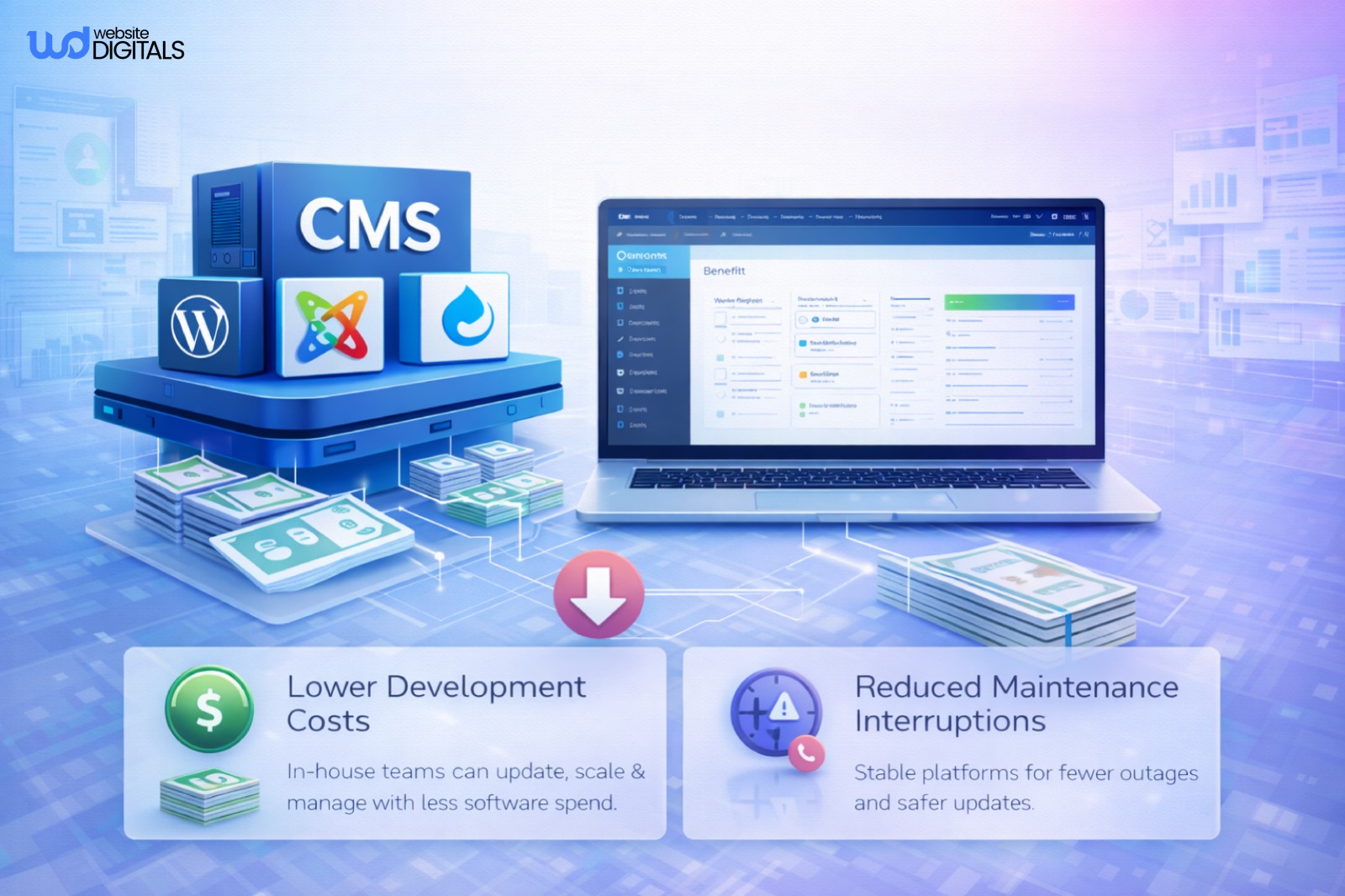
Lower Total Cost of Ownership
Automation and scalability reduce the need for constant developer intervention.
Over time, enterprises see lower maintenance costs and improved resource allocation, turning technology into a profit contributor rather than a cost center.
-
Improved Uptime and Reliability
Modern CMS platforms use cloud SaaS models and automated redundancy, ensuring consistent availability.
Built-in rollback options and continuous delivery pipelines allow teams to deploy without disruption.
-
Stronger IT–Marketing Collaboration
Centralized content governance bridges departmental silos.
With shared access and content collaboration tools, marketing can publish confidently while IT focuses on innovation, not daily support tickets.
-
Seamless System Integration
An open website architecture supports easy integration with marketing automation, digital asset management (DAM), and analytics platforms.
This creates a unified digital ecosystem where data flows effortlessly across systems.
-
Enhanced Security and Compliance
Enterprise-grade CMS platforms comply with ISO 27001 and SOC 2 standards, providing robust protection against threats.
Built-in user permissions and audit trails simplify compliance for regulated industries.
CMS Security and Compliance Comparison
|
Security Feature |
Why It Matters |
Supported Standards |
Business Value |
|
Data Encryption |
Protects sensitive data in transit |
SSL, TLS |
Minimizes breach risks |
|
Access Controls |
Restricts content editing rights |
Role-based permissions |
Prevents unauthorized changes |
|
Compliance Frameworks |
Meets legal/regional standards |
ISO 27001, SOC 2, GDPR |
Avoids fines and ensures trust |
|
Backup and Recovery |
Ensures data continuity |
Automated snapshots |
Reduces downtime risk |
|
Vulnerability Management |
Detects and patches threats quickly |
Regular audits |
Maintains long-term reliability |
Real World Case Study:
|
Harvard University transitioned from multiple legacy systems to an enterprise content management (ECM) framework powered by open source CMS technology. |
Quantifying ROI from CMS Adoption
Efficiency is valuable, but only when it’s measurable.
IT leaders can translate CMS performance into ROI through three key metrics:
- Developer Hours Saved – Modular content structures and automation reduce manual workloads, translating to lower labor costs.
- Reduced Downtime Costs – Continuous deployment and cloud redundancy decrease interruptions that previously caused revenue loss.
- Faster Delivery Cycles – Campaigns and updates reach users sooner, increasing engagement and conversion opportunities.
And the business world agrees, a Forrester blog notes that 69% of global B2C decision-makers have increased their investment in CMS technology, recognizing its impact on operational efficiency and cost control.
These numbers are more than stats; they’re proof points IT Managers can use when communicating value to leadership and stakeholders.
Choosing a CMS That Aligns with ROI Goals
Not all CMS platforms deliver equal results. If you’re evaluating how to choose the right CMS, focus on scalability, integration flexibility, and long-term cost efficiency, not just feature lists.
A strong enterprise CMS should:
- Support headless architecture for flexibility across channels.
- Offer seamless integration with analytics and reporting dashboard.
- Provide clear documentation and vendor support (e.g., Acquia, Drupal, WordPress Enterprise).
- Ensure compliance with WCAG accessibility and ISO security standards.
- Offer transparent pricing and predictable operational costs.
When comparing vendors, IT leaders should look beyond features and evaluate ROI potential, how each platform impacts downtime, deployment speed, and long-term maintenance effort.
Final Takeaway: Turning CMS Efficiency into Measurable ROI
A modern CMS is more than software; it’s an investment in lasting efficiency and scalability.
When measured and communicated effectively, performance gains become clear proof of ROI.
Recognizing the benefits of content management system adoption helps IT Managers and Digital Transformation Leads show measurable impact through lower costs, improved uptime, and better collaboration.
As Peter Drucker said,
“Efficiency is doing things right; effectiveness is doing the right things.”
The right CMS delivers both, managing content smartly while driving growth.
For expert guidance on your next CMS development project, connect with Website Digitals at info@websitedigitals.com or call (646)-222-3598 to build a platform that drives measurable ROI from day one.
FAQs
- How does Website Digitals approach CMS development for measurable ROI?
At Website Digitals, we design CMS platforms focused on performance, scalability, and measurable ROI, reducing downtime, development costs, and time-to-market.
- Why choose Website Digitals for your CMS implementation?
Our CMS experts at Website Digitals combine strategy and technology to deliver scalable, secure solutions tailored to business goals, ensuring long-term ROI.
- What are the benefits of a content management system?
A CMS simplifies content creation, improves collaboration, reduces development costs, and helps businesses manage websites efficiently without heavy coding needs.
- How does a CMS help a business in the US?
A CMS enables faster updates, consistent branding, and cost-efficient operations, critical for US businesses competing in digital-first markets.
- Why use a content management system for your website?
Using a CMS helps you manage pages, media, and SEO easily while maintaining security and uptime, ideal for organizations scaling digital presence.
- How can a CMS improve content workflows?
It automates approvals, version control, and publishing, ensuring teams collaborate efficiently with fewer manual tasks and reduced release delays.
- What are the benefits of a cloud-based content management system vs an on-premise system?
A cloud-based CMS offers scalability, lower maintenance, and real-time collaboration, while on-premise systems require more IT resources and manual updates.
- What business problems does a content management system solve?
A CMS addresses fragmented content processes, long deployment cycles, and costly maintenance, helping businesses streamline operations and improve uptime.