Enterprise Content Management System Deployment Tactics for Security and Speed
Every enterprise faces the same dilemma: move fast to stay competitive, yet remain secure to stay protected.
As systems grow more complex, this balance becomes critical, especially when deploying an enterprise content management system (ECMS) across global operations.
Research shows that 68% of enterprise data breaches originate from misconfigured systems or insecure integrations, often during deployment stages.
That’s the moment when even the best platforms become the weakest link.
As Bruce Schneier famously said,
“Security is not a product, but a process.”
The same applies to performance; it’s built, not bought.
For Enterprise Architects and CTOs, the real challenge isn’t choosing a CMS; it’s deploying it with speed, scale, and security aligned.
This guide explores proven deployment tactics that secure your CMS from day one, without slowing innovation or user experience.
Key Takeaways
|
What Defines a Modern Enterprise Content Management System
A modern enterprise content management system is no longer limited to storing and organizing files.
Understanding the benefits of content management system implementation, from centralized data control to improved compliance efficiency, helps decision-makers recognize its role as a catalyst for digital growth.
The shift toward digital transformation has turned the CMS into a strategic enabler of secure, high-performing business operations.
-
Flexibility and Adaptability Requirements
Today’s enterprises need more than static content repositories; they need CMS platforms that can develop as fast as their business models.
A flexible CMS must support integration with other enterprise content services, new technologies like machine learning, and emerging digital channels.
When evaluating how to choose the right CMS, enterprises should assess scalability, integration capabilities, and security posture to ensure alignment with long-term business goals.
Key characteristics include:
- Support for multiple content formats such as documents, multimedia, and structured data.
- Easy integration with cloud content management and automation tools.
- Customizable workflow automation that mirrors unique business processes.
This flexibility helps organizations meet complex compliance needs, adapt to new web development trends, and streamline business process management.
-
Integration Capabilities with Enterprise Ecosystems
A CMS achieves its full potential only when it integrates seamlessly with the broader enterprise tech stack.
Modern solutions rely on APIs, microservices, and content services platform architecture to connect data and processes across systems.
Integration priorities include:
- APIs and microservices for connecting with CRM, ERP, and analytics tools.
- Pre-built connectors for faster linkage with document management and records management systems.
- Support for metadata management and version control to maintain accuracy across platforms.
This unified approach ensures that the CMS becomes a central node for knowledge management, compliance tracking, and content-driven decision-making.
-
User Experience and Accessibility Standards
A high-performing CMS doesn’t only serve IT teams, it also empowers creators and end-users.
For Content Creators
A user-friendly CMS interface enhances productivity and minimizes errors.
Features like drag-and-drop editors, audit trail visibility, and intuitive content repository access improve workflow efficiency.
For End-Users
Modern systems support enterprise search, personalization, and adaptive content delivery, ensuring consistent experiences across website digitals, mobile, and enterprise portals.
Accessibility compliance (WCAG 2.1) ensures every user, internal or external, can engage effectively.
What Are the Core Architectural Pillars of a Modern CMS
A robust architecture ensures that an enterprise content management system performs reliably under scale and complexity.
-
Headless and Hybrid CMS Models
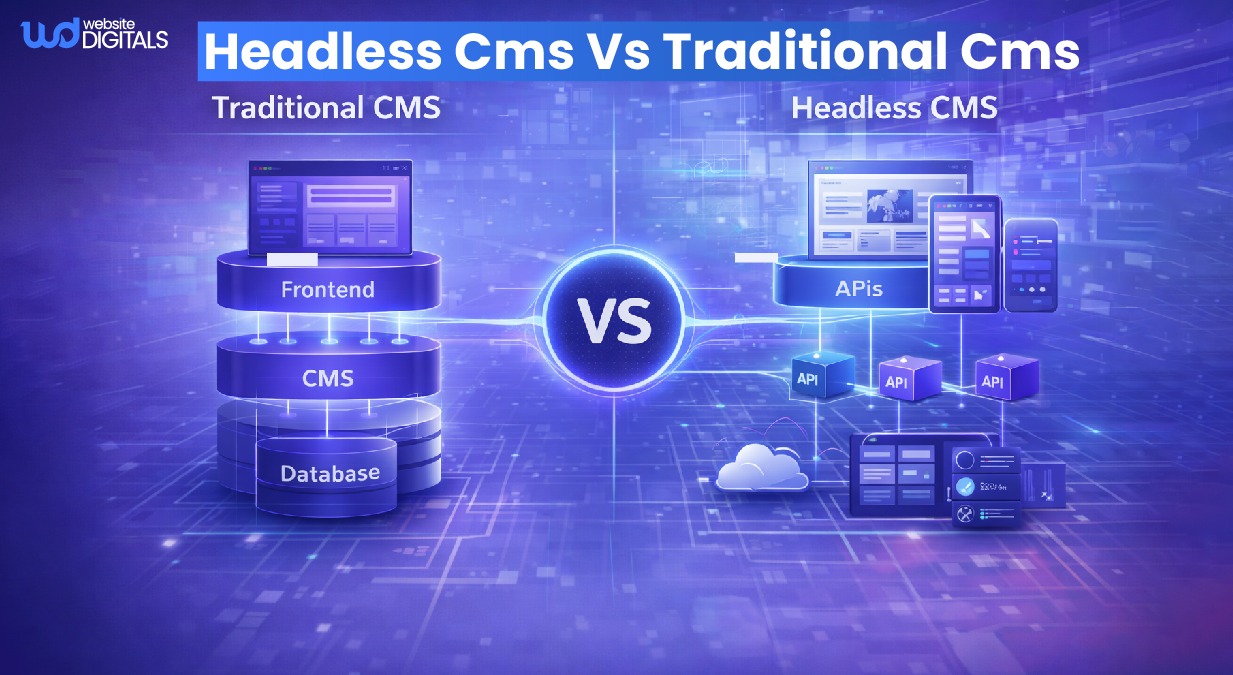
Headless CMS separates the backend (content storage) from the frontend (presentation), offering greater control over how content appears across channels.
Hybrid CMS combines the flexibility of API-based delivery with built-in presentation layers, an ideal setup for organizations balancing control and agility.
Real World Case Study:
|
IBM is redefining enterprise transformation with its “hybrid by design” strategy, combining AI and acquisitions like Red Hat to deliver an open and automated hybrid cloud platform. This unified approach helps organizations manage data and applications seamlessly across environments, streamline governance, cut costs, and accelerate innovation. |
-
Seamless Enterprise Integrations
A CMS should easily connect with enterprise tools like information governance frameworks, content analytics, and digital asset management systems.
These integrations reduce content silos and strengthen information lifecycle management, ensuring content remains secure, compliant, and findable throughout its lifespan.
-
Scalable Development Frameworks
Enterprises need CMS environments that support modular expansion and continuous innovation.
Scalable frameworks enable development teams to integrate artificial intelligence and intelligent document processing for automation and smarter content classification.
This scalability also supports cms development for education, finance, and healthcare, where compliance and uptime are critical.
Security-First Architecture: Building Trust Into Every Deployment
With threats growing more sophisticated, CMS security is no longer optional; it’s foundational.
-
Proactive Vulnerability Management
Enterprises must implement continuous scanning, patch management, and secure access controls to identify risks before exploitation.
Combining audit trail logging and content automation helps track unauthorized activities in real time.
Pro Tip:
|
Don’t wait until go-live to test your CMS. Conduct pre-deployment vulnerability scans and penetration testing alongside performance benchmarking. According to the research, “enterprises that integrate security validation during deployment experience 47% fewer post-launch vulnerabilities”. Implement DevSecOps pipelines that test for both performance and security from day one. |
-
Data Protection and Identity Governance
Implement strong encryption protocols, multi-factor authentication, and role-based access controls.
Adopt zero-trust security principles across all environments, especially for hybrid or cloud migration setups.
-
Regulatory and Compliance Alignment
Modern CMS platforms must align with key standards like GDPR compliance, HIPAA compliance, and SOX compliance.
Integrating compliance management into deployment workflows minimizes regulatory risk and strengthens operational trust.
CMS Governance Framework Overview
|
Governance Aspect |
Objective |
Key Controls |
Measurement Metric |
Compliance Standard |
|
Information Access |
Prevent data misuse |
RBAC, MFA |
Access logs |
ISO 27001 |
|
Content Quality |
Maintain accuracy |
Approval workflow |
QA reports |
Internal QA policy |
|
Change Management |
Ensure controlled updates |
Version control |
Deployment logs |
ITIL |
|
Compliance Tracking |
Monitor legal alignment |
Audit trail |
Compliance score |
GDPR, HIPAA |
Performance Optimization and Deployment Efficiency
Performance is the foundation of user satisfaction and operational stability. A CMS that can’t handle scale undermines digital growth.
-
Caching and Global CDN Acceleration
Implement caching at multiple levels (page, object, and fragment) and leverage global content delivery networks (CDNs).
These reduce latency, ensure redundancy, and improve speed across geographically distributed teams.
-
Automated CI/CD Deployment Pipelines
Integrating Continuous Integration and Continuous Deployment (CI/CD) automates testing, builds, and rollout processes.
This ensures new content and features are delivered securely and quickly, enhancing content platform stability.
-
Real-Time Monitoring and Load Resilience
Monitor system health through analytics dashboards, load testing, and uptime tracking.
By combining monitoring with information governance policies, enterprises can ensure reliability under high-traffic conditions.
Conclusion: Future-Proofing Your Enterprise CMS Strategy
A modern enterprise content management system must be secure, scalable, and adaptable to evolving business needs.
Future-ready CMS deployment means ongoing optimization, strong governance, and seamless integration across your digital ecosystem.
To build or upgrade your CMS with confidence, connect with our experts at Website Digitals. We specialize in CMS development that enhances performance, security, and user experience. Reach us at info@websitedigitals.com or call (646)-222-3598 to get started.
FAQs
How does Website Digitals help enterprises deploy a secure CMS?
At Website Digitals, we specialize in deploying a secure and high-performing enterprise content management system tailored to your infrastructure. Our experts integrate DevSecOps practices, automate CI/CD pipelines, and ensure compliance from day one.
Why choose Website Digitals for CMS development and integration?
We provide end-to-end CMS development, from planning and customization to security audits and optimization. Our approach focuses on scalability, regulatory compliance, and fast, secure deployments designed for enterprise growth.
What is an enterprise content management system?
An enterprise content management system (ECMS) is a platform that helps organizations capture, store, organize, and deliver digital content securely across departments and systems.
How does an enterprise content management system work?
It centralizes content through automation, metadata management, and secure access controls, allowing teams to collaborate efficiently while maintaining compliance and version control.
What are the key features and benefits of an enterprise content management system?
Core features include document management, workflow automation, records management, and enterprise search. The main benefits are improved productivity, stronger data security, and streamlined compliance tracking.
What’s the difference between cloud and on-premises enterprise content management systems?
A cloud-based CMS offers scalability and lower maintenance, while an on-premises CMS provides more control and data sovereignty. Many enterprises adopt a hybrid model for the best of both.
What are enterprise content management system compliance requirements in the U.S.?
U.S. enterprises must align their CMS with frameworks like HIPAA, SOX, and GDPR to ensure data protection, audit readiness, and regulatory compliance.
Why do enterprises need an enterprise content management system?
Enterprises use an ECMS to manage growing data volumes, reduce operational silos, and ensure secure collaboration across distributed teams, essential for digital transformation.
What are the main challenges in implementing an enterprise content management system?
Common challenges include complex system integrations, maintaining data security, ensuring user adoption, and aligning compliance policies across departments.