Maximizing Lead Conversion Through Responsive Mortgage Website Templates
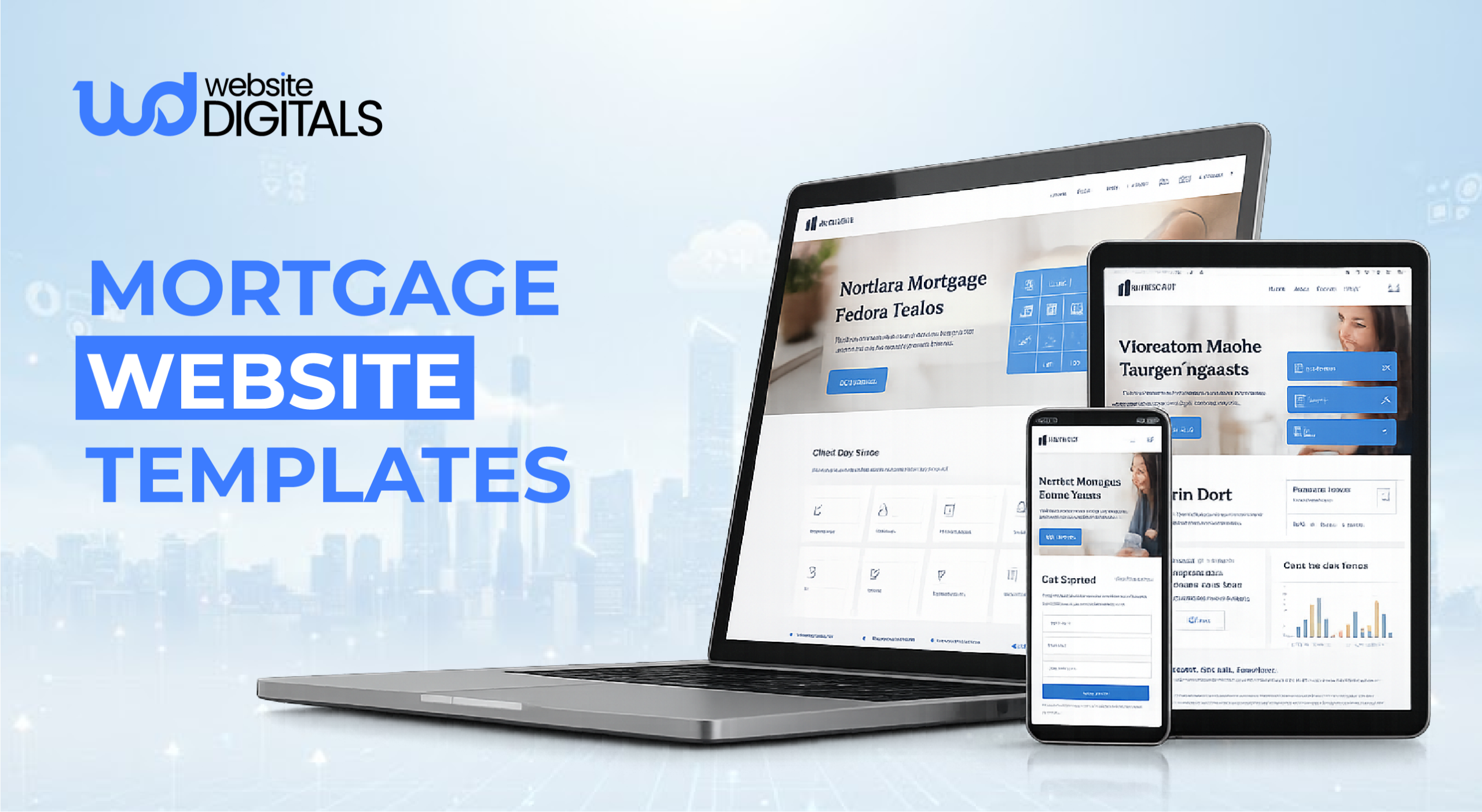
Every click on your site is a potential client, but only if the experience holds.
With the right mortgage website templates, you can turn visitors into well-qualified leads.
But the reality: many brokers and product managers report low lead-to-loan conversions, cumbersome mobile paths, and CRM hand-offs that fall apart.
One recent analysis showed that 68% of consumers give up on online applications for financial products due to complexity and delay.
“Trust takes years to build, seconds to break, and forever to repair.”
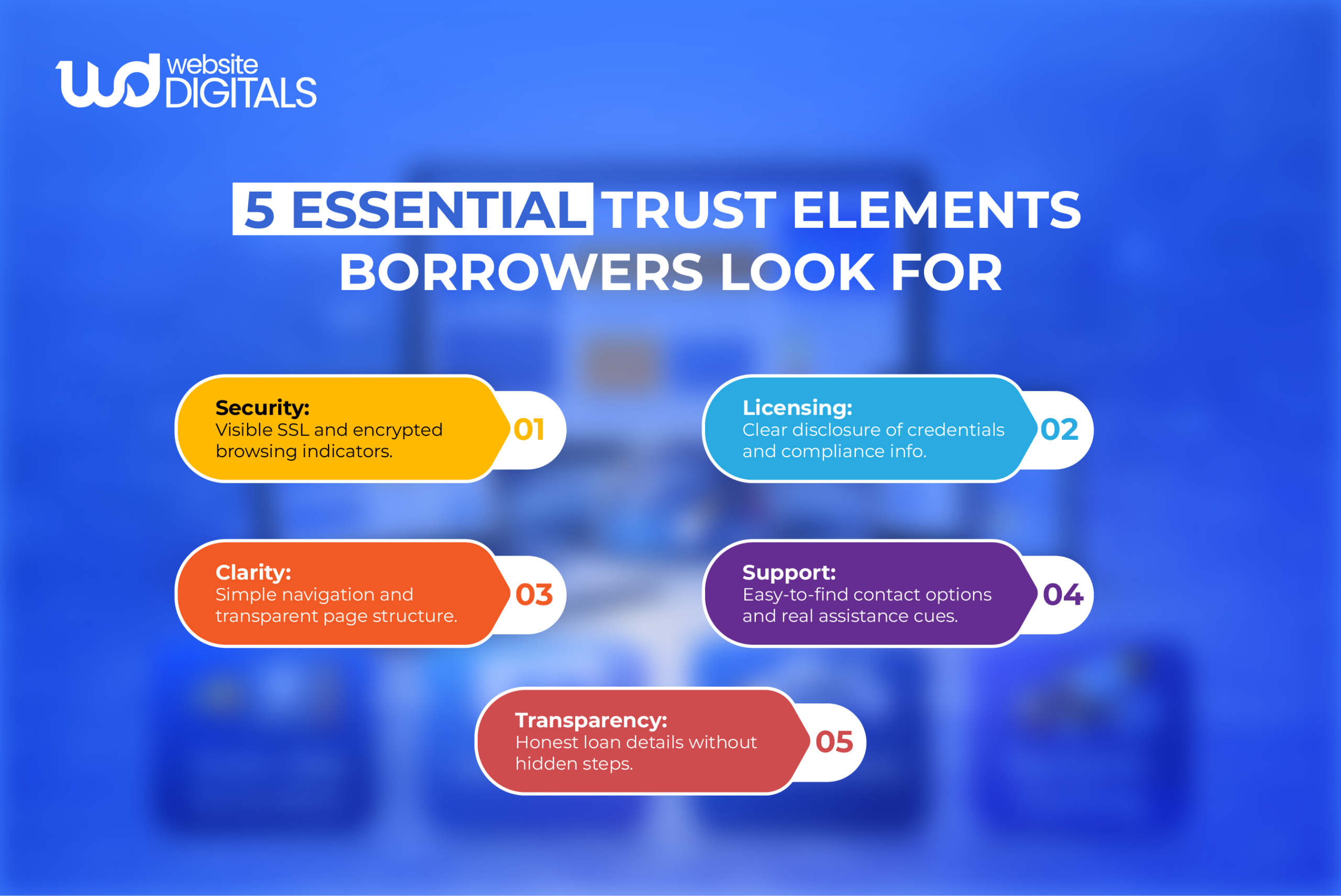
When a borrower reaches your site, that trust hinges on how easily they can navigate, compare options, and begin their application.
In this blog, we will break down how responsive design can strengthen that first impression and drive higher conversions
Key Takeaways
|
Why Responsive Website Templates Are Critical for Mortgage Conversions
A mortgage decision often begins on a smartphone.
Borrowers compare mortgage rates, explore home loan options, or check if they qualify for loan programs (FHA, VA, USDA) long before speaking to a loan officer.
If your pages aren’t built as a mobile-friendly website, you lose the prospect before you’ve even begun the conversation.
-
Mobile-First Borrower Behavior
Borrowers expect the same speed, clarity, and efficiency from a mortgage site as they do from retail or travel apps.
When researching real estate financing, they won’t tolerate layout glitches, zoom-heavy navigation, or broken calculator fields.
A responsive layout is no longer a nice-to-have; it’s the entry point to participating in the modern digital mortgage process.
Many lenders are now leveraging headless CMS advantages to deliver faster page loads, omnichannel consistency, and flexible frontend experiences without being limited by traditional CMS constraints.
-
Drop-Off Points From Non-Responsive Sites
Every input that feels difficult, every button that’s misaligned, and every unclear step pushes a borrower closer to abandoning the process.
This especially affects mobile prequalification, where a user may attempt to enter their credit score, test a mortgage calculator, or explore potential refinance options.
-
The Cost of Low Conversion Rates
Weak performance compounds quickly.
Slow pages, unclear actions, and poor layout lead to fewer completed forms and ultimately fewer funded loans.
For teams focused on growth, responsive design is directly tied to revenue impact, not just aesthetics.
The Real Causes Behind Weak Conversion Performance
Most teams don’t have a traffic problem; they have a conversion bottleneck.
The pain points you experience, low form completion, slow follow-up, and CRM inconsistencies, have one common cause: friction.
-
Friction in the Application Journey
If it feels difficult to complete an online mortgage form, borrowers will abandon it.
Lengthy fields, unclear questions, or processes that don’t scale down to mobile create barriers.
A well-structured flow guided by conversion optimization principles removes these barriers naturally.
-
Mobile Form Abandonment
The majority of site abandonment occurs when forms appear overwhelming on small screens.
Borrowers struggle with scrolling, locating required fields, or completing document upload steps.
Responsive templates fix this by adapting the entire path, not just the page layout, to user behavior.
-
CRM and LOS Disconnect
One of the most expensive leaks in the funnel is the delay between form submission and follow-up. Without effective CRM integration, teams lose momentum.
A borrower who expresses interest expects timely outreach; anything slower reduces appointment rates and erodes trust.
What Responsive Templates Solve in the Loan Journey
Well-built designs address the exact friction points, keeping teams from achieving higher conversion rates.
-
Consistent Multi-Device Experience
Responsive templates ensure that a borrower viewing website templates for lenders on a desktop gets the same seamless experience on their phone.
This consistency raises conversion odds by reducing interruptions and confusion.
-
Usable Tools and Forms on Mobile
Tools such as loan qualification tools, interest rate calculators, and prequalification steps need to load quickly and adapt to small screens.
A modern frontend for headless CMS allows lenders to optimize these tools independently of backend systems, ensuring faster rendering and smoother mobile interactions.
Many lending website design systems ignore tool responsiveness, despite tools being some of the most influential conversion assets.
For example:
Adding homebuyer education content, such as guides, FAQs, and quick explainer blocks, also supports users who need clarity before taking the next step.
-
Built-In Accessibility and Compliance
Borrowers also look for professionalism and trust. Features like ADA-compliant website design, CFPB compliance guidelines, and HUD requirements support credibility and eliminate legal blind spots. Compliance surfaces through structure, clarity, and accessibility, not just disclosures.
Conversion Advantages of Responsive Lending Templates
These templates aren’t simply about layout; they are built to improve lead flow.
-
Mobile-Optimized Forms
Borrowers move through responsive forms with ease, allowing them to complete interest checks, questions, and estimates without running into errors or unnecessary fields. These improvements directly enhance lead capture.
-
Adaptive CTAs That Guide Action
Clear call-to-action (CTA) placements matter. Whether inviting a borrower to check eligibility, request a quote, or explore financial services, CTA positioning and responsiveness influence outcomes.
-
Structured Layouts That Build Confidence
A clean structure assures borrowers that your team understands financial services website templates and industry expectations.
For example:
|
In responsive web design services for law firms, site structure often determines whether visitors perceive credibility within seconds. Mortgage websites function the same way: clear hierarchy, readable layouts, and intuitive navigation reduce hesitation and encourage action. |
Real World Scenario:
|
A company launches a fully responsive website redesign, and visitors quickly notice the difference. Whether they arrive on mobile or desktop, navigation is smoother, pages load faster, and pathways are easier to follow. With the experience now more intuitive and efficient, fewer users leave early, and the company sees its bounce rate drop. |
CRM-Integrated Templates That Improve Follow-Up
Even the best website fails if leads aren’t handled effectively.
-
Automatic Lead Syncing
Responsive sites built with modern systems push every submission into your CRM or LOS instantly.
This keeps the lending process smooth and ensures your team never loses track of form activity from your landing pages for lenders.
-
Event Tracking for Better Scoring
Understanding borrower actions, calculator usage, scroll depth, and form progression helps refine scoring models.
These habits inform your sales team and elevate follow-up quality.
-
Faster Response and Booking Rates
When everything is synced correctly, borrowers receive faster replies, more relevant outreach, and timely appointment scheduling.
Your company websites for loan services become part of your operational engine, not just a digital brochure.
Features Proven to Increase Lead Conversion
Mortgage lenders can improve lead conversion by implementing key features into their website templates.
These features are designed to enhance the user experience, making it easier for potential borrowers to navigate the mortgage process.
-
Multi-Step Mobile Prequal Forms
One effective feature is the use of multi-step mobile prequalification forms.
These forms break down the prequalification process into manageable steps, reducing friction and making it more likely that users will complete the process on their mobile devices.
By simplifying the process, lenders can increase the number of qualified leads.
Key benefits of multi-step forms include:
-
- Reduced form abandonment
- Improved user experience
- Increased conversion rates
-
Small-Screen Loan Calculators
Loan calculators that are optimized for small screens are another crucial feature.
These calculators allow potential borrowers to quickly determine their loan options, enhancing the overall user experience and encouraging lead conversion.
By providing a seamless calculation experience, lenders can build trust with their users.
-
Secure Mobile Document Upload
Secure mobile document upload capabilities are also vital for increasing lead conversion.
This feature allows users to easily upload necessary documents, streamlining the mortgage application process.
By reducing the barriers to application, lenders can increase the likelihood of conversion.
-
Compliance-Ready Trust Signals
Elements like NMLS verification, trust badges & compliance seals, and content guidelines for financial services help build borrower confidence instantly.
Top Mortgage Website Templates for Maximizing Conversions
With numerous website templates available, selecting the right one can be daunting.
This section highlights top mortgage website templates designed to maximize conversions.
-
Templates Optimized for Different Lending Niches
Mortgage companies operate in diverse lending niches, each with unique requirements. Templates optimized for these niches can significantly enhance user experience and conversion rates.
For instance, templates designed for reverse mortgages or commercial lending can cater to specific customer needs, providing relevant information and tools that streamline the application process.
Some top templates for different lending niches include:
- Templates with built-in calculators for complex loan products
- Designs that highlight specialized loan programs
- Layouts that incorporate customer testimonials and success stories
-
Integration-Ready Templates for Major LOS Systems
Integration with Loan Origination Systems (LOS) is crucial for efficient loan processing.
Templates that are ready for integration with major LOS systems can save time and reduce errors.
These templates are designed to work seamlessly with popular LOS platforms, ensuring that lead data is synced accurately and promptly.
|
LOS System |
Template Compatibility |
Integration Benefits |
|
Encompass |
Yes |
Automated lead syncing, reduced manual data entry |
|
Calyx Point |
Yes |
Enhanced loan processing efficiency, improved data accuracy |
|
Byte |
Yes |
Streamlined loan application process, faster decision-making |
-
Customizable Templates That Maintain Responsiveness
Customization is key to creating a unique brand identity, but it should not come at the cost of responsiveness.
Top mortgage website templates offer customization options while maintaining a responsive design that adapts to various devices and screen sizes.
This ensures that the website provides an optimal user experience across desktops, tablets, and smartphones.
By choosing a template that balances customization with responsiveness, mortgage businesses can create a compelling online presence that drives conversions.
Implementing Responsive Design: Technical Considerations
A well-executed responsive design strategy starts with a clear understanding of the technical elements that shape performance. This is where a specialized web design company can bridge the gap between design, compliance, and conversion optimization.
As mortgage lenders continue shifting toward a more digital-centric model, having a site that adapts seamlessly across devices is no longer optional; it’s fundamental to keeping borrowers engaged.
Below are key technical considerations that play a direct role in responsiveness, stability, and overall user experience:
-
Testing Across Multiple Devices and Browsers
To ensure a seamless user experience, it’s crucial to test your responsive design across various devices and browsers. This includes checking for compatibility with different screen sizes, operating systems, and browser versions. Thorough testing helps identify and fix issues that could impact user engagement and conversion rates.
A comprehensive testing strategy should include:
- Device testing: Ensure your site works well on desktops, laptops, tablets, and mobile phones.
- Browser testing: Verify compatibility with popular browsers such as Chrome, Firefox, Safari, and Edge.
- Screen resolution testing: Check how your site adapts to different screen resolutions.
-
Optimizing Page Load Speed for Mobile Users
Mobile users expect fast and efficient browsing experiences.
Optimizing page load speed is critical for retaining users and improving conversion rates. Techniques for optimization include:
- Compressing images and files to reduce size.
- Minifying CSS, JavaScript, and HTML code.
- Leveraging browser caching to store frequently-used resources.
Bonus Consideration:
|
Google’s Core Web Vitals heavily influence both ranking and user behavior. Faster pages significantly increase completion rates, especially when borrowers use loan qualification tools or interest rate calculators. |
-
Maintaining ADA Compliance in Responsive Templates
Ensuring ADA compliance is not only a legal requirement but also a moral imperative. Responsive templates must be designed with accessibility in mind. Key considerations include:
|
ADA Compliance Aspect |
Description |
|
Semantic HTML |
Using HTML elements to convey the structure and meaning of content. |
|
Color Contrast |
Ensuring sufficient contrast between text and background colors. |
|
Keyboard Navigation |
Allowing users to navigate the site using only their keyboard. |
By focusing on these technical considerations, mortgage lenders can ensure their responsive design is both effective and compliant with regulatory standards.

Conclusion: Future-Proofing Your Mortgage Business with Responsive Design
A strong digital presence starts with a design that adapts to every borrower.
When you use responsive mortgage website templates, you simplify the path from interest to application while strengthening credibility at every touchpoint.
By prioritizing responsive web design, mobile-optimized forms, adaptive CTAs, and CRM-ready workflows, mortgage professionals can reduce friction, improve follow-up, and create a more predictable flow of qualified leads.
If you’re ready to upgrade your website and build a conversion framework that supports real growth, our experts at Website Digitals can guide you through the next steps.
You can reach us anytime at info@websitedigitals.com or speak directly with our team at (646)-222-3598.
FAQs
How does Website Digitals help lenders improve their mortgage website performance?
Website Digitals builds responsive, conversion-focused websites tailored for lenders, ensuring faster load times, smoother user journeys, and CRM-ready workflows that strengthen lead quality.
Why should mortgage professionals choose Website Digitals for website redesign or development?
We specialize in lending-specific design, compliance-aligned structures, mobile optimization, and turnkey templates engineered to improve conversions and reduce application drop-off.
What makes a good mortgage website template?
A strong mortgage template includes responsive design, fast load speeds, simple navigation, trust elements, compliance-ready sections, and a clear path from rate checks to form completion.
What are the best features for a mortgage broker website?
Essential features include mobile-optimized forms, loan calculators, secure document upload, clear CTAs, and LOS/CRM integrations that streamline follow-up and improve conversion flow.
How do you build a mortgage website effectively?
Start with a responsive framework, add borrower-friendly content, include calculators and qualification tools, ensure compliance pages are built in, and connect forms directly to your CRM or LOS.
What should be included in a mortgage landing page?
A high-converting mortgage landing page needs a clear value message, a short form, trust indicators, a focused CTA, and streamlined content that guides borrowers toward the next step.