Why Your Landing Page for Business Doesn’t Match User Intent (And How to Fix It)

A prospect just clicked your high-value ad, they have specific, urgent intent. BUT..does your landing page for business capitalize on that moment, or is it failing to deliver?
If your sales are low despite high clicks, your page is generating costly friction, not the ROI you budgeted for.
This misalignment is where potential revenue disappears.
The reality is, your page is riddled with funnel leaks, non-conversion, crippling slow performance, and UX issues that actively repel qualified leads.
This is why we offer the strategic blueprint required to realign your design with prospect psychology, boosting speed and professional credibility.
Read on this blog to transform inefficiency into predictable revenue and build a page that truly drives results.
Key Takeaways
|
Why Your Landing Page Fails to Convert: The User Intent Disconnect
The reason so many businesses struggle with customer acquisition isn’t lack of traffic, it’s a critical mismatch between what the user expects and what your page delivers.
This failure to align with user intent is where profit goes to die.
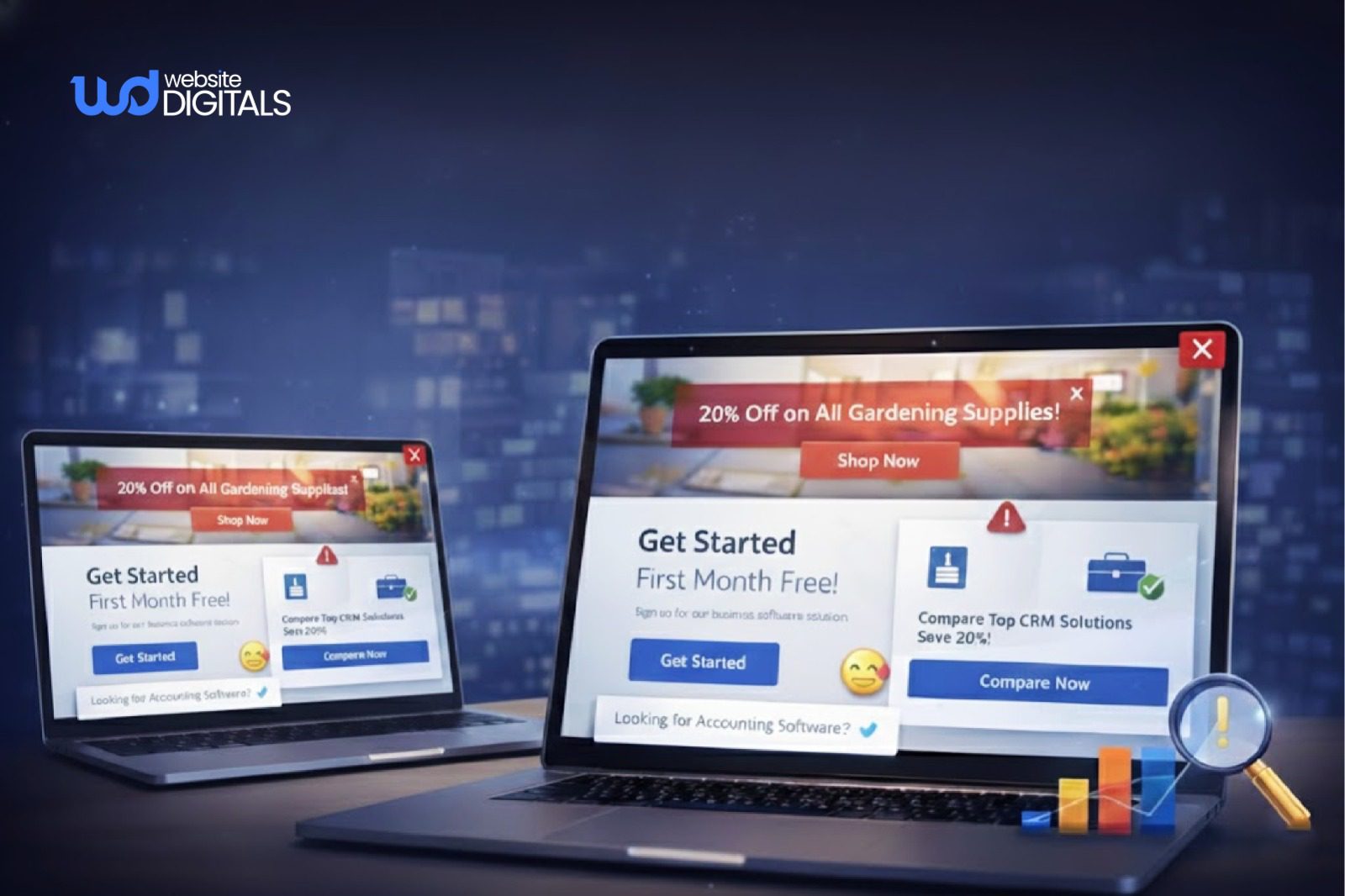
The Six Deadly Sins of Conversion Friction
High bounce rates and low conversion rates are loud signals that your business marketing strategy is faltering at the last mile.
These are the core reasons why your online presence isn’t converting:
Reason 1: Mismatch Between Traffic Intent and Page Experience:
Imagine clicking an ad for “mortgage website templates” and landing on a page that just talks about generic web design company services. The visitor immediately feels tricked and leaves. This is a fundamental failure of message matching, the single biggest killer of landing page conversion.
Reason 2: Slow Load Times: The Patience Killer:
Every second counts.
A delay of just a few seconds on desktop or mobile crushes engagement, causing visitors to abandon ship before they even glimpse your lead magnet.
Reason 3: UX Friction Points: The Effort Tax:
A page cluttered with confusing navigation or demanding lengthy forms creates barriers. Asking for 10 fields when you only need an email for lead generation (poor form optimization) imposes an unnecessary “effort tax” on the visitor, severely disrupting the sales funnel.
Reason 4: Outdated Visual Design:
Your aesthetic is your credibility. Especially in professional markets like “web design for mortgage brokers,” an unprofessional or ancient visual design instantly diminishes trust. A poor visual hierarchy or lack of trust badges signals you’re not a modern, reliable web design company.
Reason 5: Missing Analytics and Tracking:
You can’t optimize what you don’t measure. Without properly tracking drop-offs, goal completions, and click maps, you are operating in the dark. This obscures vital opportunities for conversion optimization.
Reason 6: Ineffective Messaging and CTA:
If your headline is generic or your call-to-action (CTA) button says a weak “Submit,” you’re failing to guide the visitor. Clarity and compelling, benefit-driven copy are mandatory for a high-converting landing page.
How Tech-Driven Optimization Transforms a Failing Landing Page
A failing page is not a lost cause; it’s a data-rich opportunity.
By treating your landing page for business as a system for continuous improvement, you leverage digital marketing tools to transform underperforming pages into powerhouses of customer acquisition.
-
Data Insights That Reveal the Truth
The journey to higher conversion rates begins with data.
Use tools like heatmaps and conversion tracking to gain data insights.
Note:
|
Data reveals if your targeted campaigns are attracting the right people and if the landing page layout is working. |
-
Technical Fixes for Blazing Speed
Page load speed is a non-negotiable factor.
Technical fixes are required to address this:
-
- Optimize and compress large images
- Minify heavy code
- Ensure robust server performance.
Prioritizing responsive design and mobile-friendly design guarantees a seamless user experience (UX) across all devices, a core element of modern landing page best practices.
-
UX Improvements That Eliminate Friction
Eliminating barriers is the key to accelerating lead generation.
-
- Simplify Forms: Implement concise form optimization; only ask for what you absolutely need for the first step (e.g., an email capture form for your lead magnet).
- Clear Visual Hierarchy: A clean landing page structure with ample white space and clear visual guides leads the eye directly to the call-to-action (CTA).
- Mobile-First Design: Ensuring mobile-responsive landing pages means every visitor has an easy path to conversion, regardless of screen size.
-
Design Updates That Earn Credibility
Modern web design is essential for building trust.
-
- Social Proof is King: Incorporate visible trust badges, recent customer testimonials, and recognized client logos.
- Modern Aesthetic: Update your visual hierarchy and design elements to look professional and current. An attractive design assures visitors that your business is legitimate and reliable.
-
Messaging Adjustments That Nail User Intent
Your copy must speak directly to the visitor’s initial query.
This involves meticulous messaging adjustments.
-
- Headline Optimization: If a user searched for “mortgage website templates,” your headline must deliver exactly that solution. Poor headline optimization leads to high bounce rates.
- Clarity over Cleverness: Ensure your call-to-action (CTA) is compelling (e.g., “Download Your Template Now”) and immediately clear.
A/B Testing to Validate Every Change
A/B testing is the engine of conversion optimization.
You must treat every change, from a new hero section image to a different CTA color, as a hypothesis to be proven.
- Test One Variable: Test only one element at a time to isolate its true impact on the conversion rate.
- Learn from Failures: As Thomas Edison noted (a principle applicable to testing), even negative results teach you what doesn’t work, guiding the next iteration in your business marketing funnel.
- Continuous Improvement: This iterative process is how you ensure your landing page for business remains aligned with user behavior and maintains peak performance.
How to Create a High-Converting Business Landing Page
Creating an effective landing page involves a strategic approach to design, copywriting, and technical setup.
By following these steps, businesses, including small businesses, can maximize their conversion rate.
1. Define Your Single Goal and Audience
Every element on the page must support one primary conversion goal.
Determine the specific action you want the visitor to take, and clearly define the target audience (e.g., first-time home buyers, or mortgage brokers looking for website templates).
This ensures your message is highly targeted.
2. Craft a Compelling Value Proposition
Your above-the-fold content (what the user sees before scrolling) must clearly and instantly answer the question: “What’s in it for me?”
- Headline Optimization: The headline should be clear, benefit-driven, and match the messaging of the ad or link that brought them there (matching user intent).
- Sub-Headline: Briefly elaborate on the unique benefit.
3. Design a Clear, Frictionless Layout
The landing page layout must guide the eye effortlessly toward the call-to-action (CTA).
- Visual Hierarchy: Use design elements (size, color, white space) to highlight the most important parts, the headline and the CTA.
- The Hero Section: This is the critical space above the fold. It should contain the headline, a compelling image/video, and the primary CTA button (or the form itself).
- Minimize Distractions: Remove main website navigation bars and unnecessary external links that could pull the visitor away from the conversion path.
4. Optimize the Conversion Path
This is where conversion optimization happens.
- Call-to-Action (CTA): The button text must be action-oriented and clear (e.g., “Get My Free Guide,” not just “Submit”). Use contrasting colors to make it pop.
- Form Optimization: For lead generation, keep the form as short as possible. Only ask for essential information. Fewer fields reduce UX friction points.
5. Build Credibility and Trust
Since the page is asking for contact or payment information, visitors need reassurance.
- Social Proof: Include authentic customer testimonials or reviews.
- Trust Badges: Display security badges, partner logos, or awards.
- Privacy Statement: Assure visitors that their information is safe.
6. Ensure Technical Excellence
The page must be fast and universally accessible.
- Page Load Speed: Crucial for reducing bounce rates. Compress images and use clean code.
- Mobile-Friendly Design: Implement responsive design so the page looks and functions perfectly on all devices. More than half of web traffic is mobile, making mobile-responsive landing pages non-negotiable.
Best Practices for Business Landing Pages
Adopting these practices ensures your page is always aligned with modern digital marketing standards, maximizing its impact on business growth.
|
Best Practice |
Description |
Focus |
|
A/B Test Everything |
Don’t guess—use data. Continuously test different headlines, CTA colors, form lengths, and image choices to see what yields a higher conversion rate. |
Conversion Optimization |
|
Maintain Message Match |
The headline and content must perfectly align with the ad or source that drove the traffic. If the ad promises mortgage website templates, the landing page must deliver that. |
User Intent |
|
Keep the Form Simple |
For early-stage leads, aim for only 2-3 fields (Name, Email). Save complex questions for later in the sales funnel. |
Lead Generation & UX |
|
Use High-Quality Visuals |
Invest in professional images or videos that support your message. A visually appealing and modern design enhances credibility. |
Web Design & Trust |
|
Incorporate Video |
A short, clear video (under 90 seconds) explaining the offer can significantly increase engagement and conversion, offering a dynamic look at your value proposition. |
Engagement |
|
Clear Next Steps |
Once the form is submitted, don’t leave them hanging. Redirect users to a ‘Thank You’ page that sets expectations (e.g., “Check your inbox in 5 minutes”). |
Customer Experience |
Business Landing Page Examples
Seeing examples can provide inspiration and clarity on the structure of a high-performing landing page across different industries.
- Lead Capture Page for a SaaS Company:
Goal: Free 14-day trial sign-up.
Key Elements: Hero section with a screenshot of the software, minimal form (Email only), clear call-to-action (“Start Your Free Trial”), and small logos of well-known customers as social proof.
- Webinar Registration Page (e.g., for Mortgage Brokers):
Goal: Event sign-up.
Key Elements: Benefit-driven headline (“How to Generate 10x More Leads Using AI Websites”), bulleted list of key learning points, a short form (Name, Email), and a countdown timer to create urgency.
- eCommerce Product Pre-Order Page:
Goal: Secure a product before launch.
Key Elements: Large, high-resolution product image, compelling sales copy focused on scarcity or early-bird benefits, a prominent “Pre-Order Now” CTA, and trust badges for secure payment.
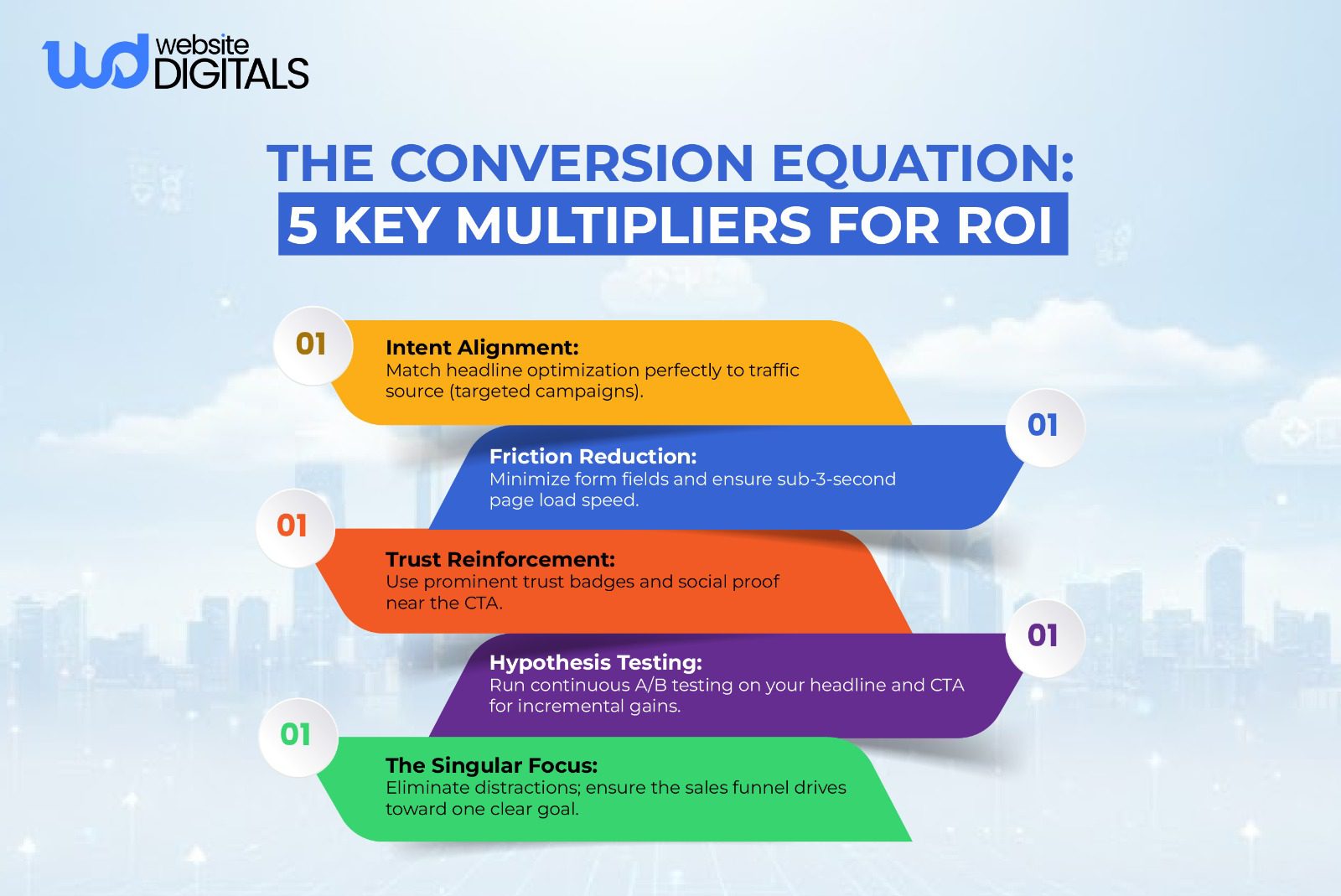
Cost of Business Landing Page Design
The cost to design a business landing page varies dramatically based on complexity, platform, and who performs the work.
|
Option |
Description |
Estimated Cost Range |
|
DIY / Template Builder |
Using a tool like Unbounce, Leadpages, or a theme within a platform like WordPress/Shopify. Low-to-moderate design knowledge needed. |
$15 – $100 / month (Platform Fee) |
|
Freelancer / Independent Designer |
Hiring a professional to design and code a custom page. Good for specific, high-end design needs or integrating with complex tools. |
$300 – $2,500 per page |
|
Web Design Agency / Dedicated Services |
Hiring a firm specializing in landing page design services for ecommerce stores or specific niches. Often includes copywriting, A/B testing, and integration. |
$2,500 – $10,000+ per page/campaign |
Note:
|
The most critical investment isn’t the upfront design cost, but the conversion optimization over time. A $500 page that converts at 10% is infinitely more valuable than a $5,000 page that converts at 1%. |
When to Take Action on Landing Page Optimization
A healthy landing page for business requires continuous monitoring.
The moment you notice certain key metrics dipping or stagnating, it’s time to pivot from passive monitoring to aggressive optimization. These indicators serve as red flags, signaling that your page is bleeding leads and wasting advertising budget.
-
Falling Conversion Rates
This is the most direct and crucial indicator. If your conversion rate is consistently trending downward, meaning the percentage of visitors taking the desired action (e.g., filling out a form, making a purchase) is decreasing, your page is failing.
- Action Needed: Implement A/B testing immediately. Focus on optimizing the primary elements like the headline, the call-to-action (CTA) button copy, and the form optimization. A falling rate means your core message or offer is losing resonance or has a fundamental flaw.
-
High Bounce Before the CTA
A high bounce rate combined with low scroll depth indicates that visitors are leaving your page almost instantly, often before they even see your primary call-to-action (CTA) or the full offer.
- Action Needed: Concentrate on the above-the-fold content (the hero section). Ensure your headline and supporting image/video are instantly compelling and clearly match the promise made in the ad (message match). High bounce before the CTA signals a severe mismatch with user intent.
-
Slow Page Load Times
Technical speed is a foundational element of user experience (UX). Studies show that even a one or two-second delay in page load speed can dramatically increase the bounce rate and decrease conversions.
- Action Needed: Engage technical fixes: compress all images, minimize code (CSS/JavaScript), and leverage browser caching. A slow page degrades the user experience and signals low technical proficiency, eroding trust.
-
Ad Traffic Not Converting
If you are investing heavily in targeted campaigns (PPC, social media ads) and seeing clicks but no leads, your ad traffic not converting is a major financial drain. The ad is working, but the page is failing to deliver.
- Action Needed: Review the entire sales funnel for disconnects. Are the ad keywords, the landing page headline, and the offer all perfectly aligned? This often points to a failure in messaging adjustments that don’t satisfy the audience’s specific need (e.g., promising “affordable web design” but delivering a luxury service).
-
Low Scroll Engagement
Low scroll engagement, often detected via heatmap tools, means visitors aren’t consuming the body of your content, such as benefit explanations, features, or customer testimonials. They are missing the crucial social proof needed to build trust.
- Action Needed: Re-evaluate your visual hierarchy and landing page layout. Break up large walls of text with bullet points, icons, and strong subheadings. Use media to maintain interest and guide the visitor down the page.
-
Missing Action Tracking
If you don’t have proper analytics, goal tracking, and event tracking set up, you have no way to know where visitors are dropping off or why. Missing action tracking means you are optimizing blindly.
- Action Needed: Implement analytics (like Google Analytics) correctly. Set up specific goals for button clicks, form submissions, and video plays. Without reliable data insights, conversion rate optimization is impossible.
Real World Scenario:
|
A small business clicks an ad for “Affordable Web Design” but lands on a page promoting a $25,000 corporate package. The message match fails instantly. The user’s low-budget intent hits a high-end commitment, resulting in an instant bounce. This proves even perfect ad targeting fails if your landing page for business doesn’t deliver the expected context. |
Wrap Up!
Stop treating your landing page for business as a static expense and start treating it as the dynamic, high-yield asset it should be.
True business growth isn’t about more traffic; it’s about relentlessly optimizing the experience you deliver, ensuring every visitor moves effortlessly through your Landing Page Design and converts. Stop bleeding profit through funnel leaks, and start commanding the ROI you deserve.
Ready to transform clicks into guaranteed revenue? Contact our experts at Website Digitals by emailing us at info@websitedigitals.com or calling us at (646)-222-3598.
FAQs
How does Website Digitals ensure my landing page for a business matches user intent?
We use proprietary analytics and rigorous A/B testing to guarantee the page content and CTA perfectly match your targeted campaigns.
Can Website Digitals help my business with web design for mortgage brokers?
Yes, we specialize in high-converting, industry-specific landing page design services tailored for competitive niches like mortgage and finance.
What is a landing page for a business?
It is a standalone page focused on a single goal, like lead generation, used to convert visitors from specific marketing traffic.
How do I create a business landing page effectively?
Start by defining one primary conversion goal, then design a clear landing page layout featuring a compelling above-the-fold content and a strong call-to-action (CTA).
What are the best practices for business landing pages?
Key tips for designing a business landing page include ensuring blazing page load speed, using social proof, and implementing concise form optimization.
Do landing pages help small businesses grow?
Absolutely. They are critical for efficient customer acquisition as they maximize conversion rate from limited marketing spend.
What is the typical cost of business landing page design?
Costs vary widely, ranging from $15/month for template builders to $2,500+ for custom development, depending on complexity and features required.