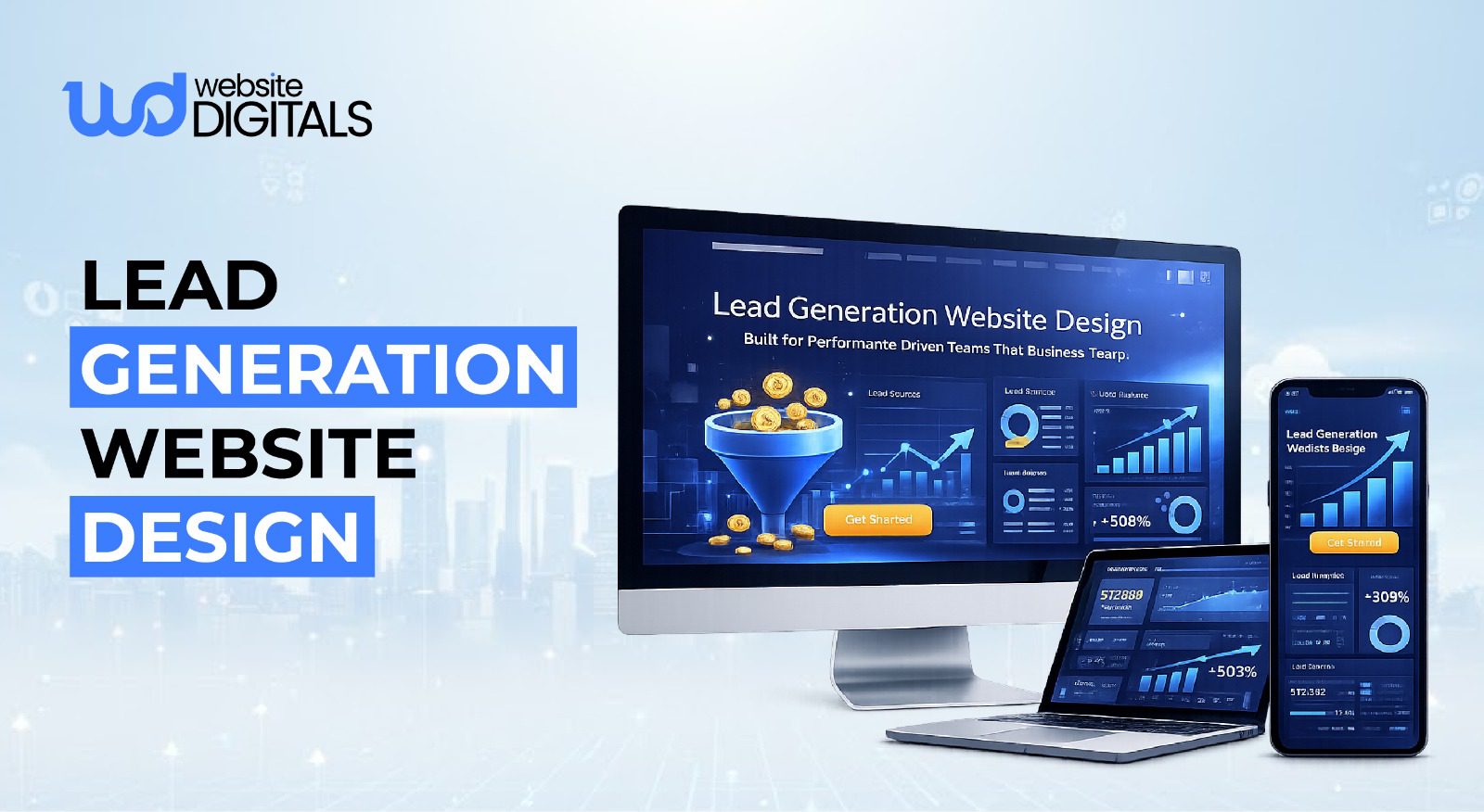
Lead Generation Website Design Built for Performance-Driven Teams That Refuse Slow Growth
Nothing drains a marketing budget faster than a slow and outdated website.
When every second counts, a slow page, weak CTAs, or a confusing path doesn’t just frustrate prospects, it sends them to faster, clearer competitors.
If you’re facing high CPL, poor tracking, and unexplainable drop-offs, the problem isn’t your traffic; it’s the system behind it.
A performance-focused lead generation website design solves these problems by improving speed, trust, and conversion flow from the ground up.
Studies show that a one-second delay in mobile load time can slash conversions by up to 20%
In this blog, we’ll break down what’s holding your site back and how a performance-driven build can turn it into a reliable source of demos, qualified leads, and revenue.
Key Takeaways
|
Why Growing Teams Outgrow Their Website
As your business grows and your marketing spend increases, the pressure on your website intensifies.
You need more leads, better-qualified opportunities, and better customer acquisition efficiency, but most sites aren’t built for that level of demand.
Many are outdated brochures lacking the infrastructure needed for high-volume, performance-driven marketing.
Here’s why growing teams quickly outgrow them:
-
Slow Pages That Lose Buyers
Slow website performance is a costly breakdown because prospects judge you on speed and reliability.
This undermines all conversion rate optimization (CRO), ensuring your message is missed, driving up CPL, and diminishing ROI.
-
Outdated Design And Broken Tools
An outdated design hurts trust and kills credibility.
Beyond aesthetics, many teams face broken integrations and bad scalability.
Trying to link lead capture forms to CRM systems (HubSpot, Salesforce) often fails, causing lost leads and poor tracking, a data nightmare that sabotages funnel optimization.
What a Lead-Gen Website Must Get Right
A truly effective lead generation website design is a strategic asset, built with the singular goal of moving qualified prospects efficiently through the sales funnel.
It’s the difference between a leaky bucket and a reliable pipeline.
-
Fast, Reliable Performance
Performance relies on page speed optimization.
A fast website is professional and respects the user’s time. Speed is core to the user experience design (UX).
High-performing sites use clean code for near-instant load times, especially for landing pages. This speed is mandatory for conversion maximization.
Warning:
|
If your site is built on a repurposed theme, say, a travel web design template, you’ll face limitations in page speed, CTA placement, tracking scripts, and form customization. These bottlenecks hurt conversions fast. |
-
Clear Paths To Take Action
Every page must support your lead strategy, removing confusion with clear call-to-action (CTA) elements.
A weak CTA flow leaves the path to submission confusing.
A conversion-focused site uses a conversion-focused layout featuring clear, benefit-driven CTAs placed strategically.
-
Trustworthy Tracking
Mastering conversion rate optimization (CRO) demands perfect visibility into user behavior.
This requires sophisticated behavioral analytics, including heatmap analysis.
Crucially, clean CRM integration ensures every lead action is recorded and routed immediately.
Without reliable lead scoring and tracking, your marketing efforts are purely guesswork.
How to Design a Website for Lead Generation
Designing a website for lead generation is a multi-disciplinary practice that balances psychology, design principles, and technical engineering.
-
The Power of Dedicated Landing Pages
A lead generation site relies on dedicated landing pages.
Many teams even use landing page design services for WordPress to build high-performing, distraction-free layouts.
Unlike a homepage, a landing page has one single goal: conversion.
It must be distraction-free, removing navigation, and hyper-focused on the offer and the lead capture forms.
This single-minded focus is what drives high-converting campaigns.
-
Conversion-Focused Layout and UX
The entire site structure must prioritize ease of use.
This starts with a mobile-first design, acknowledging that most initial visits are on a phone.
The layout should follow established patterns, prioritizing crucial information and minimizing friction in submission.
Every design choice impacts conversion.
Effective form optimization means asking only for necessary information and clearly stating your commitment to data privacy compliance.
Bonus Tip: Use Content Clarity Testing
|
Have 3–5 people read your landing page and explain the offer back in their own words. If they can’t, your messaging needs tightening. |
-
Leveraging Conversion Tools
Modern lead generation uses tools to capture attention when it matters most.
This involves testing elements like pop-ups and exit intent tools, used carefully, to re-engage users about to leave.
Seamless email marketing automation integration ensures a submitted form immediately starts lead nurturing, keeping them warm for follow-up.
What Elements Increase Website Conversions
Beyond the foundational layout, specific elements function as conversion accelerators by reducing anxiety and increasing motivation.
-
Establishing Social Proof
In the absence of a personal connection, prospects look to others to validate your claims.
This is where social proof comes in.
Strategically placing visible elements like reviews and testimonials, case study snippets, and logos of respected client companies reduces the perceived risk of engaging with your business.
When prospects see others like them have succeeded with your solution, their willingness to convert increases significantly.
-
Building Trust Signals
Trust is the currency of online conversion.
You need to proactively demonstrate that your site is secure and your business is legitimate. Key trust signals include:
- Displaying a valid SSL certificate (indicated by the lock icon in the browser).
- Clearly stating your privacy policy, especially concerning the use of data collected via lead capture forms.
- Providing clear and easy-to-find contact information.
- Ensuring the entire platform is a secure website design that protects user information.
Lead Magnet Types for Different Buyer Stages
|
Stage |
Lead Magnet Type |
Example |
Ideal CTA |
|
Awareness |
Guide |
“Industry Starter Guide” |
Download Now |
|
Consideration |
Checklist |
“Website Audit Checklist” |
Get the Checklist |
|
Decision |
Case Snippet |
“How We Increased Conversions” |
See Results |
|
Evaluation |
Demo Invite |
“Product Walkthrough” |
Book a Demo |
|
Post-Conversion |
Resource Pack |
“Optimization Toolkit” |
Access Tools |
Best Practices for Lead Generation Website Design
To ensure your investment yields maximum returns, follow a structured process built on data and strategic intent.
-
Strategy Tied To Revenue Goals
A great website doesn’t start with design; it starts with strategy.
This involves understanding the various buyer personas, mapping their journey across the sales funnel, and defining the specific actions (micro and macro conversions) that will drive revenue.
Your website should be a digital expression of your digital marketing strategy.
-
Systems Built To Scale
A high-performance build must anticipate future growth.
This means adopting a performance web design philosophy that uses modern frameworks, relies on clean, modular code, and has an infrastructure that can handle traffic spikes without incurring an outage or slowdown, the primary cause of bad scalability.
We ensure every aspect, down to the code supporting your web design company assets, is ready for expansion.
-
Clean CRM And Tool Integrations
The true mark of a professional lead generation website design is its ability to communicate flawlessly with your essential CRM systems and email marketing automation.
This requires meticulous setup and testing of APIs and webhooks, ensuring zero data loss and immediate lead routing.
When systems are integrated cleanly, the entire organization benefits from accurate reporting and a smoother workflow.
-
Ongoing Optimization and Testing
A website is never truly “finished.”
The best performers embrace continuous improvement.
Practices like A/B testing different headlines, CTA button colors, and value propositions are essential. Utilizing heatmap analysis can reveal usability issues that simple analytics miss.
This constant feedback loop is the core of effective conversion rate optimization (CRO).
This also includes applying continuous keyword-optimized content updates and ensuring your SEO-optimized content maintains its rank.
How a Performance Site Drives Revenue
A strategic lead generation website design is engineered to increase revenue efficiency across the board.
-
More Demo Requests
By streamlining the weak CTA flow and reducing friction on key conversion pages, you see an immediate jump in qualified actions.
Clearer paths, faster pages, and enhanced trust signals directly influence a user’s willingness to commit to a demo or consultation. The design removes obstacles.
-
Lower Cost Per Lead (CPL)
If you convert a higher percentage of the traffic you already have, your effective Cost Per Lead (CPL) drops significantly.
Investing in CRO through design is more cost-effective than simply buying more traffic.
This is a core return on investment for any project focused on conversion-focused layout improvements.
Real World Scenario:
|
A scaling SaaS team boosts its paid search budget, expecting more demos, but CPL climbs instead. After a quick audit, they discover the issue isn’t the ads, it’s the website. Slow mobile load times, weak CTAs, and broken CRM tracking are blocking conversions. Once the site is rebuilt with faster performance, clear CTA paths, and reliable lead routing, the same ad spend begins producing significantly more demo requests. |
-
A Smoother User Experience
Ultimately, a professionally designed, responsive website design delivers a superior user experience design (UX).
When a prospect easily finds what they need and feels confident in the platform’s reliability, they move faster through the sales funnel.
This smooth experience is crucial for high-value transactions.
What You Get With a High-Performance Build
Partnering for a custom build focused on lead generation means shifting from basic function to strategic output.
-
Strategy Tied To Revenue Goals
We begin with an in-depth analysis of your ideal customer profile and digital marketing strategy, ensuring the final site acts as a targeted revenue-generating tool.
This includes planning for content that uses structured data for businesses and schema markup to improve search visibility.
-
Systems Built To Scale
We provide robust, clean builds that solve the problem of bad scalability.
Our sites are designed to grow with your needs, accommodating increased traffic and future service integrations without requiring a total overhaul.
This long-term approach protects your investment.
-
Clean CRM And Tool Integrations
Beyond just connecting systems, we integrate them intelligently.
We ensure robust and accurate personalization capabilities based on user data and guarantee that your CRM integration is reliable, eliminating the frustration of poor tracking and lost leads.
Wrapping It Up
For performance-driven teams, investing in a purpose-built website isn’t an expense; it’s a direct move toward scalable growth.
If your current site suffers from slow performance, low conversions, or unreliable tracking, it’s no longer supporting your goals.
It’s time to shift from a basic online presence to a lead generation website design, because the real ROI isn’t in how much does a business website cost, but in how effectively it converts.
If you’re ready to stop losing qualified leads and upgrade to a system built for conversion, our experts at Website Digitals are here to help.
You can reach us anytime at info@websitedigitals.com or contact our team directly at (646)-222-3598.
Let’s build a website that actually drives revenue.
FAQs
What makes Website Digitals different from other web design companies?
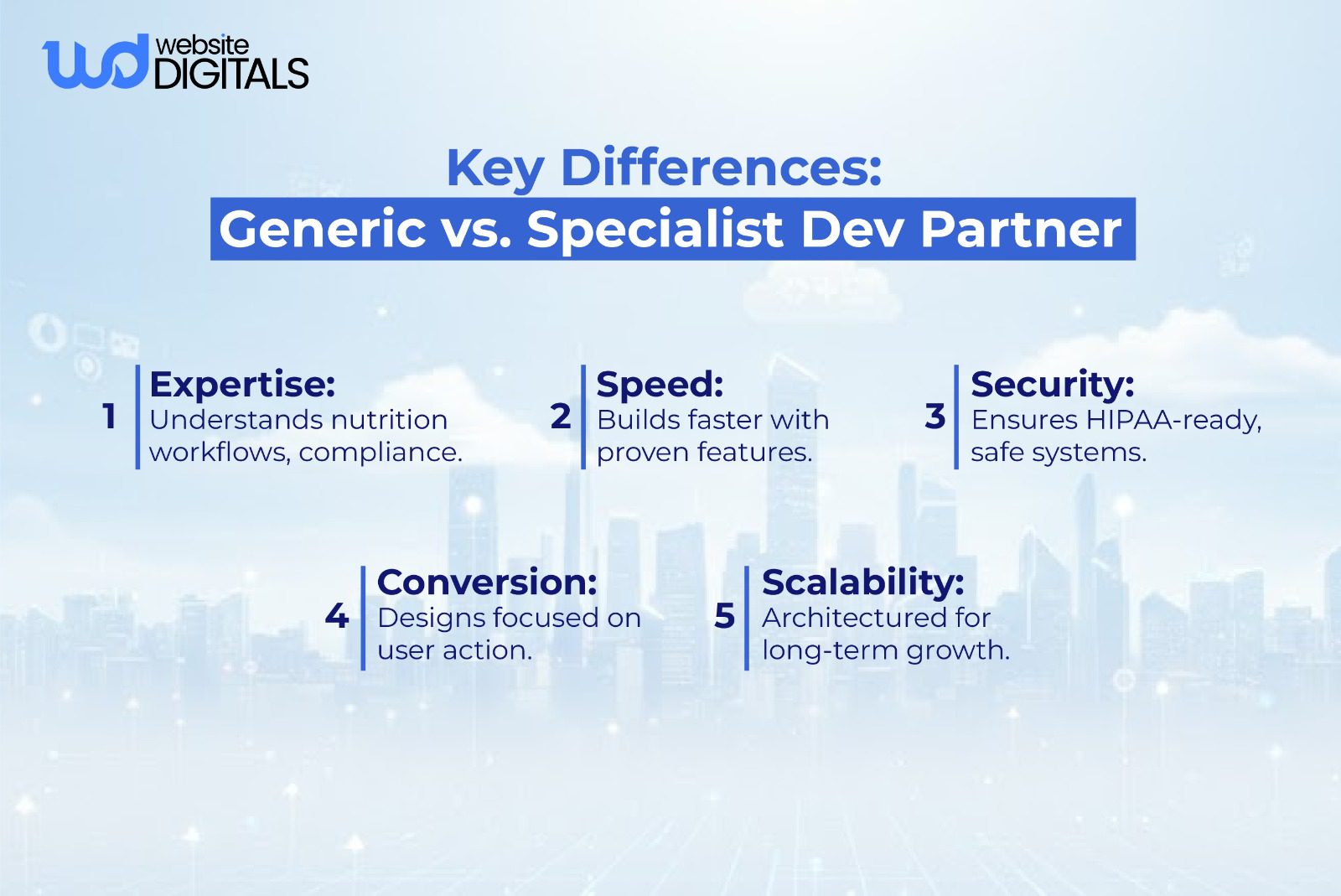
We build sites engineered for performance, focusing on conversion flow, CRM accuracy, and long-term scalability, not just design.
Does Website Digitals offer full lead generation website design?
Yes, we build revenue-focused systems with optimized UX, landing pages, CRM integrations, and CRO frameworks built in.
How do you design a website for lead generation?
Focus on clear CTAs, fast loading speed, strong UX, and dedicated landing pages that guide visitors toward a single conversion goal.
What elements increase website conversions?
Strong CTAs, trust signals, optimized forms, clear messaging, and mobile-first layouts all boost conversion rates.
Why do lead generation websites matter?
They turn traffic into qualified leads by reducing friction, clarifying value, and guiding users through the sales journey.
What are the best practices for lead generation website design?
Use strong CTAs, clean layouts, fast performance, social proof, and integrated CRM tracking.
How do you build trust on a lead-gen website?
Use testimonials, SSL security, transparent policies, social proof, and a modern, professional design.
What is a lead generation website?
It’s a website built specifically to convert visitors into leads using optimized UX, forms, landing pages, CTAs, and tracking.