How Often Should A Website Be Redesigned
You’ve probably heard the saying, “If it ain’t broke, don’t fix it,” but when it comes to your website, that mindset could be costing you.
An outdated website isn’t just a missed opportunity; it can turn customers away.
So, how often should a website be redesigned?
It’s not just about trends; it’s about staying competitive and keeping your audience engaged. Studies show 38% of people will leave a website if it looks outdated.
As designer Massimo Vignelli once said,
“The life of a designer is a life of fight: fight against the ugliness.”
And your website might already be fighting against you.
So, in this blog, we’ll uncover how a well-timed redesign can help you fight back against stagnation and ugliness and ensure your website works in your favor to drive success.
Key Takeaways
|
6 Signs Your Website Needs a Redesign
It can be difficult to view your site objectively when you know its navigation by heart.
However, a new visitor lacks that internal map.
Here are clear indicators that your current setup is a liability.
Sign 1: Outdated Visual Appeal
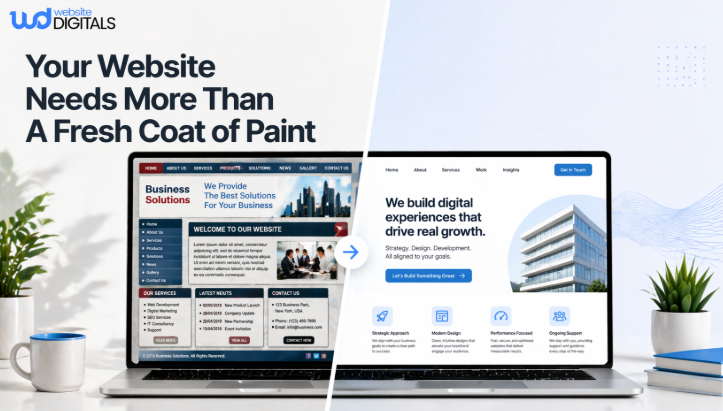
Cluttered sidebars and heavy gradients have been replaced by modern website design that favor clean lines and white space.
A fresh user interface (UI) updates strategy ensures your brand appears as professional as the services you offer.
Sign 2: Poor User Experience (UX)
If visitors struggle to find your contact page or service details, your user experience (UX) design is failing.
A site must feel intuitive. When navigation is clunky, users exit.
Prioritizing UX optimization simplifies the path from landing on your homepage to becoming a qualified lead.
Sign 3: Slow Loading Times
Patience is scarce online; users expect pages to load in under two seconds.
If unoptimized images bog down your site, you need website speed optimization.
Search engines also prioritize speed, meaning a slow site won’t just frustrate users, it will actively hide your business from search results.
Sign 4: Mobile-Unfriendly Layouts
With over half of web traffic coming from smartphones, a desktop-only focus is a major risk.
Mobile responsiveness ensures your layout shifts to fit any screen size perfectly.
If a user has to “pinch and zoom” to read your text, you are losing an audience.
A mobile-first redesign is no longer an option; it is a necessity for growth.
Sign 5: High Bounce Rates
If analytics show people landing on your site and immediately leaving, you have a high bounce rate.
This is a symptom of poor engagement.
Whether it is the design or the speed, something is pushing people away.
Improving website navigation and content layout helps keep them on the page.
Sign 6: Difficulties with Content Updates
As your business grows, you must add services or articles easily.
If you need a developer for every sentence change, your web content management is too restrictive.
Modern content management system (CMS) updates allow you to take control of your site without needing to write code.
The Impact of an Outdated Website
A stagnant website is more than an eyesore; it’s a financial drain that ripples through your marketing efforts.
Professional website design services can help transform your site into a lead-generation tool that enhances brand credibility and attracts more visitors.
-
Loss of Customers
If your competitors have a site that is easier to use and faster, that is where your potential clients will go.
The math is simple: poor functionality equals lost revenue.
If your conversion rate is dropping despite steady traffic, the problem is likely the site interface. Website conversion optimization aims to fix these leaks in your sales funnel.
-
SEO Consequences
Google constantly updates its algorithms to favor sites providing a great experience.
If you aren’t following web development best practices, your rankings will decline.
An SEO-friendly website redesign addresses technical issues like site structure and metadata.
Ignoring SEO optimization for redesign is one of the costliest mistakes a business can make.
-
Brand Credibility
A polished site acts as social proof of your competence.
Conversely, a broken site creates doubt; maintaining modern website design trends shows you are active and detail-oriented.
-
Customer Retention:
Your website isn’t just for new leads; it’s a resource for current clients.
If they find it difficult to log in, find support documents, or read your latest updates, they may start looking for a provider who offers a more seamless digital experience.
User-centered design focuses on the needs of all your visitors, ensuring long-term loyalty.
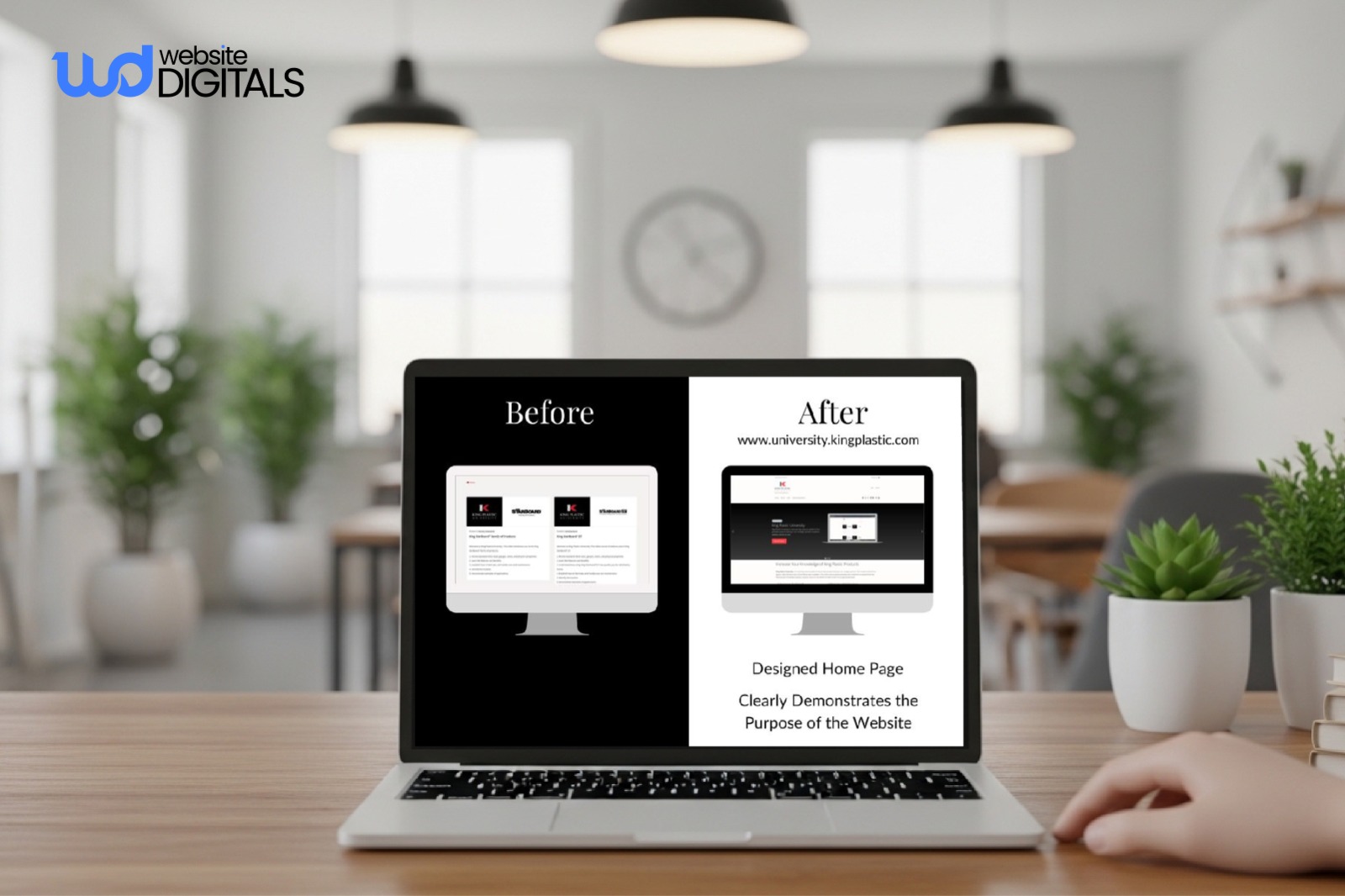
How Often Should You Redesign Your Website?
The core question, how often should a website be redesigned, doesn’t have a single “magic” number, but there are industry standards that serve as a reliable guide.
-
The 2-3 Year Rule
For most professional organizations, a major redesign every 2 to 3 years is the sweet spot.
This timeframe aligns with the natural evolution of hardware (new iPhones, tablets, and screen resolutions) and software (browser updates and CMS improvements).
It also ensures you don’t fall so far behind that the cost of catching up becomes astronomical.
Note:
|
The “every 2-3 years” rule isn’t arbitrary; it’s based on real industry patterns. |
-
Factors That Influence Redesign Timing
- Industry Competition: If your competitors are frequently updating their digital presence with websites and new tools, you may need to move faster.
- Brand Evolution: If your business has shifted its focus or launched new core services, your current site may no longer represent who you are.
- Technological Shifts: Major changes, like the move toward AI integration or new accessibility laws, can force a redesign sooner than planned.
-
When to Update vs. When to Completely Redesign
Sometimes, you don’t need to start from scratch.
A website refresh might involve changing the colors, updating the fonts, and swapping out photos to give the site a “facelift.”
This is a great intermediate step if your site is structurally sound but looks a bit tired.
However, a full redesign is necessary if:
- The underlying code is obsolete.
- The site is not mobile-responsive.
- You are switching to a better platform, such as moving to WordPress website development, for better flexibility.
Real-World Scenario:
|
A small local bakery noticed a decline in online orders. Their website was outdated, slow, and not mobile-friendly. They partnered with website developers for small businesses who quickly identified key issues like poor mobile responsiveness and slow load times. By redesigning the site with a mobile-first approach, optimizing for speed, and ensuring an intuitive user experience, they were able to improve customer engagement, boost online orders, and enhance their local visibility. |
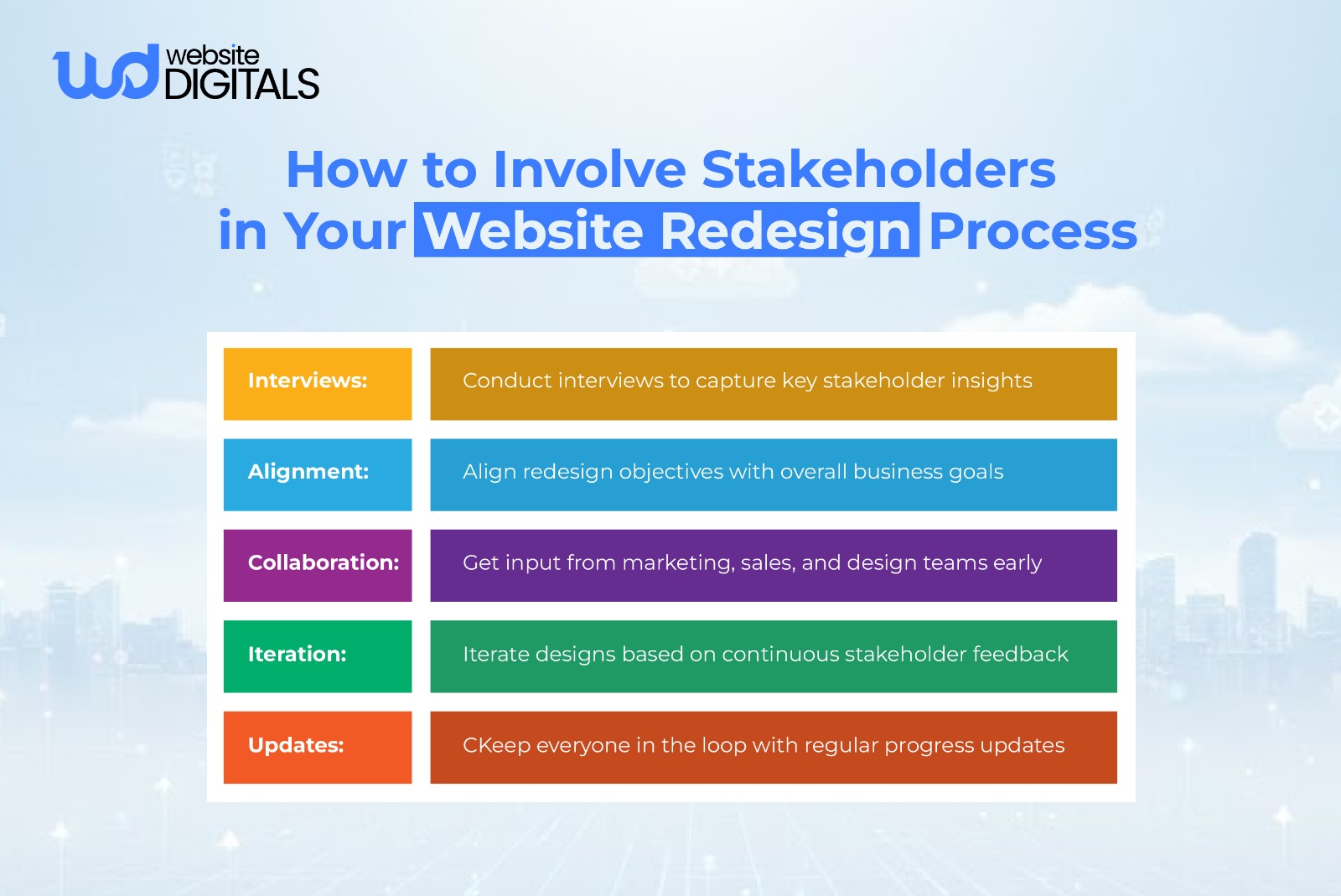
Key Elements of a Successful Website Redesign
When you decide to pull the trigger on a new project, it’s important to have a roadmap.
A successful site is a blend of psychology, technology, and art.
The goal is to make the user’s journey as frictionless as possible.
This involves clear menus, a logical hierarchy of information, and a layout that guides the eye.
Good web design trends focus on “scannability”, using headers and bullet points so people can find the “meat” of the content quickly.
-
Mobile-First Design
Instead of building a desktop site and trying to make it work on mobile, modern designers do the opposite.
They start with the smallest screen to ensure the core message and functionality are perfect, then scale up for larger monitors.
This responsive design ensures a high-quality experience for every single visitor.
-
Updated Visuals
Stock photos from 2010 are easy to spot and immediately lower your credibility.
A redesign should include high-resolution, authentic imagery that tells your brand’s story.
This is a key part of user-centered design, as it helps the visitor see themselves working with you.
-
Performance Optimization
Behind the scenes, your site needs to be lean.
This means clean code, optimized databases, and fast server response times.
These web development best practices ensure that your beautiful new design doesn’t take ten seconds to load.
-
Improved Call-to-Actions (CTAs)
What do you want the user to do? “Contact Us,” “Get a Quote,” or “Download the Guide“?
Your buttons should be prominent, use action-oriented language, and be placed strategically throughout the site.
-
Tracking Success with Tools
A redesign isn’t finished once it launches.
You need to know if it’s working.
By integrating tools like heatmaps and advanced analytics, you can see where people click and where they drop off.
This data allows for continuous UX optimization long after the initial launch
Content Strategy for a Successful Website Redesign
|
Content Type |
Action Items |
Purpose/Goal |
Tools/Resources |
|
Text |
Optimize for SEO, Update Copy |
Engagement |
CMS, SEO Tools |
|
Images |
Ensure High Quality, Use Alt Text |
SEO, Engagement |
Image Editors, CMS |
|
Video |
Compress for Speed, Use Captions |
User Engagement |
Video Editors, Caption Tools |
|
Infographics |
Design for Mobile, Use Engaging Graphics |
Visual Appeal, Engagement |
Graphic Design Tools |
|
Blog Posts |
Incorporate Target Keywords, Update Regularly |
SEO, Conversion |
CMS, SEO Tools |
Conclusion: Your Website’s Future Starts Here
The question of “how often should a website be redesigned” depends on your business goals.
To stay competitive, your website must be modern, fast, and mobile-friendly, key to any successful marketing strategy.
Whether you’re asking, ‘How much does it cost to redesign a website?’ or simply looking for a fresh update, the time to act is now.
A well-planned redesign can drive more leads and improve user experience across your site.
At Website Digitals, our experts can help you redesign your site to align with your growth goals. Contact us at info@websitedigitals.com or call (646)-222-3598 to get started today.
FAQs
1 Why should I choose Website Digitals for my website redesign?
Website Digitals specializes in custom website redesigns that align with your business goals. Our expert team combines design, user experience, and SEO to create mobile-friendly, fast websites that drive conversions and help you stay competitive.
2 What sets Website Digitals apart from other website design agencies?
What sets us apart is our personalized approach. We tailor redesigns to reflect your brand and business needs, focusing on user-centered design and SEO. We guide you through every step of the process with clear communication and transparency.
3 Why is website redesign important for my business?
A website redesign keeps your business competitive by improving user experience, mobile responsiveness, SEO, and conversion rates. It ensures your site reflects your brand and meets evolving customer expectations, helping to attract and retain visitors.
4 How much does it cost to redesign a website?
The cost of a website redesign depends on factors like complexity, features, and scope. Simple updates may be more affordable, while comprehensive overhauls with custom features can cost more. Costs typically vary based on your specific needs and goals.
5 How often should I redesign my website for better performance?
Ideally, websites should be redesigned every 2-3 years to stay current with design trends and technological advancements. Regular updates ensure optimal user experience and keep your site performing well on search engines.
6 What factors determine when to redesign a website?
The decision to redesign often depends on business growth, user feedback, changes in design trends, and technological updates. If your site’s performance is falling behind or not meeting business goals, it might be time for a redesign.
7 What are the signs that my website needs a redesign?
Signs your website needs a redesign include slow loading times, outdated design, poor mobile responsiveness, high bounce rates, and difficulties updating content. If any of these issues are affecting your business, a redesign may be necessary.