Benefits of Headless CMS in Modern Multi-Platform Web Architectures
Your content looks flawless on the website, but breaks on the app, lags on the kiosk, and never updates on the smart display.
Sound familiar?
Then it’s time to explore the benefits of headless CMS. It solves this fragmentation by separating content management from presentation, letting teams publish once and deploy anywhere.
Research indicates 58% of enterprises using headless systems report faster delivery and improved performance.
For Digital Architects and Enterprise Developers, it’s not just a new tool; it’s a smarter foundation for scalable, multi-platform content delivery.
This article explores how headless CMS brings flexibility, integration ease, and long-term efficiency, and how you can pilot it confidently within your enterprise.
Key Takeaways
|
How Headless CMS Architecture Works
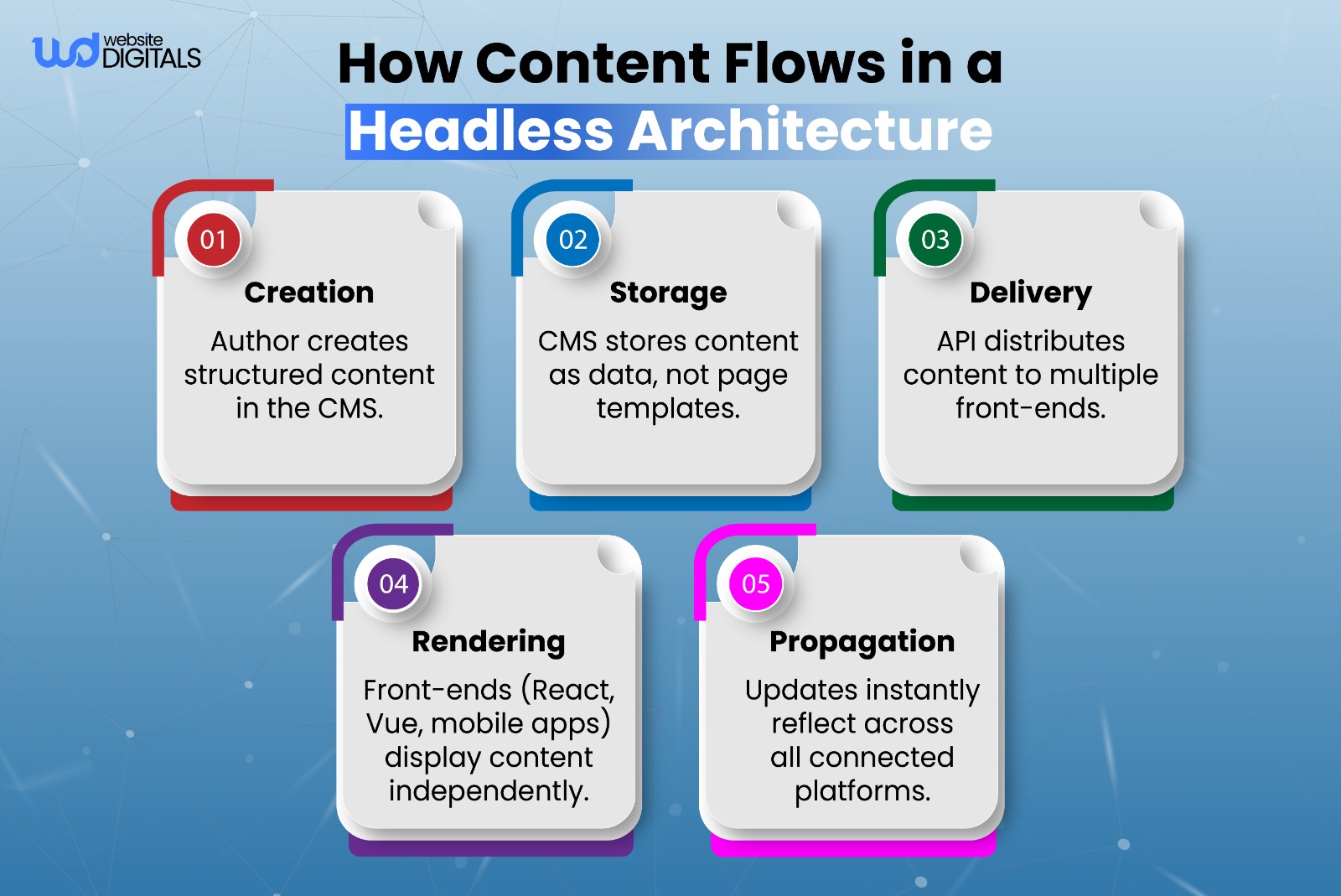
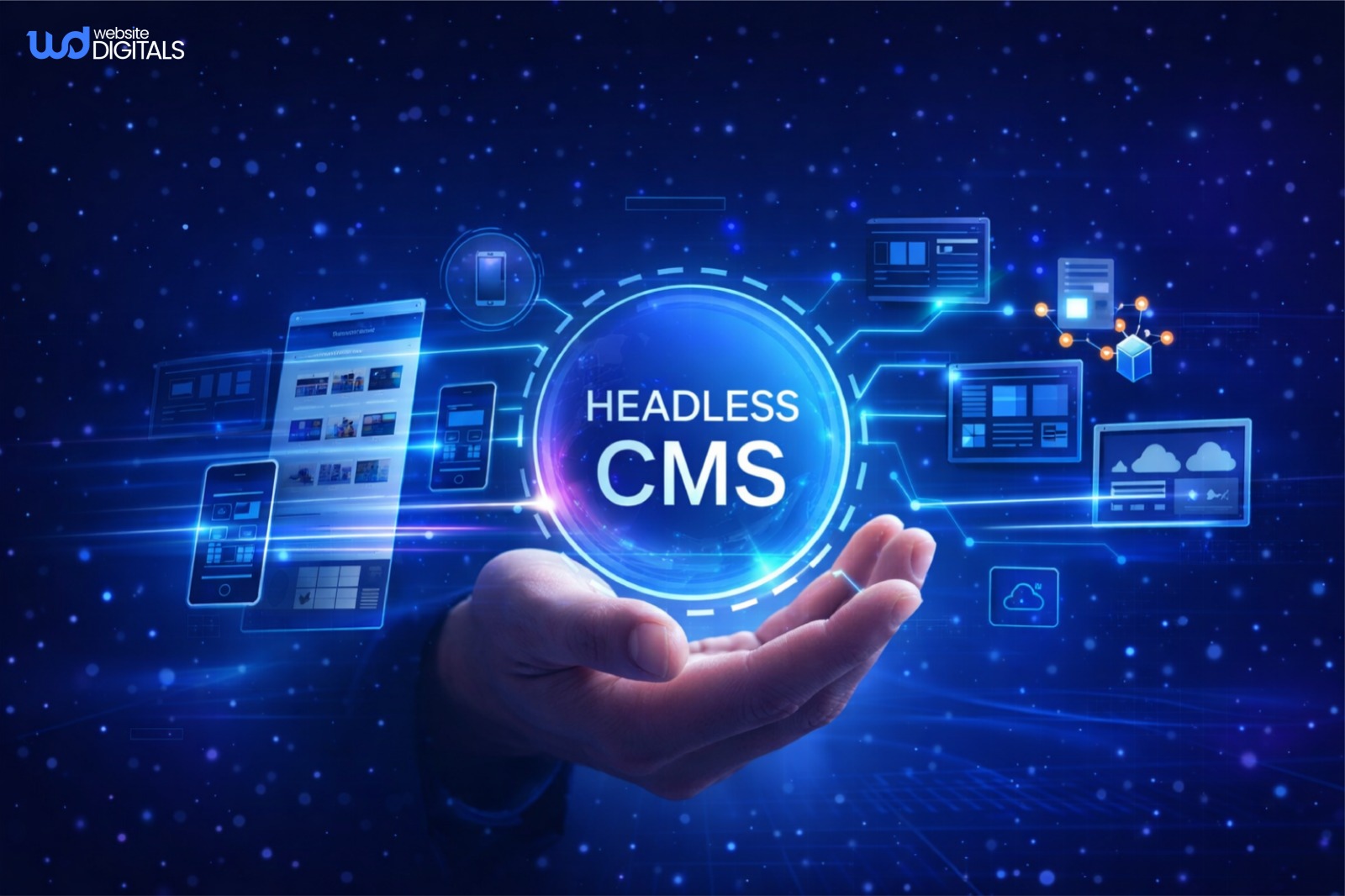
A Headless CMS uses a decoupled architecture that separates the content layer (creation and management) from the presentation layer (display).
Instead of sending content to predefined templates, it delivers it through REST API or GraphQL API to any front-end framework, including headless CMS React, Angular, or Vue setups, for greater flexibility and speed.
This API-first model gives developers freedom to craft experiences without platform limits, while content teams manage structured content in a dedicated backend.
Unlike traditional systems, where design and content are interdependent, headless architecture supports omnichannel publishing, ensuring consistent experiences across websites, apps, kiosks, digital signage, and IoT devices.
Key Benefits of Headless CMS for Multi-Platform Strategies
1. Decoupled Flexibility
By decoupling content from design, teams can leverage microservices and JAMstack setups to build faster, modular systems.
For enterprises, the front end can evolve independently without disrupting the backend, enabling redesigns, rebrands, or new channels without rebuilding from scratch.
2. Unified Content Model
A unified content model gives teams a simple way to create content once and reuse it across every platform, whether it’s for web development, mobile apps, or emerging digital channels.
Because everything is stored as structured content, it connects seamlessly with different delivery layers, reducing duplication and minimizing errors.
This approach becomes the backbone of digital experience platforms (DXPs), helping brands maintain consistent messaging across all touchpoints.
Industry Tip: Why Headless CMS Works Perfectly for Restaurants
Restaurants manage content across websites, mobile apps, online ordering portals, delivery platforms, QR menus, kiosks, and digital displays.
Handling this with a traditional CMS becomes time-consuming and inconsistent.
If you’re exploring cms development for restaurants, headless architecture is a major advantage, particularly when understanding how headless cms vs traditional cms impacts multi-platform menu management.
Why This Matters for Restaurants
- Instant menu updates across all platforms (apps, kiosks, POS screens, websites).
- Consistent promotions published once and deployed everywhere.
- Seamless integration with reservation systems, loyalty apps, delivery APIs, and POS systems.
- Better performance during busy periods thanks to CDNs and API-driven data delivery.
- Multi-location support, allowing franchises to maintain global brand consistency while letting individual locations update localized content.
A headless CMS gives restaurant brands the content agility they need in a fast-moving, multi-platform environment.
3. API-Driven Integration
The strength of a headless CMS lies in its APIs.
Using REST API or GraphQL API, content moves easily between systems like CRM, PIM, DAM, and marketing tools, building a composable ecosystem.
For developers, it simplifies integration with modern front-end frameworks; for marketers, it accelerates campaign launches.
The API-first model ensures consistency and faster deployments across enterprise environments.
Pro Tip: Prioritize API Governance from Day One
|
When adopting a headless CMS, don’t overlook API governance and documentation. Clearly defining access control, versioning, and data structure ensures your content scales safely and consistently. |
4. Performance & Scalability
With headless architecture, content delivered via CDNs and microservices ensures faster load times and reliability.
Platforms such as Contentful, Strapi, Acquia, and Contentstack demonstrate how distributed infrastructure boosts performance optimization and handles high traffic without downtime.
This scalability ensures stable user experiences across platforms.
5. Operational Efficiency
Without maintaining multiple CMS instances, teams achieve higher operational efficiency.
A headless CMS supports centralized content governance, version control, and efficient workflows.
Marketers focus on storytelling while developers manage the front end independently, reducing delays and improving time-to-market for new content.
Real World Case Study:
|
When IKEA adopted a headless CMS to improve its online customer experience. They reported a 30% increase in user engagement and faster loading times on their e-commerce platform. |
6. Developer Autonomy
Headless architecture grants developers full autonomy to use preferred tools, React, Vue, Next.js, or custom web development stacks, without backend restrictions.
Supporting continuous integration and deployment, it enhances developer productivity, enabling faster rollouts and minimizing technical debt.
7. Security & Compliance
By separating the presentation layer from the backend, a headless CMS reduces its attack surface.
No data is exposed via templates or plug-ins, improving security compliance.
Platforms like Strapi and Acquia follow SOC 2 and ISO 27001 standards.
Built-in access controls and content governance ensure secure operations with full audit visibility, ideal for enterprise-grade systems.
What Is the Difference Between Headless and Traditional CMS?
|
Aspect |
Traditional CMS |
Headless CMS |
|
Structure |
Coupled setup |
Decoupled architecture |
|
Delivery |
Web-only |
Omnichannel publishing |
|
Integration |
Plugin-based |
API-first (REST, GraphQL) |
|
Flexibility |
Limited |
Any front-end framework |
|
Performance |
Slower |
CDN & microservices for speed |
|
Scalability |
Hard to expand |
Easily scalable |
|
Security |
Higher risk |
Strong security compliance |
|
Maintenance |
Frequent updates |
Future-proof architecture |
Headless CMS Evaluation Checklist
|
Evaluation Criteria |
What to Look For |
Why It Matters |
|
API Capabilities |
Support for REST & GraphQL API |
Enables flexible integrations |
|
Scalability |
Cloud-based, modular infrastructure |
Handles traffic spikes |
|
Security Compliance |
SOC 2, ISO 27001, GDPR readiness |
Enterprise-grade trust |
|
Ease of Integration |
Compatible with CRM, DAM, and PIM |
Reduces development effort |
|
Content Modelling |
Support for structured content |
Future-proof architecture |
|
Developer Tools |
SDKs, CLI, sandbox environments |
Improves developer productivity |
Conclusion: Embracing the Future with Headless CMS
The benefits of headless CMS go beyond flexibility; it gives your team the freedom to create once and deliver everywhere.
By separating content from presentation, you get a system that’s faster, more secure, and built to grow with your business.
As your digital needs expand across new platforms, a headless setup helps you stay organized, consistent, and ready to move quickly when opportunities arise.
If you’re considering a CMS upgrade, our team at Website Digitals can help you plan and build a headless solution that fits your goals. Get in touch at info@websitedigitals.com or call (646)-222-3598, we’ll help you make your content work smarter, not harder.
FAQs
How does Website Digitals help with CMS development?
At Website Digitals, we design and build scalable headless CMS solutions customized to your business needs. Our experts specialize in CMS development, helping enterprises integrate API-first systems that boost efficiency, flexibility, and growth.
Why choose Website Digitals for headless CMS implementation?
We combine strategy, design, and engineering to deliver future-ready CMS architectures. Whether it’s migration, setup, or optimization, Website Digitals ensures seamless implementation and ongoing support, so your team can focus on creating, not managing.
How does a headless CMS differ from a traditional CMS?
A headless CMS uses a decoupled architecture that separates content from presentation, unlike traditional CMS platforms that tie both together. This structure allows teams to publish content to any front-end framework or device through APIs, making it faster, more flexible, and easier to scale.
Why use a headless CMS for my business?
Adopting a headless CMS gives your business greater control over content delivery, supports omnichannel publishing, and reduces time-to-market. It helps developers build with modern tools while marketers can manage structured content independently, ideal for enterprises focused on scalability and performance.
How does a headless CMS improve website performance?
A headless CMS enhances performance by serving content through CDNs, microservices, and optimized API-first integrations. This reduces load times, improves reliability, and ensures faster updates across multiple platforms without heavy template rendering.
Who are some leading headless CMS service providers in the U.S.?
Top providers include Contentful, Strapi, Acquia, and Contentstack. Each offers robust APIs, security compliance, and scalability tailored to enterprise needs. Choosing the right one depends on your content strategy, tech stack, and integration goals.