Why the Best Ecommerce Platform for B2B Needs Customization and Scalability
Can a B2C-style, out-of-the-box ecommerce platform ever be considered the best ecommerce platform for B2B businesses juggling 10,000 SKUs, custom contracts, and international buyers?
The truth is, it can’t.
For current B2B companies, customization and scalability are not optional features.
They are essential to delivering smooth digital experiences, meeting buyer expectations, and ensuring long-term growth.
As the B2B ecommerce industry continues to grow, traditional platforms are struggling to keep up.
With 75% of B2B buyers now preferring ecommerce sites and the market projected to reach $36.2 trillion by 2026, the demand for tailored digital experiences has never been higher.
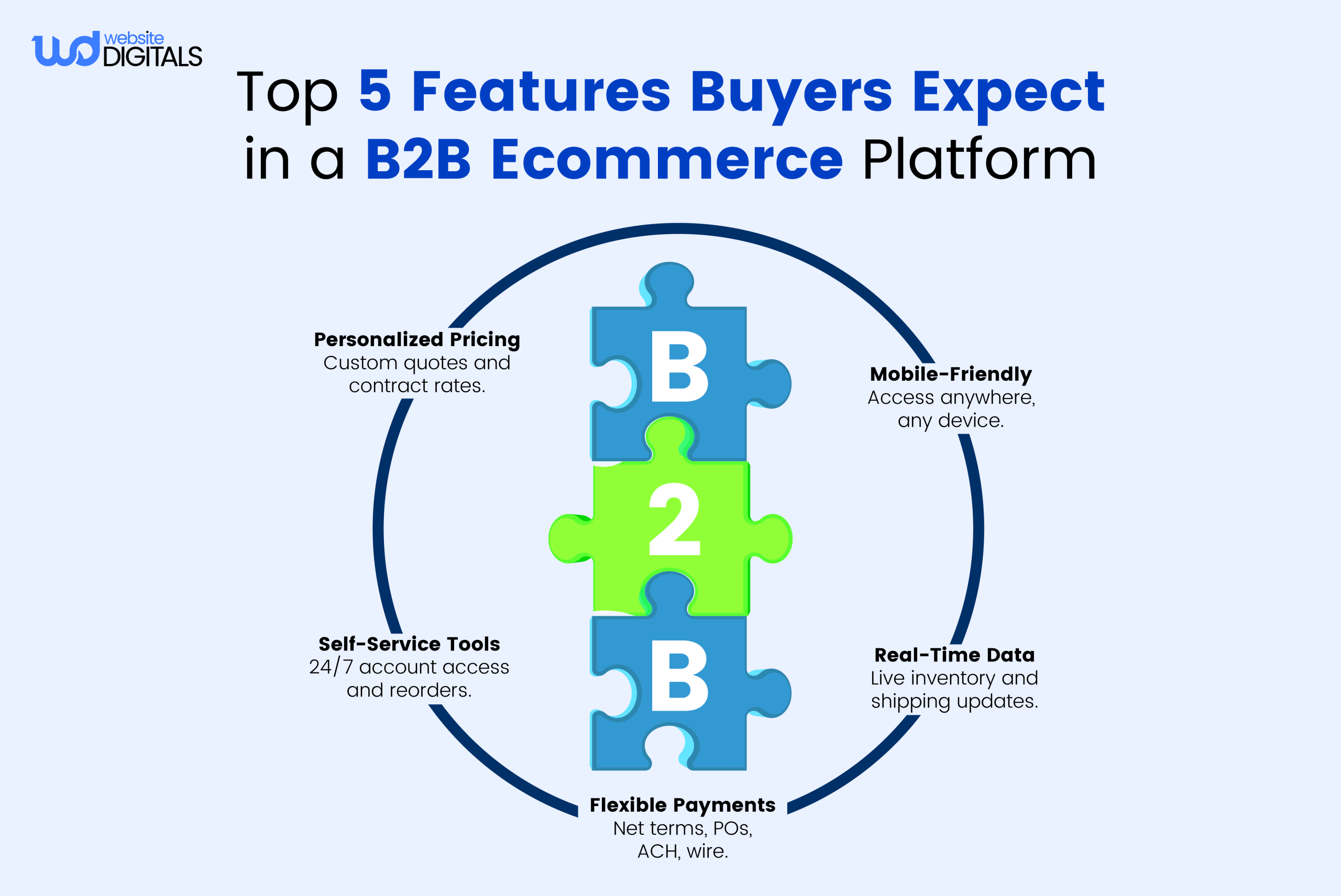
The modern B2B buyer expects a journey that feels as smooth as B2C shopping, complete with personalized pricing, self-service options, and real-time visibility.
This makes a well-defined digital commerce strategy critical for companies that want to align technology with buyer expectations and operational efficiency.
That’s why companies shifting from traditional sales models to digital channels need platforms that can adapt to unique business models and scale alongside growth.
Key Takeaways
- B2B ecommerce is experiencing rapid growth, with a projected market value of $36.16 trillion by 2026.
- Customization and scalability are crucial for B2B ecommerce success.
- B2B buyers expect smooth digital experiences, similar to those in B2C ecommerce.
- The right ecommerce solution must balance complex wholesale requirements with user-friendly interfaces.
- B2B companies need platforms that can adapt to their unique business models and growth trajectories.
How B2B Ecommerce Is Changing
B2B ecommerce is undergoing a major transformation, with businesses now expected to deliver intuitive, smooth, and personalized digital experiences.
|
As Lance Olwide, B2B General Manager at BigCommerce, predicted, “Ecommerce will become even more central to the B2B buying journey.” |
This reflects the reality that ecommerce platforms are no longer just online storefronts; they have become the operational backbone for B2B interactions, from quote requests and reordering to invoicing and payments.
Growth of Digital Commerce
The rapid rise of digital commerce is reshaping how B2B companies operate. To meet buyer demands, businesses are prioritizing ecommerce solutions that serve as a central hub for critical interactions, streamline operations, and enable long-term scalability.
Changing Buyer Expectations
Modern B2B buyers are bringing B2C-style expectations into their professional purchases. They now expect:
- 24/7 access to account details and order history
- Custom pricing with self-service ordering options
- Mobile access across devices and locations
- Personalized experiences based on industry, company size, and buying patterns
- Real-time visibility and proactive communication throughout the purchasing journey
To meet these expectations, B2B companies need platforms with robust customization capabilities.
Those who adopt adaptable solutions not only improve customer satisfaction but also maintain a competitive edge in a fast-growing market.
Why Customization and Scalability Matter for B2B Ecommerce Success
Platforms must provide both customization and scalability to drive long-term success in the B2B ecommerce industry. Tailoring a solution to business needs while ensuring it can grow alongside the company is critical for ongoing viability.
For many organizations, this means choosing an enterprise ecommerce platform that combines flexibility with performance.
The Business Case for Customizable Solutions
Customizable B2B commerce software, when paired with skilled web development, helps businesses create unique digital experiences that reflect their brand identity and operational requirements.
It enables companies to enhance customer engagement, streamline processes, and stand out in crowded markets.
Examples of flexibility in action include:
- Custom pricing models tailored to specific customers or contracts
- Role-based approvals
- Customer-specific catalogs
Beyond the front end, customization also enables integration with ERP, CRM, CPQ, or PIM systems. This ensures the platform can keep pace with new technologies and processes.
Such adaptability is especially important as businesses respond to changing regulations, emerging channels, and pricing volatility.
When applied thoughtfully, customization reduces friction, builds trust, and prevents the platform from becoming outdated.
How Scalability Supports Long-Term Growth
Scalability ensures that as B2B companies grow, their platforms can handle more products, larger customer bases, and higher transaction volumes without adding unnecessary operational overhead.
A scalable ecommerce architecture supports this growth by allowing businesses to expand functionality in stages, maintain strong performance under heavy demand, and prepare for new market opportunities.
Key advantages include:
- Enable businesses to start lean with core features and expand functionality as they grow.
- Maintain performance and user experience even as transaction volumes increase.
- Support geographic expansion by managing multiple currencies, languages, and tax rules within a single implementation.
By choosing a platform that balances customization with scalability, B2B businesses can adapt to new opportunities, sustain performance at scale, and remain resilient in a competitive marketplace.
This naturally leads into the next step: understanding the essential features that make these capabilities work in practice.
|
Key Insight: Customization and scalability aren’t just technical features. They are strategic enablers. The right balance helps B2B companies lower operational costs, respond quickly to market changes, and deliver experiences that keep buyers coming back. |
What Essential Features Matter Most in the Best Ecommerce Platform for B2B
The best B2B ecommerce platforms go beyond simple storefronts. They provide capabilities designed for the complexities of wholesale, distribution, and manufacturing, ensuring smooth operations and stronger customer relationships.
Access Restriction and User Permission Controls
Role-based permission or access controls, account hierarchies, and audit logs help businesses manage sensitive data.
Features like SSO and multi-factor authentication ensure only authorized users can view or edit information, protecting data integrity and compliance.
Custom Pricing and Payment Options
B2B sales rarely fit a single price tag. Platforms should support:
- Tiered and contract-based pricing
- Quote/RFQ workflows
- Net terms and purchase orders
- ACH, wire, or split payment options
These options help align pricing and payments with each customer’s unique agreements.
Order Management Capabilities
Efficient order handling directly impacts buyer satisfaction. Partnering with an experienced ecommerce development consulting company can help businesses design advanced order management processes that cover:
- Automated routing and inventory allocation
- Multi-warehouse fulfillment
- Backorders, partial shipments, and RMAs
- EDI and shipping integrations
This reduces errors, accelerates fulfillment, and lowers operational overhead.
Integration with Business Systems
Strong integration ensures a unified view of operations and customer data. One of the most critical aspects for modern platforms like headless ecommerce Shopify is ERP integration, which keeps product details, inventory, and orders synchronized across systems. Other essential connections include:
- ERP sync for product, inventory, and orders
- CRM connectivity for unified customer insights
- Warehouse/logistics systems for fulfillment and tracking
- PIM/CPQ/tax systems for product accuracy and compliance
- API-first architectures for flexible integration with emerging tools
- Punchout (cXML/OCI) to connect with procurement systems
Integrated data reduces manual entry, cuts errors, and provides a single source of truth for decision-making.
|
Implementation Tip: Not every feature needs to be activated from day one. Start with the essentials and work with your platform or a custom ecommerce app development company to add advanced functions as your business grows. |
Best Ecommerce Platforms for B2B with Strong Customization Options
Choosing the right platform depends on how well it can adapt to the complexity of your operations.
Below are examples of leading B2B ecommerce solutions known for their flexibility and depth of customization.
BigCommerce B2B Edition
BigCommerce B2B Edition provides a ready-made framework for companies moving into wholesale while still offering flexible configurations.
It supports account hierarchies and tailored pricing, which makes it suitable for businesses balancing both B2C and B2B sales. Key highlights include:
- Customization focus: Price lists, company accounts, and advanced B2B checkout controls.
- Best for: Mid-to-large distributors and manufacturers needing out-of-the-box B2B tools with marketplace integrations.
- Considerations: Some advanced workflows may rely on third-party apps.
OroCommerce
OroCommerce stands out with its open-source architecture, giving businesses complete control over workflows and system behavior.
It’s often chosen by enterprises with unique sales processes that can’t be met by packaged solutions. Key highlights include:
- Customization focus: Workflow modeling, custom catalogs, and open-source flexibility.
- Best for: Enterprises with highly specific processes that require deep technical control.
- Considerations: Open-source approach can mean higher maintenance and hosting responsibilities.
Shopify Plus
Shopify Plus extends Shopify’s core platform with wholesale tools that support larger catalogs and B2B-specific checkouts.
It is a good choice for companies already familiar with Shopify that want to add B2B without moving to a completely new system. Key highlights include:
- Customization focus: Price lists, B2B checkout customization, and integrations with ERP/CRM systems.
- Best for: Growing B2B companies already using Shopify who want to extend into wholesale.
- Considerations: May require custom apps or development for more complex B2B use cases.
Sana Commerce
Sana Commerce is built to run closely with ERP systems, particularly Microsoft Dynamics and SAP.
By using ERP data directly, it reduces duplication and ensures buyers always see accurate pricing, stock, and account information. Key highlights include:
- Customization focus: ERP-driven catalogs, pricing, and stock visibility.
- Best for: Businesses already running Microsoft Dynamics or SAP seeking ERP-centric ecommerce.
- Considerations: Best suited for companies where ERP is the single source of truth; less flexible outside that ecosystem.
|
Key Consideration: When comparing B2B ecommerce platforms, don’t just evaluate features in isolation. Consider how well each option aligns with your existing systems, technical resources, and long-term growth plans. |
Platforms That Excel at Scalability for Growing B2B Businesses
Growing B2B businesses require ecommerce platforms that can scale efficiently. Scalability is a critical factor that determines the success and longevity of a B2B ecommerce business.
A scalable ecommerce platform can handle increased traffic, larger product catalogs, and more complex operations without compromising performance.
Znode
Znode is a scalable ecommerce platform designed for B2B businesses. It offers a range of features that support business growth, including flexible product management and advanced order processing.
With Znode, businesses can easily manage complex product catalogs and scale their operations as needed.
Sitecore OrderCloud
Sitecore OrderCloud is a cloud-based B2B ecommerce platform that excels at scalability. It provides a robust set of features, including advanced order management and customizable product catalogs.
Sitecore OrderCloud enables businesses to scale their ecommerce operations efficiently and effectively.
SAP Commerce Cloud
SAP Commerce Cloud is a comprehensive ecommerce platform that supports scalability for B2B businesses.
It offers a range of features, including product catalog management, order processing, and customer management.
SAP Commerce Cloud enables businesses to scale their ecommerce operations and improve customer experiences.
BetterCommerce
BetterCommerce is a composable commerce platform designed for modern B2B businesses. It offers an API-first and modular approach that simplifies complex requirements.
With over 100 out-of-box features and easy integrations with ERP, CRM, and other utilities, BetterCommerce enables businesses to launch quickly and scale efficiently.
- Composable Architecture: Allows businesses to implement, replace, and scale individual commerce components independently.
- API-First Approach: Enables error-less integration with existing business systems and flexibility to adapt as technology stacks change.
- Complex Product Catalogs: Excels at handling intricate product catalogs and pricing structures that grow more sophisticated as businesses expand.
- Modular Design: Allows businesses to start with essential components and add functionality incrementally as they scale.
|
Growth Insight: Scalability is not just about handling more traffic or products. The right platform should grow with your processes, integrations, and customer expectations without adding unnecessary complexity. |
How to Assess the Total Cost of Ownership for B2B Platforms
To make an informed decision, B2B businesses must consider the total cost of ownership for ecommerce platforms.
This encompasses not just the initial platform fees but also various other costs associated with development, maintenance, integrations, updates, and training.
Platform Fees and Pricing Models
The initial step in understanding the total cost of ownership is to examine the platform fees and pricing models.
Different ecommerce platforms have varying pricing structures, including subscription-based models, transaction fees, and costs for additional features or user licenses.
Businesses should carefully evaluate these costs to determine the most cost-effective solution.
Hidden Costs to Consider
Beyond the obvious platform fees, several hidden costs can significantly impact the total cost of ownership. These include:
- Implementation and Customization Costs: Often exceeding the platform license itself, particularly for complex businesses.
- Ongoing Maintenance and Support: Expenses for updates, security patches, and technical troubleshooting.
- Integration Costs: Initial setup and ongoing maintenance for integrating with existing business systems like ERP, CRM, and inventory management software.
- Training and Onboarding: Essential for staff and customers to ensure effective use of the platform.
- Performance Optimization and Scaling: Costs associated with maintaining performance as the business grows.
|
Cost Insight: When evaluating total cost of ownership, look beyond upfront fees. Factor in long-term expenses like integrations, upgrades, and training to avoid underestimating the real investment. |
Choosing Between Cloud vs. On-Premise B2B Ecommerce Platforms
|
Step |
Action |
Focus |
|
Define Goals |
Set business outcomes & KPIs |
Growth, speed-to-market, compliance |
|
Set Non-Negotiables |
List must-have requirements |
Compliance, security, hosting |
|
Assess Complexity |
Review business needs |
Pricing models, catalog size, workflows |
|
Map Integrations |
Document system connections |
ERP, CRM, WMS, tax, real-time vs batch |
|
Project Growth |
Forecast future needs |
Traffic, orders, global expansion, performance |
|
Choose Model |
Decide cloud vs on-premise |
Cloud = vendor-managed, On-prem = full control |
|
Compare TCO |
Build cost models (3 yrs) |
Licenses, infra, support, staff |
|
Shortlist Options |
Filter based on fit |
Goals, integrations, budget, skills |
|
Run Proof of Value |
Pilot test (4–6 weeks) |
Pricing, integrations, load performance |
|
Assess Risks |
Identify vulnerabilities |
Vendor lock-in, upgrades, exit strategy |
|
Score with Matrix |
Weighted scoring system |
Functionality, cost, scalability, compliance |
|
Decide & Rollout |
Finalize and plan execution |
Migration, integration, KPIs, 90-day roadmap |
How to Choose the Right B2B Ecommerce Platform for Your Business
With many B2B ecommerce platforms available, the challenge isn’t finding options but identifying the one that matches your operations and growth goals.
The right choice directly impacts efficiency, customer satisfaction, and long-term scalability.
Before making a decision, focus on two key areas of evaluation: your business requirements and the platform’s security and support.
Assessing Your Business Type and Needs
Start by mapping your business model and requirements. Consider the scale of your operations, the complexity of your catalog, and the structure of your sales processes. Key areas to evaluate include:
- Custom pricing agreements or contract-based sales
- Complex product configurations and bundling options
- Shipping workflows across multiple regions or warehouses
This process helps you shortlist platforms that align with your operational realities rather than adopting a one-size-fits-all solution.
Evaluating Platform Security and Support
Security and vendor support are often overlooked but critical for B2B success. Look for platforms that provide:
- PCI compliance, data encryption, and secure authentication (e.g., MFA, SSO)
- Audit trails and user permission controls for compliance requirements
- Responsive vendor support, ideally with B2B onboarding resources and 24/7 assistance
A platform with strong security practices and reliable support reduces risk and ensures your team can resolve issues quickly, keeping operations running smoothly.
|
Selection Insight: Don’t just compare features on paper. Evaluate how well the platform aligns with your workflows, team capabilities, and long-term growth plans to avoid costly mismatches. |
Investing in a Future-Proof B2B Ecommerce Solution
B2B ecommerce is no longer optional. It is now a core driver of growth, efficiency, and global reach. The right platform does more than process orders.
It supports faster reordering, more accurate pricing, and the ability to expand into new markets with confidence.
When evaluating options, prioritize platforms that combine scalability such as multi currency, multi language, and high volume support with customization such as contract pricing, role based permissions, and ERP or CRM integration.
These capabilities ensure the solution adapts as your business model, customer base, and market conditions change.
Future proofing is not about a single adoption decision. It is about choosing a platform that supports continuous improvement.
Businesses that invest in flexible and integration ready platforms are better positioned to manage developing regulations, new sales channels, and shifting buyer expectations.
For long term resilience, leaders should move beyond short term fixes and view ecommerce as a strategic investment.
This decision will shape customer relationships, operational efficiency, and competitiveness for years to come.
Not sure which is the best ecommerce platform for B2B to fit your business needs? Start a free consultation with Website Digitals. Call us at (646) 222-3598 or email info@websitedigitals.com.
FAQs
What are the key features to look for in a B2B ecommerce solution?
When evaluating a B2B ecommerce solution, consider features such as custom pricing, access restriction, and order management capabilities that cater to the unique needs of B2B buyers and businesses.
How do I determine the total cost of ownership for a B2B ecommerce platform?
To calculate the total cost of ownership, consider not only the platform fees and pricing models but also hidden costs such as customization, integration, and support expenses.
Can a B2B ecommerce platform support my business's long-term growth?
A scalable B2B ecommerce platform can support long-term growth by adapting to changing business needs, handling increased traffic, and integrating with new systems and tools.
How do B2B ecommerce platforms handle custom pricing and payment options?
Many B2B ecommerce platforms offer custom pricing and payment options that allow businesses to tailor their pricing and payment terms to specific customers or customer groups.
What are the benefits of integrating my B2B ecommerce platform with other business systems?
Integrating your B2B ecommerce platform with other business systems, such as ERP and CRM systems, can streamline operations, improve data accuracy, and enhance the overall customer experience.
How do I assess the security and support offered by a B2B ecommerce platform?
When evaluating a B2B ecommerce platform, consider the level of security and support offered, including features such as data encryption, secure payment processing, and responsive customer support.