Boost website leads overnight by fixing friction, improving clarity, and adding strong CTAs, turning your site into a high-converting, lead-generating asset.
How 7 Small Website Fixes Can Increase Website Leads Overnight

Many businesses chase new traffic, assuming volume is the key to growth.
But what if you could double your leads without spending a dollar more on ads?
The real bottleneck isn’t reach; it’s conversion leaks on your existing pages.
And the cost of ignoring them is steep: 74% of companies say converting leads is their top priority, yet most still lose prospects due to unoptimized user experiences.
Peter Drucker famously said,
“What gets measured gets managed.”
And nowhere is this more true than in inbound marketing, because if you’re not tracking user behavior, you’re not managing your leads.
Today, we’ll expose 7 simple and high-impact fixes you can implement immediately to increase website leads and turn anonymous visitors into qualified prospects.
Key Takeaways
|
Why Your Website Isn’t Generating Leads (Even With Steady Traffic)
Before diving into the solutions, we must understand the core issues.
If you are asking, “Why isn’t my website generating leads?“, the answer almost always lies in one of three areas: friction, clarity, or trust.
These are the symptoms of an underperforming digital asset.
- High Friction: The path to conversion is too complicated. This includes long forms, confusing navigation, or slow page loads. Prospects give up when the effort outweighs the perceived value.
- Low Clarity: Visitors don’t immediately grasp what you offer, who it’s for, or what the next step is. Your persuasive copywriting is failing to connect within those critical first few seconds.
- Missing Trust: The website lacks visible credibility signals, verifiable social proof, or looks unprofessional, leading to high abandonment. If they don’t trust you, they won’t convert.
A major culprit is that your current setup might be optimized for views rather than action, resulting in a low lead capture optimization score.
If you’re wondering how to improve a website that isn’t converting, the first step is fixing these core friction points so your website can finally operate as a true sales tool.
Your website needs a tune-up to truly address the problem of your website not working as a primary sales tool.
Understanding What Influences Website Conversions
Conversion isn’t an accident; it’s the predictable outcome of persuasion supported by strong user experience (UX).
According to the Fogg Behavior Model, a user takes action when three elements align:
- Motivation
- Ability
- Prompt.
In conversion optimization, these translate seamlessly into practical levers you can influence:
-
Motivation
The visitor must feel that their need, desire, or problem is clearly understood and meaningfully addressed by your offering.
-
Ability
The path to taking action must be effortless.
In web terms, this means reducing friction, simplifying steps, eliminating confusion, and ensuring the experience feels intuitive.
-
Prompt
The visitor must be guided at the right moment with a clear, compelling call-to-action (CTA) that tells them exactly what to do next.
Note:
|
Every “small fix” discussed above is designed to strengthen one or more of these behavioral triggers. When applied systematically, these adjustments form the foundation of effective lead conversion optimization and can transform an underperforming website into a predictable lead-generation engine. |
7 Common “Small Fixes” That Drive Big Lead Increases
These small changes, often overlooked during initial web development or routine website maintenance services, hold the key to turning the tide on low conversion rates.
They are easily implemented yet have an outsized impact on visitor behavior.
Fix #1: Clear, Benefit-Driven Headlines
A visitor spends an average of 5.94 seconds looking at a website’s main image and primary headline before deciding to stay or leave.
If your headline is vague, generic, or focused only on your company, you lose them, crippling your chance to increase website leads.
- The Fix: Transform headlines to focus entirely on the buyer intent keywords and the benefit the user gains, not just the feature you offer. Use emotional and tangible outcomes.
- Example: Change “Our Advanced Software Integration” to “Cut Your Data Entry Time in Half, Starting Today.“
Pro Tip: Run a “5-Second Test.”
|
What it is: Show your homepage or landing page to 5–10 people for five seconds and ask: “What do you think this company offers, and what should you do next?” Why it matters: If the answer isn’t clear, your headline & hero section need work. |
Fix #2: Directional, Action-Oriented CTAs
Poor CTAs are a primary reason for low conversion rates.
Your CTA should be impossible to miss and tell the user exactly what they get, not just what they do.
This is the essence of CTA optimization. Avoid the pain point of “poor CTAs.”
- The Fix: Use directional cues (whitespace, subtle arrows) and action-oriented verbs. Avoid generic terms like “Submit” or “Click Here.” The CTA should match the commitment level required.
- Example: Change “Contact Us” to “Start My Free Conversion Audit.”
If a potential client can’t find what they are looking for in seconds, they assume the whole website is complex.
Simple, intuitive navigation reduces cognitive load and allows prospects to find relevant service pages without friction.
- The Fix: Reduce the number of main navigation links to 5-7. Ensure key lead generation pages (e.g., “Pricing,” “Request a Demo,” “Solutions”) are prominent. This supports better customer journey mapping and reduces confusion from “unclear messaging.”
Real World Case Study:
|
Moz boosted conversions by 52% and generated over $1M in extra revenue by rebuilding its signup page entirely around user feedback. After interviewing customers, free-trial users, and churned members, Moz created a clearer, more compelling page and split-tested it with 5,000 visitors, resulting in a dramatic lift in PRO memberships. They then sealed the win with a smart $1 full-access offer, proving that listening to users is one of the fastest paths to higher conversions. |
Fix #4: Faster Pages & Better Mobile Experience
A fast experience signals professionalism and respect for the user’s time.
Given that the majority of initial online research starts on a phone, mobile conversion optimization is non-negotiable.
- The Fix: Run a page speed optimization audit and aggressively compress large images. Ensure all fields, buttons, and text are easily readable and clickable on all devices. If you need to improve a website’s underlying performance, this is the most essential technical fix.
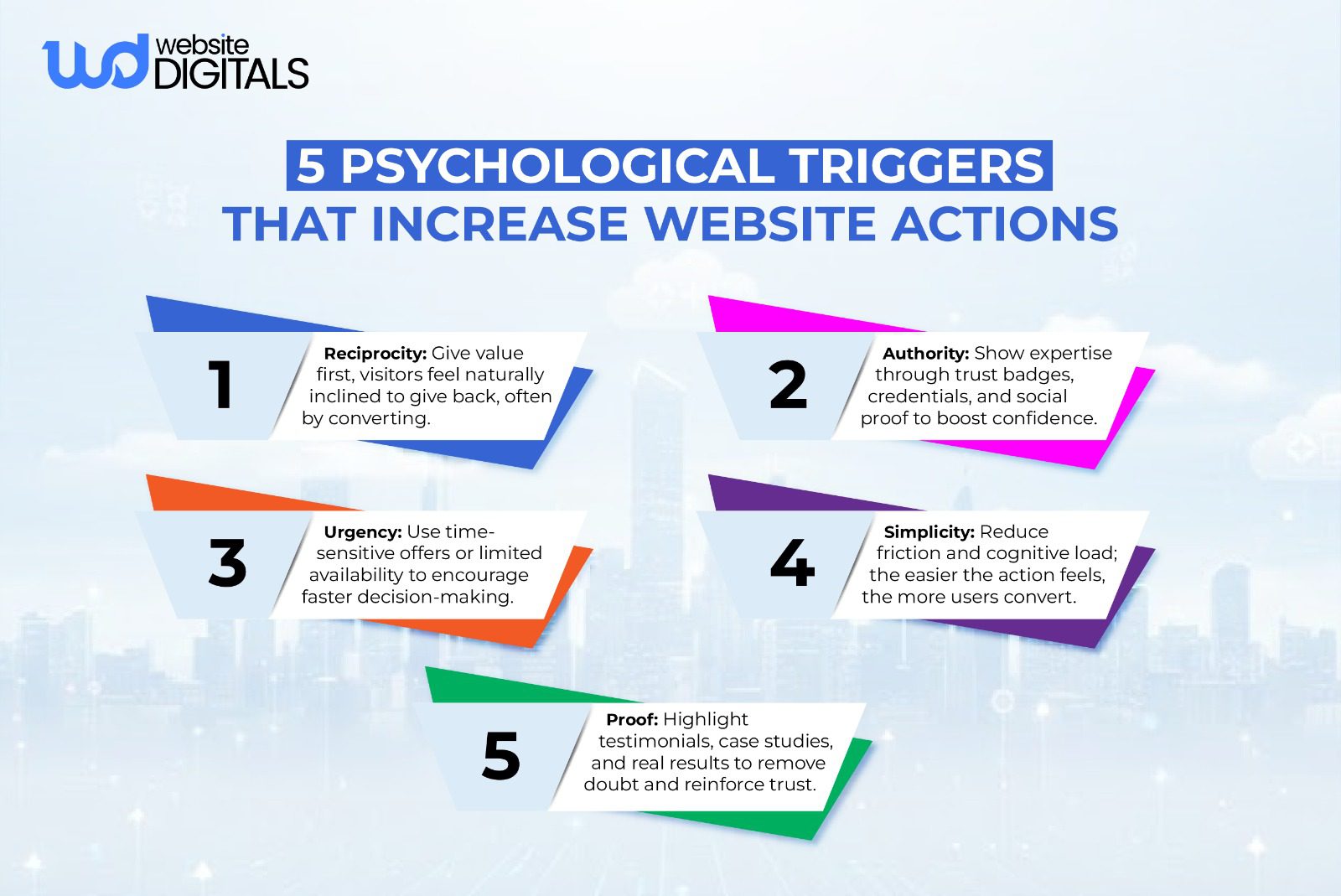
Fix #5: Stronger Trust & Social Proof
Prospects need reassurance before they hand over their contact details.
The quickest way to build it is through visible, credible signals.
- The Fix: Integrate visible trust badges (security seals, industry awards, partner logos) near CTAs and forms. Showcase short, high-quality testimonials or case study snippets as social proof. Leveraging high-quality online reviews can significantly reduce perceived risk.
Fix #6: High-Converting, Frictionless Forms
Web form optimization is a science.
Every extra field you ask for is a barrier to entry, contributing to a “slow user flow.”
Prospects are suffering from “form fatigue.”
- The Fix: Implement multi-step forms or conditional logic to only ask for essential information. Minimize fields for initial lead capture (Name, Email, Company). Only ask for a budget or job title later in the marketing automation workflows. This directly addresses the need for a landing page optimization focus.
Fix #7: Cleaner Visual Hierarchy for Focus
A clean visual design guides the visitor’s eye. If everything is shouting for attention, nothing is heard.
You need a clear path to the most important element: your conversion point.
- The Fix: Use whitespace generously. Isolate the primary headline and the CTA with high-contrast colors and ample breathing room.
Note:
|
This clarity ensures the prospect understands the value proposition and the next step in the conversion funnel metrics. This simple step often resolves the “unclear messaging” problem quickly. |
Supporting CRO Techniques That Boost These Fixes Further
Applying the seven fixes is the first step.
To sustain and maximize your results, you must embed them within a culture of continuous improvement using advanced CRO techniques.
This is how you address “low conversion rates” systemically.
-
A/B Test Key Page Elements:
Use A/B testing tools to validate your hypotheses regarding headlines, CTAs, imagery, and form lengths.
This provides the data needed to continually optimize landing pages based on real user feedback.
-
Optimize Page Speed:
Beyond the basics, conduct a full website performance improvement audit to ensure a consistently fast experience across all devices and regions.
-
Improve Mobile Layouts:
Ensure your mobile forms are a breeze to complete and that pop-ups don’t obstruct the user experience, enhancing mobile conversion optimization.
-
Simplify Form Fields:
Continuously assess if you are asking for the minimum required data to qualify a lead.
If your CRM systems can manage the data, keep the form short.
-
Analyze Heatmaps for Drop-Offs:
Tools that generate a heatmap analysis provide critical visual feedback, showing where users click, scroll, and, most importantly, where they abandon the page, aiding in user behavior analytics.
This diagnostic step reveals precisely where your conversion leaks are.
Lead Capture Enhancements That Work Alongside Small Fixes
Once your core pages are clean and converting efficiently, you can introduce advanced lead capture tactics to capture the remaining traffic that isn’t ready to commit to a primary demo request.
This is critical for robust multi-channel lead generation.
-
Use Exit-Intent Popups:
These are effective for capturing the attention of a departing visitor.
An exit-intent pop-up can offer one last chance to convert with a high-value offer, such as a gated piece of content.
-
Offer High-Value Lead Magnets:
Provide tailored, gated content (e.g., industry benchmark reports, templates) that align with the user’s intent.
These compelling lead magnets are the cornerstone of a successful inbound marketing funnel.
-
Add Chatbots for Engagement:
A chatbot lead capture system can provide instant answers, qualify leads based on predefined criteria, and guide them toward a human sales agent.
-
Build Focused Service Pages:
Create highly specific pages tailored to specific services and, critically, specific semantic keywords & LSI keywords.
This improves both search engine optimization (SEO) and conversion rate.
-
Capture Leads Across Multiple Channels:
Ensure your conversion opportunities are not limited to one area.
Use linked forms, embedded offers, and CTAs across your blog and resources to ensure robust online lead capture.
Bonus Tip:
|
Group website visitors by behavior (time on page, scroll depth, returning vs. new visitors) and trigger tailored CTAs or offers. |
How Marketing Tools Support Conversion Improvements
No discussion of effective customer acquisition strategies or digital marketing strategies is complete without acknowledging the role of technology.
The right tools are essential for monitoring performance and managing the lead flow.
-
Track Behavior With Analytics
Google Analytics is your dashboard for understanding your customer journey mapping. It helps you see which pages have high bounce rates and where users drop off in the conversion process.
-
Manage Leads With CRM Tools
Once a lead converts, the handoff must be seamless.
Strong CRM systems (HubSpot, Salesforce, Zoho) are critical for managing the flow and automating the follow-up.
-
Automate Follow-Ups
Marketing automation allows you to nurture new leads instantly, routing them through personalized workflows based on the lead magnet they downloaded or the service they showed interest in.
-
Monitor Conversion Funnels
Tracking the entire journey from visit to sale provides the full picture of sales funnel optimization. It helps identify bottlenecks and allows you to continually optimize for a better flow.
-
Leverage Buyer Intent Keywords
Use tools to track and target visitors who exhibit high buyer intent keywords, signaling they are near the purchase stage, ensuring your sales team is focused on the highest-quality leads generated through both SEO lead generation and paid ads lead generation.
Quick Wins vs. Deeper Website Improvements: What Boosts Leads Faster?
|
Quick Wins (Immediate Impact) |
Deeper Improvements (Long-Term Growth) |
|
Clear, benefit-driven headlines |
Full brand messaging overhaul |
|
Better CTA placement and wording |
Complete UX/UI redesign |
|
Simplified navigation labels |
Structural information architecture updates |
|
Page speed fixes & mobile adjustments |
Custom development for performance optimization |
|
Trust signal additions (reviews, badges) |
Comprehensive credibility framework (case studies, industry proof) |
|
Shorter, frictionless forms |
Advanced form logic, automation, and CRM integration |
|
Adjusted visual hierarchy |
Full visual system rebuild (typography, components, layouts) |
Wrapping It Up!
Improving an underperforming website isn’t luck, it’s the result of small, data-backed changes that quickly lift performance.
By applying the 7 fixes and core CRO methods, you turn your site from a static brochure into a high-value asset built to consistently increase website leads.
If unclear messaging, weak CTAs, or low conversions sound familiar, it’s time for a focused website redesign or maintenance audit.
For expert help, our team at Website Digitals is ready to optimize your site for measurable growth. Contact us at info@websitedigitals.com or call (646)-222-3598 to start increasing your leads today.
FAQs
How does Website Digitals help businesses increase website leads?
Website Digitals uses data-driven CRO, UX improvements, and targeted website redesign strategies to remove friction and attract higher-quality conversions, helping businesses consistently increase website leads without increasing ad spend.
When should I hire Website Digitals for web maintenance or a redesign?
If your site shows signs like low conversions, outdated design, slow performance, or unclear messaging, Website Digitals can step in with a focused redesign or maintenance plan to restore performance and improve lead generation.
How can I increase website leads quickly?
Start by improving clarity, strengthening CTAs, reducing friction, and optimizing forms. A/B testing and heatmaps reveal exactly what drives more leads.
Why isn’t my website generating leads?
Common reasons include confusing messaging, weak CTAs, slow speed, poor mobile UX, or lack of trust signals, any of which can stop visitors from taking action.
What are the best ways to get more website conversions?
Simplify the user journey, improve page load speed, use compelling CTAs, add social proof, and test variations regularly to find what converts best.
How do you optimize a website for lead generation?
Focus on clear messaging, intuitive navigation, fast performance, strong offers, and CRO tools like session recordings and A/B testing.
How does CRO improve lead generation?
CRO identifies barriers in the user journey and systematically removes them, leading to higher engagement, stronger CTAs, and more completed conversions.