How Intranet Portal Development Can Improve Team Collaboration and Communication
Growth turns simple communication into chaos.
What works for five people quickly breaks at fifty as messages multiply, tools pile up, and clarity fades.
When that happens, the effects are immediate:
- Updates get missed
- Engagement drops
- And teams that once worked closely together slip into silos, even though they’re communicating more than ever.
That disconnect has real consequences.
Gallup found that highly engaged teams are 17% more productive than those who feel out of the loop. This is where intranet portal development comes in, not to add another tool, but to restore structure.
In this blog, we’ll explore how the right intranet portal helps growing teams stay aligned, informed, and connected as complexity increases.
Key Takeaways
|
What Is Intranet Portal Development?
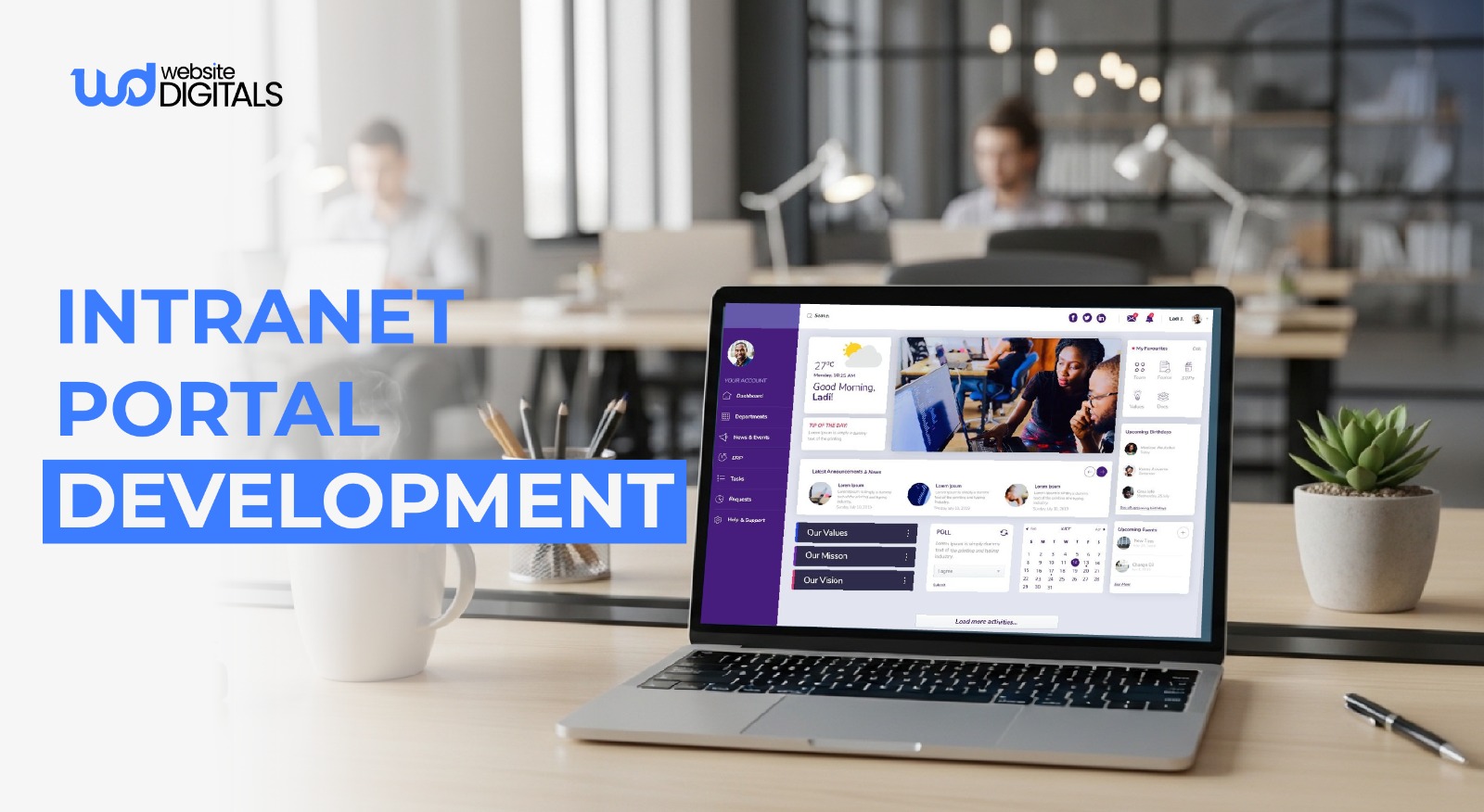
Intranet portal development is the process of creating a private, secure internal platform where employees can access everything they need to do their jobs, without jumping between multiple tools.
Think of it as your company’s internal website, accessible only to employees and approved users, much like client portal development, but focused entirely on internal teams rather than external users.
Unlike a public website, an intranet portal is built entirely for internal use. It typically includes:
- Company policies and documents
- Internal announcements and updates
- Employee directories
- Project files and collaboration spaces
- Training materials and internal tools
A well-developed intranet portal is usually the first place employees visit when they start their workday.
Why This Matters
|
According to McKinsey, employees spend nearly 20% of their workweek searching for internal information or tracking down colleagues for help. That’s a full day lost every week!! |
Note
|
If employees ask, “Where do I find this?” more than once a day, your internal systems aren’t working for them. |
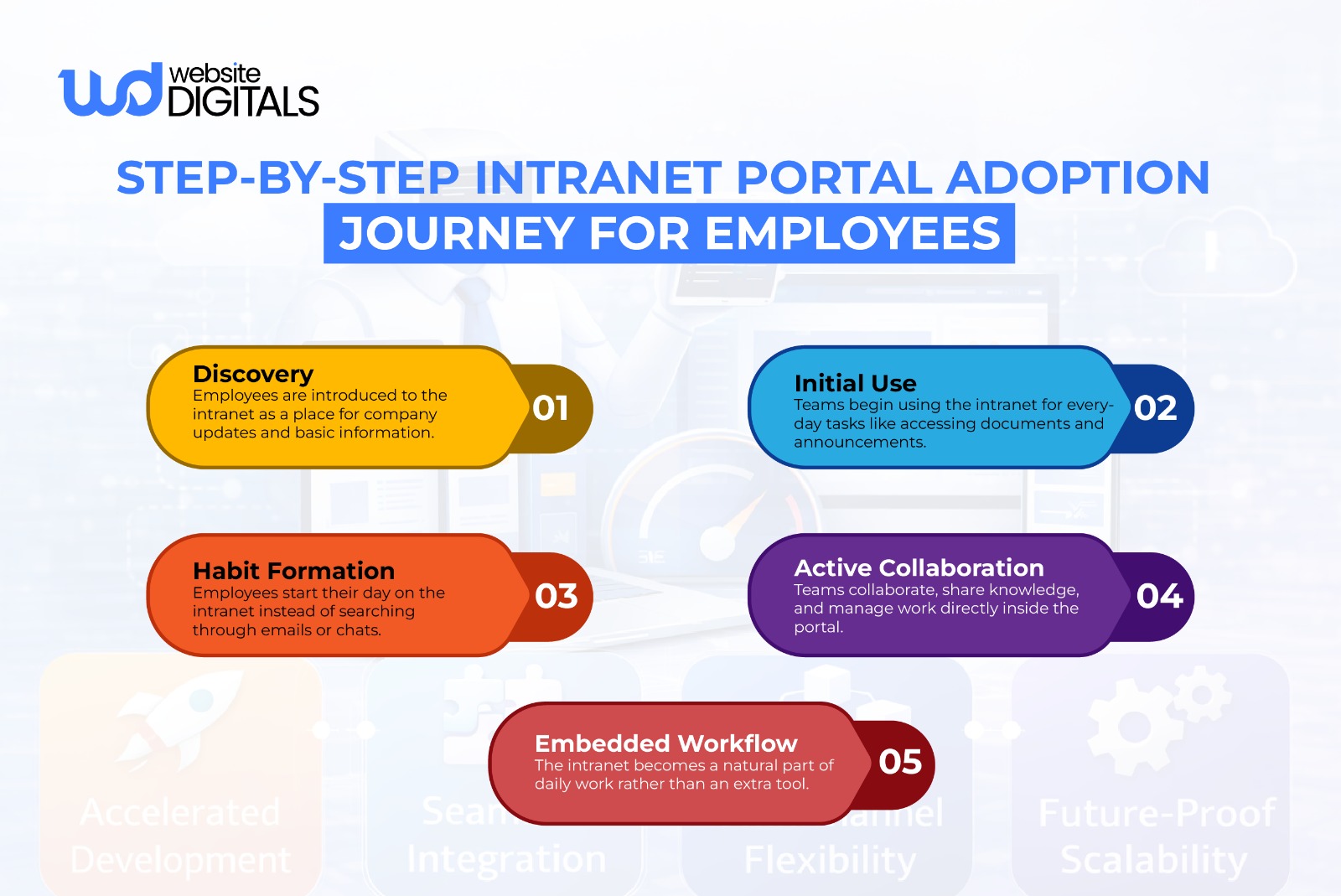
How Intranet Portals Improve Day-to-Day Team Communication
Most communication breakdowns happen because messages and updates are scattered across emails, chats, meetings, and shared drives.
Intranet portal development addresses this by giving communication a permanent and visible home.
An intranet portal functions as an internal communication system that keeps updates accessible, organized, and easy to reference.
-
Streamlined Team Communication
Instead of relying solely on email, intranet portals create structured spaces for communication.
Company-wide announcements live in one place, department updates stay within relevant teams, and project discussions remain connected to project files.
This structure reduces noise and helps employees focus on information that matters to their work.
-
Consistent Information Sharing
Inconsistent information is one of the biggest barriers to collaboration.
Different document versions, verbal updates, and unofficial sources create confusion.
An enterprise content portal solves this by maintaining a single source of truth.
When content is updated, everyone sees the same version, and outdated information is removed automatically.
Research shows that organizations with centralized knowledge systems can reduce duplicate work by up to 35 percent simply by improving information consistency.
Real-World Scenario: Improving Internal Communication
|
A mid-sized professional services company struggled with internal communication after expanding to remote work. Updates were shared through emails and meetings, but employees often missed important changes. After implementing an intranet portal, leadership centralized announcements and policies in one place. Employees quickly learned where to check for updates, and managers spent less time repeating information. Within a few months, the company reported fewer clarification requests and smoother communication across teams. |
-
Reduced Communication Gaps
Communication gaps often appear between departments, locations, and work schedules. Remote employees miss hallway conversations, and different shifts operate with incomplete information.
A digital workplace platform helps close these gaps by ensuring updates are visible to everyone, regardless of location or time zone. Communication becomes transparent rather than isolated.
-
Unified Remote Communication
Intranet portals support asynchronous communication, allowing employees to read updates and participate in discussions when their schedules allow. This is especially important for remote and hybrid teams.
Important information no longer disappears after meetings. Instead, it remains accessible inside the digital workplace intranet.
Intranet Portal Architecture That Makes Information Easy to Find and Use
Information is only useful when employees can find it easily.
That is why intranet portal architecture plays a critical role in adoption and daily use, particularly in enterprises relying on secure, scalable cloud frameworks like Azure portal development.
-
Role-Based Content Structure
Role-based permissions ensure employees see content relevant to their responsibilities.
This reduces clutter and improves focus, making the intranet easier to use and more effective.
User access control also protects sensitive information while ensuring teams have what they need to do their work.
-
Organized Document Management
Internal document management within an intranet portal provides structure, version control, and content governance.
Employees can trust that documents are current and approved.
Clear navigation helps employees move through the portal intuitively.
When navigation reflects how people think about their work, adoption increases, and frustration decreases.
-
Enterprise Search Functionality
Enterprise search allows employees to quickly find documents, people, and resources using keywords or phrases.
Search results respect permissions, ensuring the secure company portal remains protected.

Using Intranet Portals to Improve Cross-Team Collaboration Without Confusion
Collaboration becomes difficult when ownership and responsibilities are unclear. Intranet portals introduce structure that supports collaboration without slowing teams down.
-
Role-Based Collaboration Access
Role-based collaboration access ensures the right people can contribute, review, and approve content.
This prevents confusion and protects sensitive information.
Employee collaboration platforms provide shared workspaces where files, discussions, tasks, and updates live together.
This creates clarity and reduces the need to search across multiple tools.
-
Structured Cross-Team Collaboration
Structured collaboration tools help teams track tasks, document decisions, and understand progress.
This structure improves coordination without creating unnecessary processes.
-
Collaboration Accountability
An internal operations platform improves accountability by making ownership visible.
Teams can see responsibilities, timelines, and dependencies clearly, reducing missed tasks and duplicated work.
Real-World Scenario: Cross-Team Collaboration at Scale
|
A growing product company struggled with collaboration between engineering, marketing, and customer support. Each team used different tools and worked with partial information. After introducing project-based intranet workspaces, teams accessed shared updates, documents, and timelines. Decisions were documented, and collaboration became more transparent. As a result, project delays decreased, and cross-team alignment improved. |
|
Tips for Successful Intranet Portal Development
|
Intranet Portal Planning Checklist for Successful Implementation
|
Area |
Questions to Ask |
Outcome |
|
Business Goals |
What problems should the intranet solve first: communication, collaboration, or knowledge access? |
Clear priorities that guide intranet portal development decisions |
|
User Roles & Access |
Who needs access to what, and what information should be restricted? |
Proper user access control and role-based permissions |
|
Content Ownership |
Who is responsible for creating, updating, and approving content? |
Consistent, reliable information with long-term governance |
|
Technology & Integration |
Which existing tools or systems should the intranet connect with? |
A scalable intranet platform that fits into current workflows |
|
Adoption & Growth |
How will employees be introduced to the portal, and how will it evolve? |
Higher adoption and an intranet that grows with the organization |
Wrapping It Up!
Investing in intranet portal development is about giving growing teams a clear, reliable way to communicate, collaborate, and stay aligned.
A well-built intranet replaces scattered tools with structure, making it easier for employees to find information, stay informed, and work together without friction.
When done right, intranet portal development goes beyond organizing files; it shapes how people work every day.
If your current systems are creating confusion instead of clarity, our experts at Website Digitals, an experienced enterprise web portal development company, can help you build a portal designed around real workflows and long-term growth.
You can reach us at info@websitedigitals.com or call (646)-222-3598 to explore how a custom intranet portal can support your organization’s next stage.
FAQs
1 What is intranet portal development?
Intranet portal development is the process of building a secure internal platform where employees can access company information, collaborate, and complete daily tasks from one central place.
2 How does an intranet portal work?
An intranet portal works by centralizing internal tools, documents, and communication behind secure login access, allowing employees to find information and collaborate without switching systems.
3 What are common intranet portal features for employees?
Typical intranet portal features for employees include internal announcements, document access, collaboration spaces, employee directories, onboarding resources, and self-service tools.
4 What are the benefits of an intranet portal for businesses?
The benefits of an intranet portal for businesses include better communication, fewer information silos, improved collaboration, reduced duplicate work, and stronger alignment as teams grow.
5 What is the difference between an intranet portal and an employee portal?
An intranet portal supports company-wide communication and collaboration, while an employee portal usually focuses on specific self-service functions like HR requests, payroll, or benefits access.
6 How does Website Digitals approach intranet portal development?
Website Digitals focuses on intranet portal development that aligns with real business workflows, ensuring the portal is easy to use, scalable, and built for long-term adoption.
7 Can Website Digitals build custom intranet portals for growing teams?
Yes, Website Digitals designs custom intranet portals tailored to organizational needs, whether the goal is better internal communication, collaboration, or structured information access.