Why Your Nutrition Platform Isn’t Getting Results and How Better Website Design Can Help
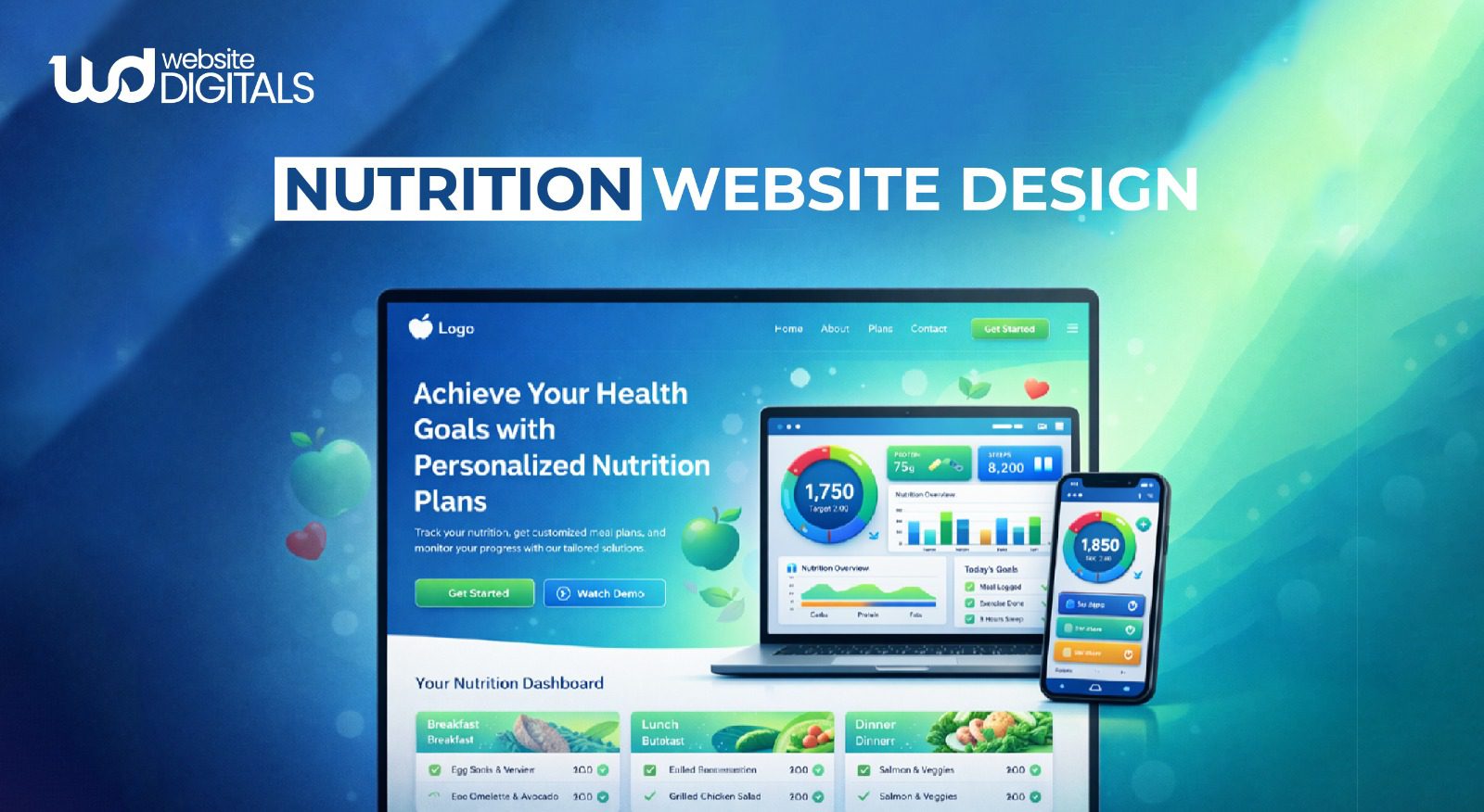
Think about how users approach a nutrition solution: eager for transformation, but impatient with complexity.
If your nutrition website design isn’t built to convert that intent into action, you’ll see low engagement, no personalization, slow speeds, difficult onboarding, and scalability limits, not because your program lacks value, but because the experience fails.
In a recent review of nutrition-education platforms, insufficient consumer engagement in design led to lower habit-tracking and poorer outcomes.
Design great websites and apps that don’t just look good, they handhold users from intent to action.
As Frank Chimero noted,
“People ignore designs that ignore people.”
When your site falls into that trap, conversions suffer. Read this blog to see how thoughtful design changes the outcome.
Key Takeaways
|
Why Nutrition Platforms Fail to Convert
-
The Engagement Gap
Even with brilliant nutritional science, your platform fails if it doesn’t convert intent into action.
This is the Engagement Gap.
Poor digital experiences require extra discipline just to use the tool, quickly bleeding away user motivation.
If logging is tedious or progress is unclear, users stop engaging, leading to a high churn rate that nullifies marketing efforts.
-
UX Issues Driving Users Away
User experience (UX) determines your profitability.
UX Issues Driving Users Away create friction.
A confusing user experience forces users to interpret the interface rather than focus on their health.
A convoluted first session, known as complex onboarding, is the fastest way to lose a new client. Users demand instant clarity and quick wins.
Warning
|
Templates built for unrelated industries, like a travel web design template, often create navigation issues and slow adoption because the layout doesn’t match the way nutrition clients make decisions. |
Core Problems Hurting Your Platform
-
Confusing User Experience
Effective nutrition website design makes complexity simple.
When navigation is buried or data input is frustrating, the confusing user experience overwhelms the user.
The goal is to make the platform feel like a seamless tool, not a difficult hurdle.
-
Weak Personalization
Users expect tailored advice. A platform that gives a static plan, ignoring real-time progress, suffers from Weak Personalization, delivering no personalization of value.
This failure to adapt makes the user feel unseen, diminishing the platform’s utility and failing to meet unique needs.
-
Technical Limitations
Technical flaws threaten growth and trust.
Slow speeds damage the perception of quality and increase bounce rates.
API integration issues limit connectivity to wearables and health apps, shrinking your value proposition.
Building on a foundation with scalability limitations means success will break your system, leading to instability and high maintenance costs.
-
Compliance and Security Risks
Trust is earned through rigorous protection of sensitive data. Fear of poor data security is a major conversion barrier.
Ignoring compliance challenges (like HIPAA or GDPR) is an existential risk, limiting high-value clinical or enterprise partnerships.
A professional compliance-ready framework is a necessity.
How Better Design Improves Performance
-
Clear User Flow
A Clear User Flow removes friction by making every action, from signup to logging, logical and effortless.
This principle maximizes the time users spend engaging with the program, forming the foundation of effective lead generation website design that guides users toward action without friction.
Things to Consider
|
High-converting platforms use “content scaffolding,” meaning educational or motivational content is delivered exactly when the user needs it (e.g., a short video on portion control pops up after a user logs their first high-calorie meal). This prevents the overwhelming feeling of being dumped into a content library and directly supports the clear user flow. |
Note:
|
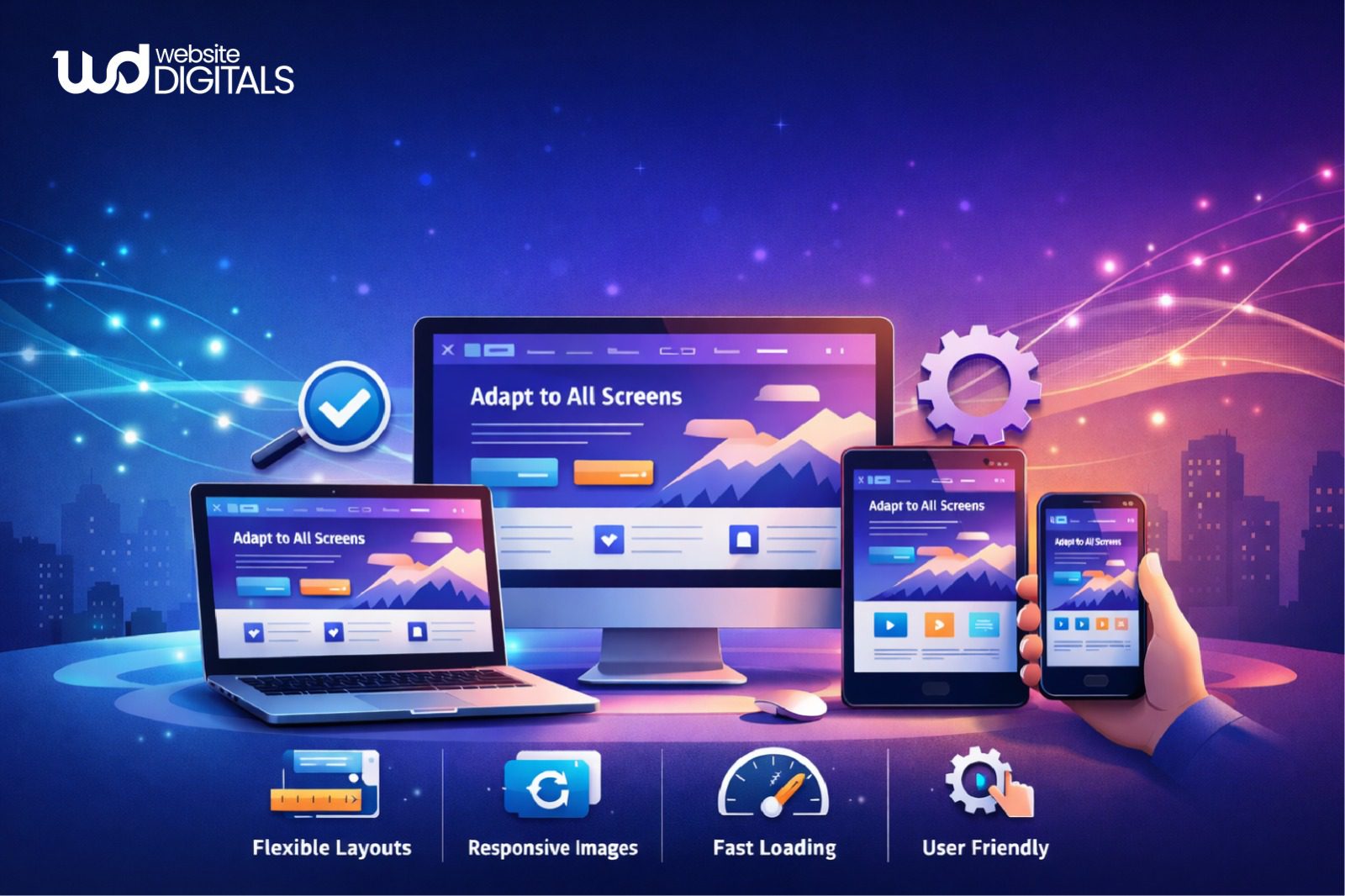
Prioritizing responsive web design services for healthcare ensures your nutrition platform stays consistent across all devices, reducing UX friction and boosting engagement. |
-
Built-In Personalization
Built-In Personalization means the platform architecture dynamically analyzes user data to provide highly relevant, real-time feedback and recommendations.
This responsiveness transforms the experience from passive to actively guided, effectively solving the problem of weak personalization.
-
Smooth Onboarding
A Smooth Onboarding process minimizes input, provides immediate value, and quickly transitions a user to their “Aha!” moment.
This design approach immediately boosts initial conversion rates by overcoming the challenge of complex onboarding.
-
Faster Performance
A platform designed for Faster Performance uses clean code and optimized architecture.
Eliminating slow speeds is critical because instant responsiveness signals reliability and keeps the user focused on their goals, not on load times.
Pro Tip:
|
Focus development efforts on the one or two core user actions performed multiple times daily (e.g., logging a meal, checking a water goal). Make these micro-interactions effortless (two taps maximum). A perfect micro-moment design encourages habit formation more effectively than a complex macro-feature. This relates to fast speeds and immediate feedback. |
Real World Scenario:
|
Picture a nutrition coach whose platform freezes every time clients log meals. Even a brief delay pushes users back to spreadsheets and manual tracking. In this scenario, the tech becomes a barrier instead of support. After upgrading to a faster, optimized system, logging becomes instant, and client retention quickly recovers because the platform finally matches the quality of the coaching. |
-
Scalable Infrastructure
Scalable Infrastructure uses modern architecture to allow seamless growth from 100 to 100,000 users without compromising performance.
When this foundation is engineered by an experienced web design company, it eliminates scalability limitations long before they become barriers to business expansion.
What a High-Performing Platform Needs
-
Conversion-Focused UX/UI
A Conversion-Focused UX/UI means every element is designed to motivate the user toward a desired outcome, maximizing the platform’s effectiveness as a business asset.
-
Habit Tracking and Insights
Success requires behavioral change support.
Robust Habit Tracking and Insights go beyond data logging, offering visualizations, positive reinforcement, and actionable insights to encourage daily adherence.
This feature solves the lack of habit tracking.
-
Strong API Integrations
Strong API Integrations connect your platform to wearables, medical devices, and other health apps.
This expands your value proposition and provides the rich data necessary for deep personalization, resolving API integration issues.
-
Compliance-Ready Framework
A Compliance-Ready Framework built into the core ensures data governance, encryption, and protocols meet the highest international standards, providing trust and mitigating high-risk compliance challenges.
-
Analytics for Optimization
High performance requires continuous refinement.
Built-in Analytics for Optimization tracks key user behavior (session length, feature usage) to provide the intelligence needed to iterate the user journey and maximize conversion efficiency.
Factors Affecting Data Security Scope
|
Factor |
Description |
|
1. Data Sensitivity Level |
The type of data collected (PHI, meal logs, biomarkers, payment info) determines encryption standards, storage rules, and compliance requirements. |
|
2. Access Control & Permissions |
How many users, roles, and third-party systems can access the data affects exposure risk and the strength of authentication needed. |
|
3. Third-Party Integrations |
APIs, wearables, telehealth tools, cloud vendors, and analytics platforms expand the attack surface, requiring secure integration protocols. |
|
4. Infrastructure & Hosting Environment |
Whether the platform uses shared servers, dedicated environments, or cloud systems influences vulnerability levels and required safeguards. |
|
5. Compliance & Regulatory Requirements |
Standards like HIPAA, GDPR, or WCAG define the level of security controls, reporting, auditing, and breach-response processes required. |
Why the Right Development Partner Matters
-
Industry-Specific Expertise
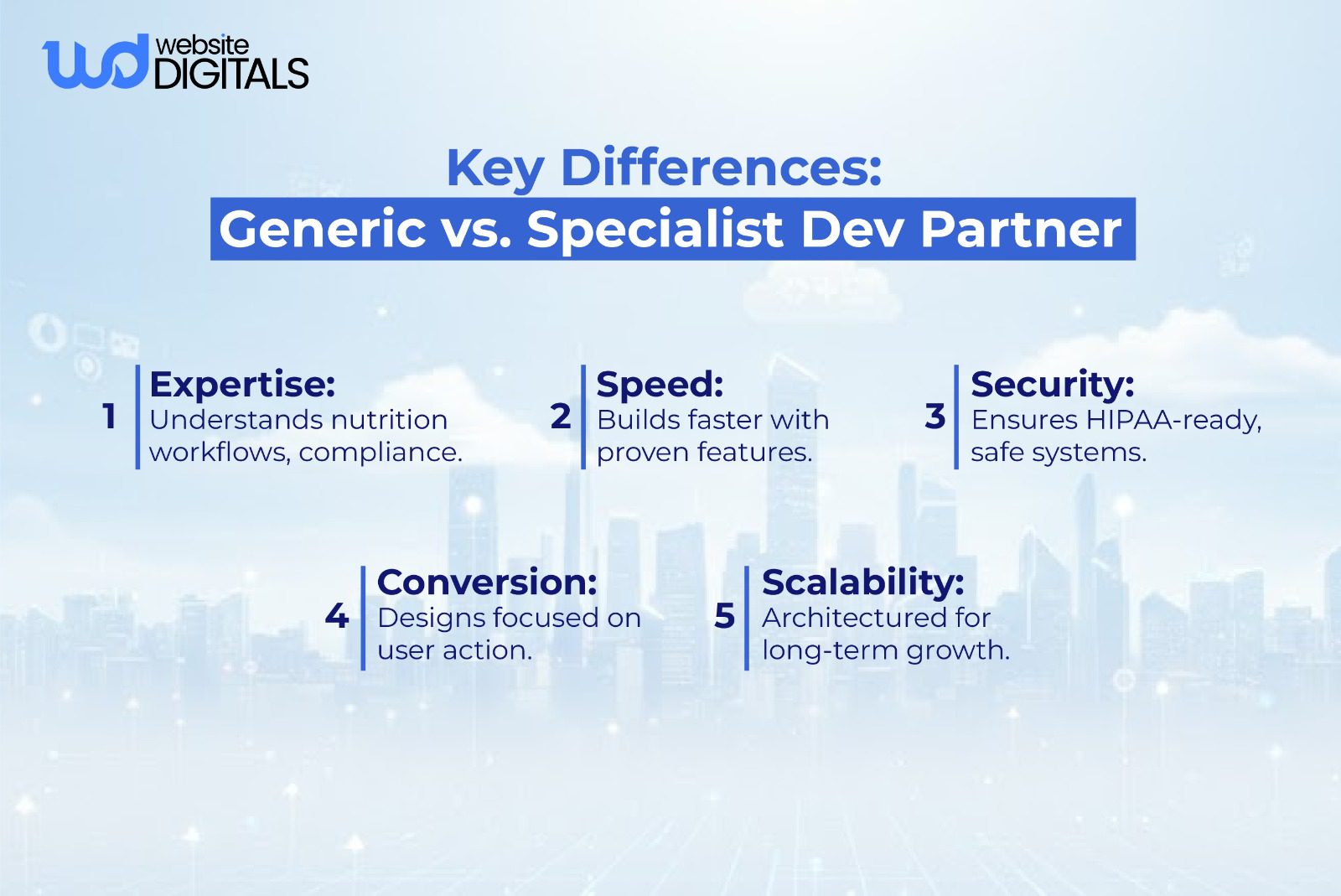
A partner with Industry-Specific Expertise in a nutrition website design company, experienced in health and wellness, understands compliance, behavioral psychology, and data security.
This knowledge ensures a platform that is safer, more effective, and built for success in digital health.
-
Better ROI and User Retention
Investing in a professionally built, high-performing platform leads directly to Better ROI and User Retention.
By eliminating friction and providing genuine value, the platform maximizes the lifetime value of every client, avoiding the costly expense of rebuilding a flawed system later on.
Wrap Up!
The success of your digital health platform depends on more than strong content; it relies on how well that content is delivered.
With the right nutrition website design, your platform becomes a seamless system that guides users from sign-up to long-term success.
You can either continue operating on a foundation that limits engagement and personalization or invest in a CMS built to scale, convert, and support the full lifecycle of your programs.
So, if you’re ready to build a platform that actually supports your business goals, our experts at Website Digitals can help you get started. You can reach us anytime at info@websitedigitals.com or connect directly at (646)-222-3598 to discuss your project.
FAQs
What makes a good nutrition website design?
A strong nutrition website design offers a clear user journey, built-in personalization, fast performance, and a mobile-responsive layout. It should highlight a compelling professional bio page and simplify health tracking for users.
What should a dietitian or nutritionist website include?
A high-performing site should offer secure client intake forms, online scheduling, telehealth options, and detailed service pages. Top nutritionist features include habit tracking, progress insights, and a well-structured nutrition blog.
How do you make a HIPAA-compliant nutrition website?
Start with HIPAA-compliant architecture, using end-to-end encryption, secure PHI storage, and strict access controls. A qualified nutrition website design agency ensures proper protocols and BAAs are in place.
How does Website Digitals handle accessibility?
Website Digitals follows strict ADA and WCAG standards to ensure every custom nutrition website is accessible, inclusive, and legally compliant.
Does Website Digitals support post-launch optimization?
Yes. We provide ongoing optimization, including local SEO for nutritionists, conversion improvements, and schema markup to enhance search visibility.
Where can I find examples of effective lead-focused nutrition websites?
Look for sites with strong landing page design, clear CTAs, high-value content, and simple lead-capture forms designed to support nutrition counseling services.