How Portfolio Website Creation Helps You Win Premium Clients Without Cold Outreach
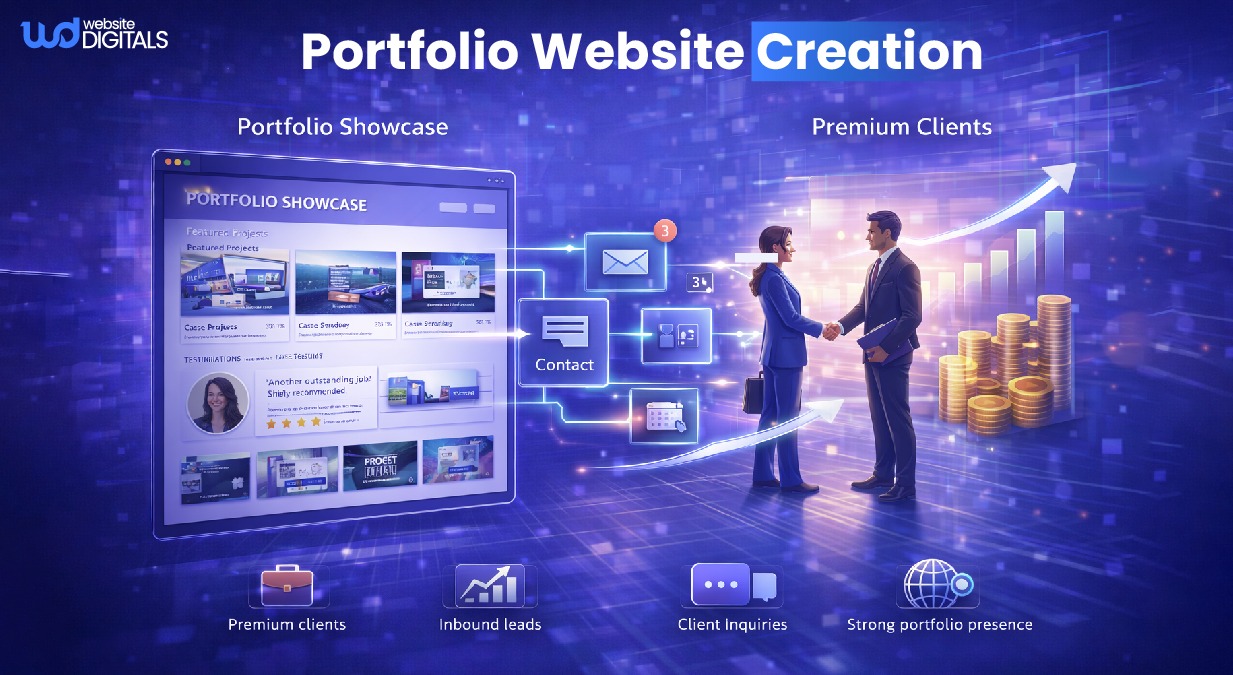
What if the real reason you’re exhausted from cold outreach and stuck with inconsistent leads has nothing to do with your skills, and everything to do with how potential clients perceive your value online?
For many freelancers and creative professionals, the challenge isn’t talent. It’s the inability to prove expertise instantly when prospects first evaluate your online presence.
And when you’re relying on DIY tools, generic templates, and constant tweaking just to look “professional enough,” it’s no surprise that premium clients hesitate before reaching out.
High-value clients make decisions based on clarity, trust, and credibility, not outbound messages that feel intrusive. They’re actively researching, comparing, and choosing the service providers who look like specialists from the moment they land on their site.
This is where portfolio website creation becomes transformative. A strategic, well-built portfolio doesn’t just display your work. It communicates authority, positions you as a specialist, and attracts qualified clients naturally by showcasing your strengths the way decision-makers expect to see them.
When your portfolio is doing the heavy lifting, you no longer need to chase opportunities. You position yourself where the right clients find you.
Key Takeaways
- Attract premium clients without relying on cold outreach.
- Build a strong online presence with a professional portfolio website.
- Showcase your skills and expertise with a custom design.
- Increase your credibility and trust with potential clients.
- Boost your engagement and drive lead magnet sign-ups
The Shift from Outbound to Inbound Client Acquisition
Why Businesses Are Moving Away from Outbound Marketing
Marketing behavior has changed dramatically in recent years, and traditional outbound tactics like cold calling, cold outreach, and bulk emailing are losing effectiveness. Modern buyers have become more selective and more resistant to unsolicited pitches, choosing instead to research providers on their own terms.
Today’s clients prefer approaches that feel authentic, trustworthy, and value-driven rather than interruptive or pushy.
Why Cold Outreach Is Yielding Diminishing Returns
Cold outreach has long been part of business development, but its impact is shrinking. Consumers face overflowing inboxes, aggressive ad saturation, and widespread digital noise. As a result:
- Email response rates continue to decline.
- Decision-makers are more skeptical of unsolicited pitches.
- Ad-blocking technology is limiting reach.
According to HubSpot, 96% of sales prospects research companies and products before engaging with a sales representative HubSpot Sales Statistics. This trend shows clearly that interruptive outreach is no longer aligned with how modern clients prefer to buy.
How Portfolio Websites Create Passive Client Opportunities
A strategic portfolio website provides a sustainable and inbound alternative to declining outbound channels. Instead of forcing your way into a prospect’s inbox, your portfolio:
- Displays your expertise, skills, and results clearly
- Demonstrates credibility through testimonials, case studies, and past work
- Works 24/7 to attract leads organically
- Helps clients understand what makes you different
Unlike cold outreach, which stops the moment you stop sending messages, a well-built portfolio website continuously positions you as a specialist. It becomes a long-term asset that brings clients directly to you.
What Clients Research Before Hiring
Modern clients take research seriously before making a hiring decision.
Gartner reports that 72% of B2B buyers have completed a significant transaction through digital commerce, indicating a strong preference for researching and progressing through the buying journey independently before engaging with a provider Gartner Research.
Similarly, according to the Demand Gen Report 2023 Content Preferences Survey, 54% of B2B buyers say they feel overwhelmed by the amount of content available, which reinforces how essential it is for service providers to present clear, high-value proof of expertise Demand Gen Report.
A portfolio website fulfills exactly what these buyers want. It provides evidence, clarity, credibility, and proof of value, whether you are a freelancer or a web design company showcasing your expertise.
Why Inbound Strategies Outperform Outbound Today
When businesses shift from outbound to inbound, they align with how buyers actually behave. Instead of interrupting prospects, inbound strategies draw them in through value-rich content, strong online presence, and clear positioning.
A well-optimized portfolio website becomes the centerpiece of this strategy. It showcases your strengths, builds trust, and attracts clients proactively without relying on cold outreach.
Understanding What Premium Clients Look for in Portfolios
Premium clients evaluate portfolios very differently from general prospects. They expect clarity, credibility, and proof that you can solve high-value problems at a professional standard. Understanding these expectations helps you design a portfolio website that immediately signals expertise.
Decision-Making Factors for High-Value Clients
When reviewing a portfolio, high-value clients focus on factors that reflect your ability to deliver results. They look for:
- Quality of work with clear examples that demonstrate problem-solving, creativity, and technical skill
- Relevant experience that aligns with their industry, style, or project requirements
- Clear explanations of process and outcomes, not just visuals or screenshots
- Real results, such as performance improvements, conversions, or measurable impact
A portfolio website that presents this information clearly helps clients understand your capabilities within seconds, increasing the likelihood that they move forward in the buying journey.
Trust Signals That Convert Visitors Into Leads
Premium clients weigh trust heavily when comparing service providers. They want reassurance that you are reliable, experienced, and credible. The strongest trust-building elements include:
- Client testimonials that describe real outcomes
- Case studies that detail the challenge, solution, and results
- Certifications, awards, or notable clients that strengthen authority
- Evidence of consistency, such as long-term partnerships or repeat clients
These trust signals reduce friction and increase a visitor’s confidence, turning your portfolio website into a powerful inbound lead generation asset.
Industry Specific Portfolio Expectations
Different industries expect different portfolio formats, whether the focus is on lead generation website design, web development, graphic design, or copywriting.
High-value clients look for portfolios that follow the standards and conventions of their field, whether it involves nutrition website design, web development, graphic design, or copywriting.
- Web development portfolios often include code snippets, GitHub links, live demos, or technical breakdowns.
- Graphic design portfolios focus on visual range, brand systems, and creative direction.
- Copywriting portfolios highlight tone, structure, research depth, and conversion results.
- Photography or videography portfolios emphasize storytelling, lighting, composition, and editing style.
When your portfolio is tailored to the expectations of your specific industry, it shows premium clients you understand their needs and can produce results that match their goals.
Why Customization Matters for Attracting Premium Clients
A generic portfolio blends in, but a custom-built, strategically structured portfolio website immediately communicates professionalism. High-value clients are drawn to portfolios that:
- Present a clear value proposition.
- Highlight specialized skills or niche expertise.
- Use intuitive navigation and a clean layout.
- Create a frictionless viewing experience.
By aligning your portfolio with what premium clients care about, you build stronger trust, increase engagement, and position yourself as the obvious choice in your category.
Strategic Portfolio Website Creation for Client Attraction
Creating a strategic portfolio website is essential for standing out in a competitive market and attracting high-value clients. A well-structured portfolio website does far more than display your work. It communicates your expertise, demonstrates your value, and positions you as the clear choice for the clients you want to attract.
Defining Your Unique Value Proposition
Your unique value proposition (UVP) is the foundation of effective portfolio website creation. It identifies what sets you apart and why premium clients should choose you over competitors. A strong UVP requires:
- A clear explanation of your services and what you deliver
- Specific benefits you provide that matter to your target audience
- Differentiators that highlight your strengths and make your offering distinct
To develop a compelling UVP, analyze your core strengths, understand the priorities of your ideal audience, and align your messaging with the problems you solve best.
Identifying Your Ideal Client Persona
A strategic portfolio attracts clients only when it speaks directly to the right audience. This starts with a well-defined ideal client persona. Understanding who you are designing for allows you to tailor your content, examples, visuals, and messaging.
Key factors to consider when defining your ideal client persona include:
- Industry or niche
- Company size and buying environment
- Decision-making roles and processes
- Common challenges, goals, and expectations
By aligning your portfolio website with your ideal client’s motivations and pain points, you create a more persuasive and relevant experience that increases conversions.
Setting Clear Portfolio Goals and Metrics
A strategic portfolio is intentional. To measure performance effectively, you need specific goals and clear KPIs. These help you understand what is working, identify areas for improvement, and make data-driven decisions.
Examples of portfolio goals and metrics include:
- Website traffic: Increase organic visitors by 20 percent within six months
- Lead generation: Capture 50 qualified leads per quarter
- Engagement: Increase average session duration by 30 percent
- Conversions: Improve portfolio-to-inquiry conversion rate by 15 percent
Tracking these metrics helps you optimize your portfolio over time and ensure it consistently supports your client-acquisition strategy.
Essential Elements of a High-Converting Portfolio Website
A high-converting portfolio website is one of the most effective tools for attracting premium and high-value clients. To perform well, you must communicate your expertise, showcase your best work, and guide visitors toward taking action.
Crafting an Impactful Homepage That Communicates Value
Your homepage is the first point of contact for potential clients. It should make your value clear within seconds and set the tone for the rest of your portfolio website. Key elements include:
- A clear headline that highlights what you do and who you help
- A strong visual element, such as a hero image or video, that showcases your best work
- A concise introduction that explains your strengths and how clients benefit from working with you
This combination helps clients immediately understand why your services are relevant to their needs.
Designing Project Showcases That Tell Strong Stories
Project showcases are the heart of a high-converting portfolio website. Instead of just listing deliverables, use each showcase to walk visitors through your process and the results achieved.
Effective project showcases include:
- High-quality visuals and descriptions that explain challenges and solutions
- Clear outcomes or results, such as performance improvements, conversions, or client wins.
- Relevant testimonials connected to each project for added credibility
- Calls to action that encourage visitors to explore more or contact you
This approach helps clients visualize how you can solve their specific problems.
Implementing Strategic Testimonials and Social Proof
Testimonials and social proof help build confidence and reduce hesitation. They show potential clients that you can deliver consistent results.
Strong trust-building elements include:
- Specific and detailed testimonials that explain real outcomes
- Logos or names of notable clients you have worked with
- Awards, certifications, or recognitions that demonstrate credibility
These elements reinforce your authority and strengthen your online presence.
Creating a Clear Client Journey Throughout Your Site
A high-converting portfolio website guides visitors through a smooth and intuitive experience. Every element should help them understand what you do, evaluate your expertise, and take the next step.
A clear client journey includes:
- Intuitive navigation that helps visitors find the information they need
- Purposeful calls to action placed throughout your pages
- Easily accessible contact information that shortens the path to inquiry
By creating a friction-free flow, you increase the chances that visitors will convert into qualified leads.
A portfolio website that integrates these essential elements will attract premium clients and communicate your value effectively. When your homepage, project showcases, testimonials, and navigation all work together, your portfolio becomes a powerful system for client attraction.
Step-by-Step Portfolio Website Development Process
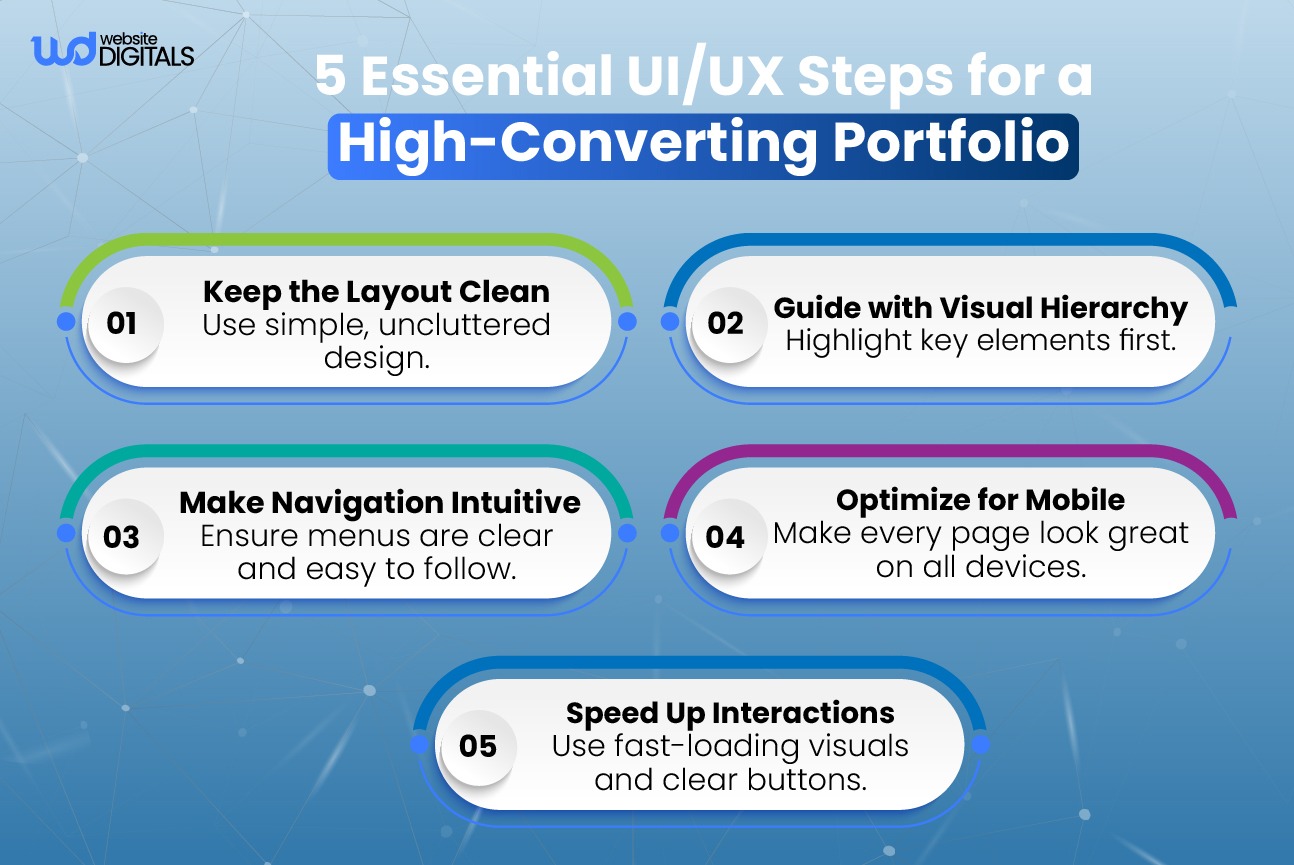
Creating a high-quality portfolio website requires a structured and intentional process. Each step plays an important role in shaping your online presence, communicating your value, and helping you attract high-value clients. A strategic approach ensures your portfolio website creation supports both usability and conversions.
Step 1: Selecting the Right Platform Based on Your Skills
Choosing the right platform is the foundation of an effective portfolio website. Your decision should reflect your technical skills, the type of work you showcase, and how much customization you need.
Common options include:
- Website builders such as Wix or Squarespace for simple, visual portfolios
- Content Management Systems like WordPress for more control and flexibility
- Custom-coded websites using HTML, CSS, and JavaScript for full customization
Graphic designers may prefer easy-to-use website builders, while web developers often choose CMS platforms or fully custom solutions. Selecting the right platform ensures your final website aligns with your goals and technical strengths.
Step 2: Planning Your Information Architecture
Strong information architecture makes your portfolio intuitive and easy to navigate. It helps visitors quickly understand where to find your work, what you offer, and how to contact you.
Key steps include:
- Organizing your content into logical categories
- Creating a sitemap that outlines your page structure
- Using card sorting techniques to refine how projects and content should be grouped
Clear information architecture improves user experience and helps visitors move through your site without friction.
Step 3: Implementing Responsive Design Best Practices
A responsive design ensures your portfolio works seamlessly across desktops, tablets, and mobile devices, just like the standards followed by top responsive web design service providers. Since most users browse on mobile, this step directly impacts engagement and conversions.
Important responsive design practices include:
- Flexible grids and layout systems
- Scalable images and optimized media
- Media queries to adjust design elements for different screen sizes
- Testing your site on multiple devices to confirm user experience quality
A responsive portfolio website helps you maintain a professional appearance and reliable performance for every visitor.
Step 4: Applying Technical Considerations for Your Creative Field
Different creative fields have unique technical needs. Tailoring your website to your specialty helps you showcase your work effectively and ensures potential clients can experience your best results.
Examples include:
- Photographers and videographers: optimize for high-resolution images and fast loading speeds
- UI and UX designers: prioritize intuitive navigation and interactive elements
- Visual artists: balance image quality with performance optimization
- Developers: include code snippets, project documentation, and GitHub links
- Writers and copywriters: use strong typography, readable formatting, and accessible layouts
Understanding the requirements of your field helps you build a portfolio website that communicates your expertise clearly and professionally.
By following this structured process, you support better user experience, stronger visual presentation, and a more persuasive online presence. Each step contributes to a high-performing portfolio website that attracts premium clients and showcases your best work with clarity and credibility.
Creating Case Studies That Demonstrate Problem-Solving Abilities
Case studies are one of the most effective ways to showcase your expertise on a portfolio website. They help potential clients understand how you approach challenges, solve problems, and deliver measurable results. A well-structured case study gives high-value clients the insight they need to trust your process and see how you can solve their specific problems.
Using the Challenge Approach Results Framework
The Challenge Approach Results (CAR) framework is a simple and effective way to structure case studies. It helps you present your work clearly and makes it easier for potential clients to visualize your value.
A strong CAR case study includes:
- Challenge: A clear explanation of the client’s problem or goal
- Approach: The strategies, tools, and methods you used to solve the problem
- Results: The measurable outcomes, improvements, or impact achieved
This structure creates a logical story that shows how your expertise translates into real results.
Showcasing Your Unique Process and Methodology
Your process is one of the biggest differentiators you can highlight. Instead of simply listing tasks, explain the reasoning behind your decisions and the steps you take to move a project from challenge to solution.
Strong process documentation includes:
- The specific techniques and tools you use
- Why did you choose your approach?
- How does your method improve the client’s outcome?
By presenting your methodology clearly, you demonstrate the depth of your expertise and make it easier for high-value clients to understand how you think and work.
Using Visual Documentation to Highlight Outcomes
Visual elements help your case studies communicate information quickly and clearly. They make complex data easier to understand and give clients a clearer picture of your impact.
Effective visual documentation includes:
- Before and after comparisons
- Infographics or charts that show measurable improvements
- Annotated screenshots that explain key decisions
These visuals make your case studies more engaging and reinforce the results you deliver.
Strategically crafted case studies enhance your portfolio website creation by showcasing your skills, process, and results in a way that attracts premium clients. When potential clients can clearly see your problem-solving abilities, they are more likely to trust your expertise and move forward with you.
SEO and Discoverability Strategies for Portfolio Websites
Strong SEO is essential for increasing the visibility of your portfolio website and attracting high-value clients. A strategic approach to search optimization helps you improve your online presence, rank for the right queries, and bring qualified visitors to your site naturally.
Niche Specific Keyword Research and Implementation
Effective SEO begins with understanding what your ideal clients are searching for. Niche-specific keyword research helps you identify the terms and phrases people use when looking for professionals in your field.
Key actions include:
- Researching keywords with tools such as Google Keyword Planner, Ahrefs, or Semrush
- Focusing on intent-based phrases that reflect what high-value clients need
- Adding keywords naturally to page titles, headings, URLs, and meta descriptions
- Optimizing project pages with relevant long tail keywords
This ensures your portfolio website creation aligns with search behavior and increases your chances of ranking for the right terms.
Portfolio Content Optimization for Search Engines
Strong on-page optimization helps search engines understand your content and improves user experience. This includes more than keywords.
Important elements include:
- Meta tags and meta descriptions that summarize the page’s purpose
- Alt text for images to improve accessibility and SEO
- Fast loading pages supported by image compression and clean code
- Internal linking that connects your case studies, services, and homepage
A technically optimized portfolio website is easier for search engines to crawl and more enjoyable for visitors to navigate.
Building Authority Through Strategic Content Creation
Creating valuable content strengthens your authority and broadens your discoverability. Google prioritizes content that demonstrates expertise, experience, and relevance.
Useful content types include:
- Case studies that show your process and results
- Blog posts or guides that answer client questions
- Thought leadership pieces that highlight your expertise
High-quality content can attract backlinks, increase time on page, and help your portfolio website rank for a wider range of searches.
Local SEO Tactics for Freelancers and Small Agencies
If you serve clients locally, local SEO helps your portfolio website appear in location-based searches.
Important steps include:
- Optimizing for local keywords related to your city or service area
- Creating and updating your Google Business Profile
- Collecting client reviews to build trust and visibility
- Adding accurate NAP information (name, address, phone number) across directories
These strategies help local clients discover your services quickly and improve your visibility in map and regional search results.
Summary Table: Core SEO Strategies
|
SEO Strategy |
Description |
Benefit |
|
Niche specific keyword research |
Identify and use keywords your ideal clients search for |
Improved ranking and visibility |
|
Content optimization |
Optimize meta tags, media, and internal links |
Better search performance and user experience |
|
Local SEO |
Optimize for location based searches |
Higher visibility for local clients |
Converting Portfolio Visitors into Premium Clients
Turning portfolio visitors into premium clients requires more than displaying your work. It involves creating a guided experience that moves prospects from interest to action. By optimizing key touchpoints throughout your portfolio website, you can attract high-value clients and encourage them to take the next step.
Strategic Call to Action Placement and Design
Effective calls to action are essential for increasing conversions on your portfolio website. They should be clear, visible, and aligned with what your ideal clients are ready to do.
Strong CTA practices include:
- Using action-oriented copy, such as “Start Your Project” or “Request a Quote”
- Placing CTAs in high-visibility areas like the hero section, project pages, and the bottom of case studies
- Using contrasting buttons to ensure your CTAs stand out
- Keeping CTA messaging consistent across your site
Well-designed CTAs guide visitors through your portfolio website creation and increase the likelihood that qualified clients will reach out.
Creating Contact Forms That Pre-Qualify Prospects
Your contact form is a powerful pre-qualification tool. Instead of collecting generic inquiries, ask targeted questions that reveal whether a prospect fits your ideal client profile.
Effective items to include:
- Project budget
- Timeline
- Project goals
- Type of services needed
This helps you filter out low-quality leads and focus your time on serious inquiries from potential premium clients.
Example Contact Form Fields
|
Form Field |
Purpose |
Example |
|
Project Budget |
Understand financial expectations |
$1,000 to $5,000 |
|
Project Timeline |
Determine urgency |
Within 3 months |
|
Specific Needs |
Identify deliverables |
Web design and development |
Implementing Follow-Up Systems That Close Deals
After a prospect reaches out, your follow-up process plays a major role in converting them into clients. A structured system helps maintain momentum and demonstrates professionalism.
Strong follow-up practices include:
- Automated email confirmations to acknowledge inquiries
- Personalized follow-up messages within 24 to 48 hours
- A clear next step, such as a discovery call, questionnaire, or proposal
Consistent follow-up reinforces trust and increases your chances of securing premium projects.
Communicating Your Pricing Strategy Upfront
Transparent pricing on your portfolio website helps set expectations and reduces unqualified inquiries. While you do not need to list exact figures, offering a pricing framework improves clarity and attracts clients who align with your services.
Ways to communicate pricing effectively:
- A pricing guide page outlining service ranges
- Packages or tiers for common types of work
- Minimum project investment to filter out low-budget leads
Clear pricing builds trust, supports conversion, and positions you as a professional who values clarity and efficiency.
Conclusion: Transforming Your Portfolio into a Client Acquisition Asset
A strategic portfolio website is one of the most powerful tools for attracting premium clients. When built intentionally, it becomes more than a digital showcase. It becomes a persuasive, credibility-driven client acquisition asset that works for you around the clock.
By defining your unique value proposition, aligning your content with your ideal client, and showcasing your process through strategic case studies, you create a portfolio website that communicates expertise and builds trust instantly. Each element of your portfolio website creation contributes to a stronger online presence and a smoother path to conversion.
As buyer behavior continues to shift toward digital research and self-guided decision making, businesses that invest in a well-structured portfolio website gain a competitive advantage. Clear positioning, optimized UX, compelling project stories, and strategic calls to action work together to increase engagement and drive qualified inquiries.
A thoughtfully crafted portfolio website does more than display your skills. It positions your business to attract high-value clients, support inbound client acquisition, and create long-term growth. By applying the strategies outlined throughout this guide, your portfolio becomes a core asset that consistently delivers opportunities without relying on cold outreach.
If you’re serious about leveling up your online presence and want a site that truly reflects your expertise, partner with Website Digitals. Let’s build a portfolio that works for you 24/7.
Call us today at (646) 222-3598 or email info@websitedigitals.com to get started.
Frequently Asked Questions:
What is the primary purpose of a portfolio website for freelancers and creative professionals?
A portfolio website demonstrates your skills, expertise, and results in a structured, credible way. It strengthens your online presence, builds trust with potential clients, and provides a central hub for showcasing your best work and attracting high-value opportunities.
How does a portfolio website differ from traditional outbound marketing like cold outreach?
A portfolio website supports inbound client acquisition by attracting prospects who are actively searching for services. Cold outreach requires initiating contact, while a strategic portfolio website brings premium clients to you by demonstrating your capabilities, results, and credibility upfront.
What are the essential elements of a high-converting portfolio website?
Key elements include:
- A clear value-driven homepage
- Compelling project case studies
- Trust signals such as testimonials and social proof
- A guided client journey supported by strong calls to action
These elements help turn visitors into qualified leads.
How can I optimize my portfolio website for search engines?
Optimize your portfolio website creation with:
- Niche-specific keyword research
- On-page SEO, including meta tags, internal linking, and alt text
- Fast loading pages and responsive design
- Authority-building content, such as case studies and educational resources
These practices improve visibility and help attract clients organically.
Why are case studies important in a portfolio website?
Case studies highlight your problem-solving abilities, unique methodology, and measurable results. They help premium clients understand how you think, the value you deliver, and what makes you a strong fit for their project.
Use conversion-focused elements such as:
- Clear call to action placement
- Contact forms that pre-qualify prospects
- A structured follow-up process for inquiries.
- Transparent pricing or service ranges
This combination helps turn interest into high-quality client engagements.
What are the best practices for creating a responsive portfolio website?
Best practices include mobile-first design, flexible layouts, optimized visuals, and regular testing across multiple devices. This ensures a seamless user experience and improves engagement.
Can I use platforms like Wix, Squarespace, or Webflow to create a portfolio website?
Yes. Website builders such as Wix, Squarespace, and Webflow offer user-friendly tools, customizable templates, and flexibility for many creative fields. They are suitable for professionals who want to build a polished portfolio without custom code.
How often should I update my portfolio website?
Update your portfolio regularly with new projects, skills, testimonials, and refined case studies. Frequent updates show active expertise, support better SEO performance, and keep your site relevant for returning visitors and search engines.