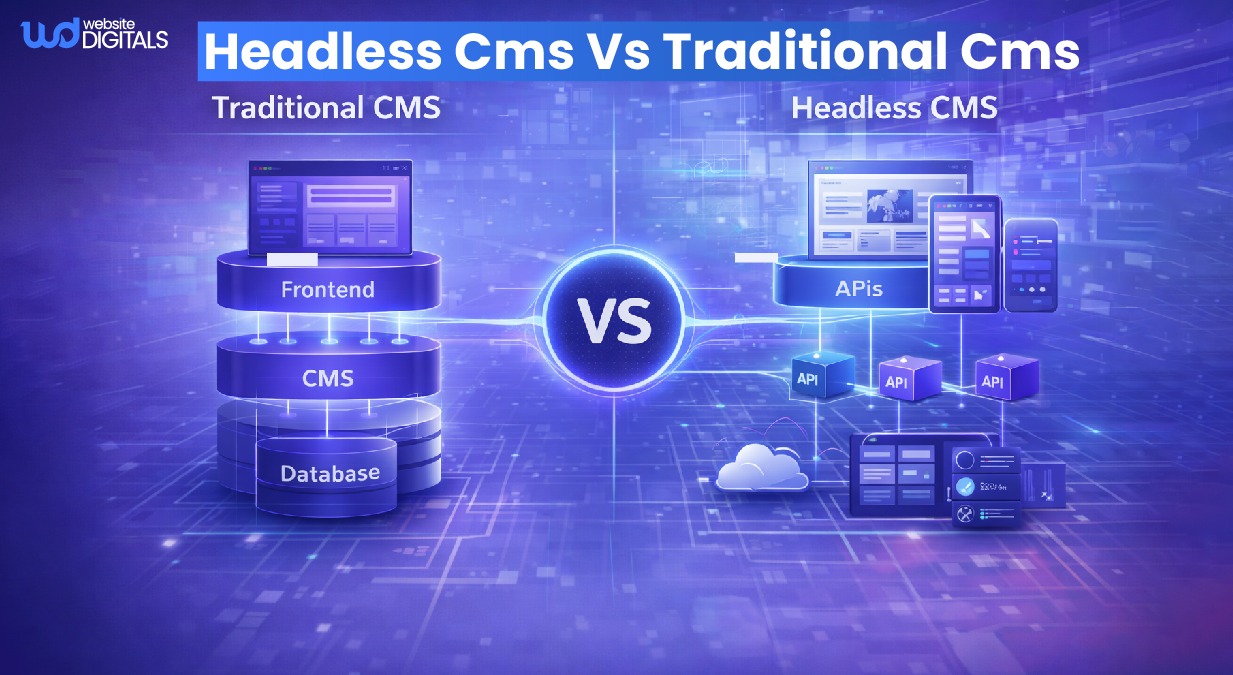
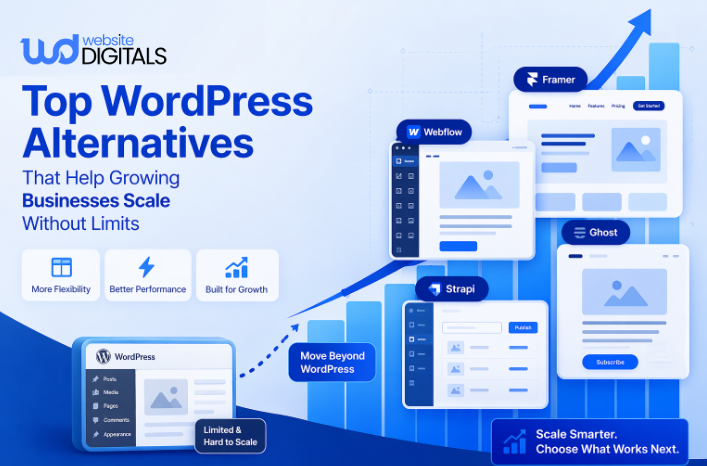
Top WordPress Alternatives That Help Growing Businesses Scale Without Limits
There comes a point when a website stops feeling like a growth engine and starts feeling like another thing the team has to babysit.
At first, it is manageable. A plugin here, a theme tweak there, and a quick fix after an update breaks a form.
But then traffic grows, product lines expand, teams multiply, and suddenly the site that once felt flexible begins to feel fragile.
Marketing wants faster landing pages. Sales wants cleaner lead flows. Operations wants fewer surprises. Tech wants fewer fires.
That is usually when the search for WordPress alternatives begins. Not because WordPress never works, but because growth changes the standard.
A platform that feels “good enough” at one stage can become expensive in a different way later:
slower decisions, more maintenance, more risk, more work just to stay steady.
Key Takeaways
- The best platform is not the one with the most features. It is the one your team can scale without constant friction.
- Growing businesses usually outgrow complexity before they outgrow traffic.
- The strongest alternatives reduce maintenance, simplify publishing, and support performance from the start.
- A smart switch starts with business needs, not platform hype.
What are WordPress Alternatives, Really?
They are website platforms built to reduce the tradeoffs that often appear when growth increases complexity.
In practical terms, they are options that may offer simpler editing, fewer moving parts, stronger built-in commerce, better design workflows, or easier scaling for high-traffic and multi-team environments.
That matters because scale is rarely just a traffic problem. It is a coordination problem. The site has to support marketing, sales, content, operations, and customer experience without turning every change into a mini project.
Google’s own guidance emphasizes creating helpful, people-first content and making sites easy for users and search engines to understand.
Google recommends a strong page experience, including good Core Web Vitals, as part of a successful search presence.
One number puts WordPress’s scale into perspective: W3Techs reports that WordPress powers 42.5% of all websites. That reach explains why so many businesses start there. It also explains why so many teams eventually need a sharper fit for their next stage.
Why Do Growing Businesses Start Looking Elsewhere?
Usually, the problem is not one dramatic failure but slow pileup.
A team adds plugins to fill gaps. Then those plugins need updates. A page builder adds convenience but also weight. One integration conflicts with another. The site still works, technically, but it becomes harder to move quickly with confidence.
You have probably felt this in a familiar way: a campaign is ready, copy is approved, design is done, and then someone says, “Let’s wait until after the update window.” That is not just a website issue. That is a business speed issue.
The Four-Part Test For Choosing A Better Fit
A good decision gets easier when the team stops asking, “Which platform is best?” and starts asking, “Best for what?”
Here is a simple framework:
- Publishing speed
Can marketing or content teams make routine changes without technical bottlenecks? - Operational stability
Does the platform reduce dependency on constant plugin care and patchwork fixes? - Performance under growth
Can the site stay fast and reliable as pages, users, products, or regions expand? - Business fit
Is it built for the kind of site the company actually runs: content-led, commerce-led, service-led, or multi-team?
|
As Steve Jobs famously put it, “Design is not just what it looks like and feels like. Design is how it works.” |
That idea applies here. The right CMS is not the prettiest dashboard. It is the one that lets the business move well.
A practical way to match the alternative to the business
|
Business need |
Best-fit direction |
Why it helps |
What to watch |
|
Fast brochure or service site |
Visual-first, lower-maintenance platform |
Easier editing and cleaner handoff |
Less flexibility for edge-case features |
|
Content-heavy publishing |
Editorial-first CMS |
Better writing workflow and simpler content structure |
Migration planning matters |
|
Growth-stage ecommerce |
Commerce-first platform |
Built-in product and checkout logic |
Costs can rise with scale |
|
Multi-team or complex operations |
Structured, scalable CMS setup |
Better governance and cleaner workflows |
Setup takes stronger planning |
What Most Teams Get Wrong
The most common mistake is choosing based on demos instead of daily reality.
A polished editor can be impressive. So can a long feature list. But the real test is what happens six months later, when more people need access, the site has more pages, campaigns move faster, and uptime matters more.
Do this, not that:
- Do this: Choose for the next stage of the business.
Not that: Choose only for today’s team size. - Do this: Prefer fewer dependencies when possible.
Not that: Assume more plugins always means more flexibility. - Do this: Map the publishing workflow before migrating.
Not that: Treat migration as a design refresh only.
A Familiar Real-World Scenario
Picture a scaling ecommerce brand with a lean team. Traffic is rising. New products launch every month. Marketing needs faster campaign pages. The ops team needs fewer surprises. Every update feels harmless until it is not. A checkout tool conflicts with another add-on. A landing page loads just slowly enough to hurt momentum. Nobody panics, but nobody feels relaxed either.
That is the moment when a simpler, better-matched platform can create real relief. Not magic. Not perfection. Relief. Fewer moving parts. Cleaner ownership. Faster publishing. More confidence.
So Which Direction Makes Sense?
The answer depends on the business model.
A service business may benefit from a lower-maintenance website builder with stronger visual control. A scaling content brand may need an editorial-first CMS. A commerce-first setup may better serve a fast-growing store. A more complex organization may need a structured CMS approach with stronger governance and room for custom workflows.
The key is this: wordpress alternatives are not automatically better. They are better when they remove the specific friction your team feels every week.
Conclusion
Growth should make a business feel more capable, not more fragile.
If the website now requires too much maintenance, too many workarounds, or too many careful warnings before simple changes go live, that is useful information. It does not mean the original choice was wrong. It means the business has changed. And when the business changes, the platform should earn the right to stay.
The smartest path is to evaluate wordpress alternatives through the lens of scale, stability, and team workflow, then choose the option that supports the next chapter with fewer compromises.
For businesses planning that move carefully, Website Digitals can help with scalable CMS strategy, migration planning, performance improvements, and custom implementation. To start the conversation, contact (646)-222-3598 or info@websitedigitals.com.
FAQs
What are the best WordPress alternatives?
The best fit depends on the job. Some businesses need a simpler website builder, others need a commerce-first platform, and others need a structured CMS for multi-team growth.
Why choose a WordPress alternative?
Usually, for lower maintenance, cleaner workflows, better performance control, or a stronger fit for content, ecommerce, or high-growth operations.
Is WordPress still the best CMS?
It is still a strong option for many websites, but not automatically the best choice for every growing business or every workflow.
What is the best CMS for small business website growth?
The best CMS for small business website growth is the one that matches publishing needs, team skills, and future complexity without creating unnecessary maintenance.
How should teams think about Webflow vs WordPress?
That comparison usually comes down to visual control and lower-maintenance builds versus broader ecosystem flexibility and deeper plugin dependence.
How should teams compare Shopify vs WordPress?
A commerce-led business often values built-in selling workflows, while a content-led business may care more about editorial flexibility and custom structure.
Can Website Digitals help evaluate migration options?
Yes. The team can support strategy, migration planning, performance improvements, and implementation for businesses that need a more scalable CMS direction.
When should a business contact Website Digitals?
Usually when the current site feels harder to manage than it should, growth is exposing performance or maintenance issues, or the team is preparing for a platform move.