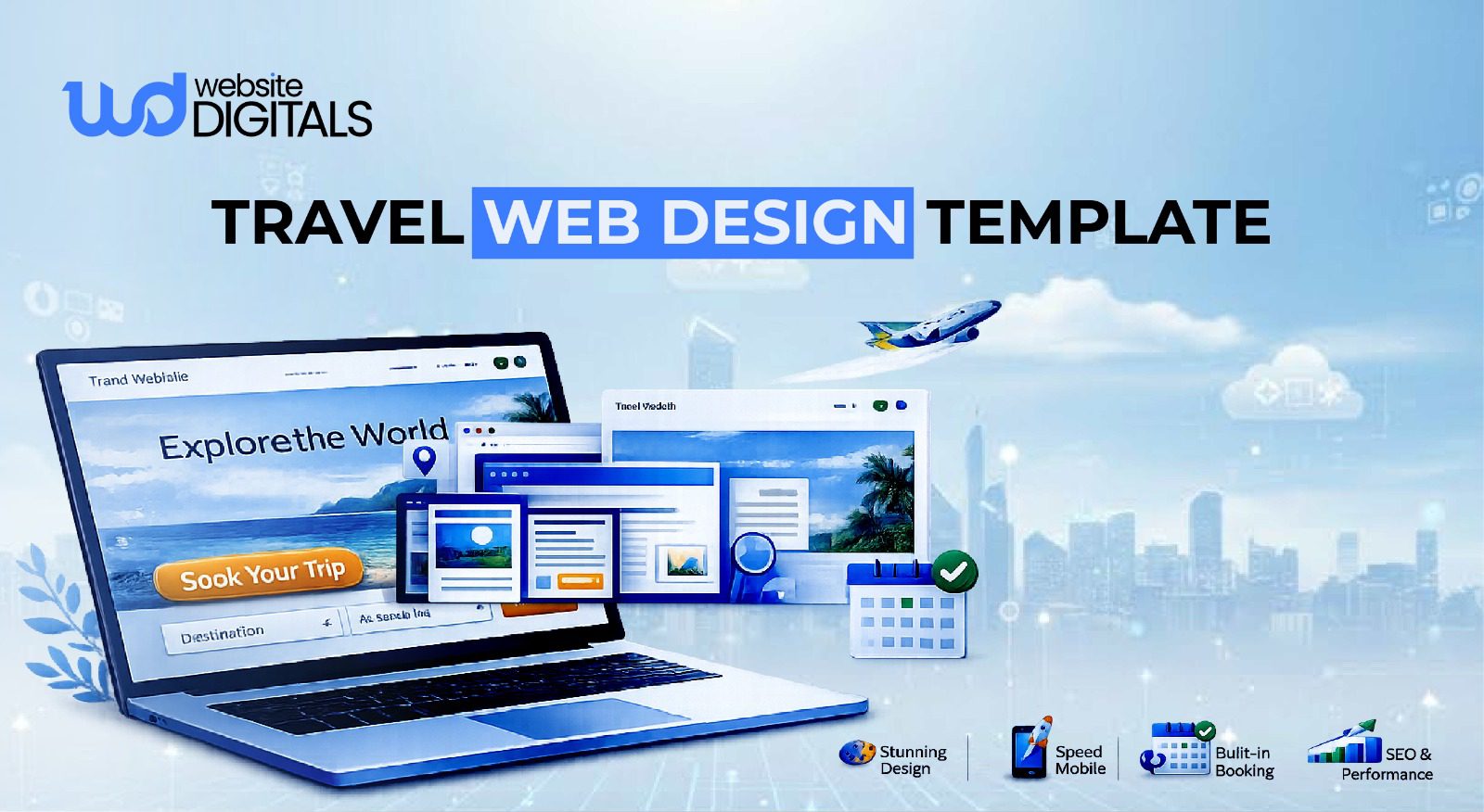
What Makes a Travel Web Design Template Outperform Custom-Coded Sites
Many travel agencies launch custom websites only to discover the hidden cost:
- Constant maintenance
- Slow updates and broken booking features.
The uncertainty of choosing the right approach becomes more obvious when every change requires developer intervention.
As Charles Eames said,
“The details are not the details. They make the design.”
And he’s right, because on many custom travel sites, it’s those very details that fall apart first.
The filters glitch, the maps stop loading, the booking engine misbehaves… and suddenly your “custom build” feels anything but reliable.
In the blog below, you’ll see how a well-built travel web design template avoids these issues entirely and gives you a cleaner, more dependable way to run your travel business online. Let’s dive in.
Key Takeaways
|
What a Travel Website Must Deliver Today
A successful travel website is far more than a digital brochure.
It is a sophisticated e-commerce platform that must simultaneously manage complex logistics, provide rich destination marketing content, and facilitate secure transactions.
-
Performance Standards Travelers Expect
Travelers are highly impatient and mobile-first. They demand instant results and seamless transitions.
The core expectations your site must meet are:
- Speed: A site that loads in under 3 seconds, especially on mobile devices.
- Accessibility: An intuitive, clean layout that is easy to navigate, regardless of the user’s technical proficiency.
- Trust: Clear security indicators, prominent testimonials, and a transparent booking process.
- Mobile-responsive travel templates are the non-negotiable standard. Google’s mobile-first indexing strategy means poor mobile performance will directly tank your search rankings.
-
Core Features Travel Agencies Rely On
Beyond basic pages, a travel site requires specialized components to function as a sales tool:
- An efficient itinerary booking system that handles multi-day, multi-stop trips.
- A captivating tour package showcase with high-resolution imagery and video.
- Seamless booking engine integration with your chosen reservation software.
- A powerful online reservation system capable of handling dynamic pricing and availability.
- Interactive map integration to give travelers a visual sense of the itinerary.
If you opt for a traditional custom build, every single one of these specialized elements must be designed, coded, tested, and debugged from scratch, a massive drain on time and budget.
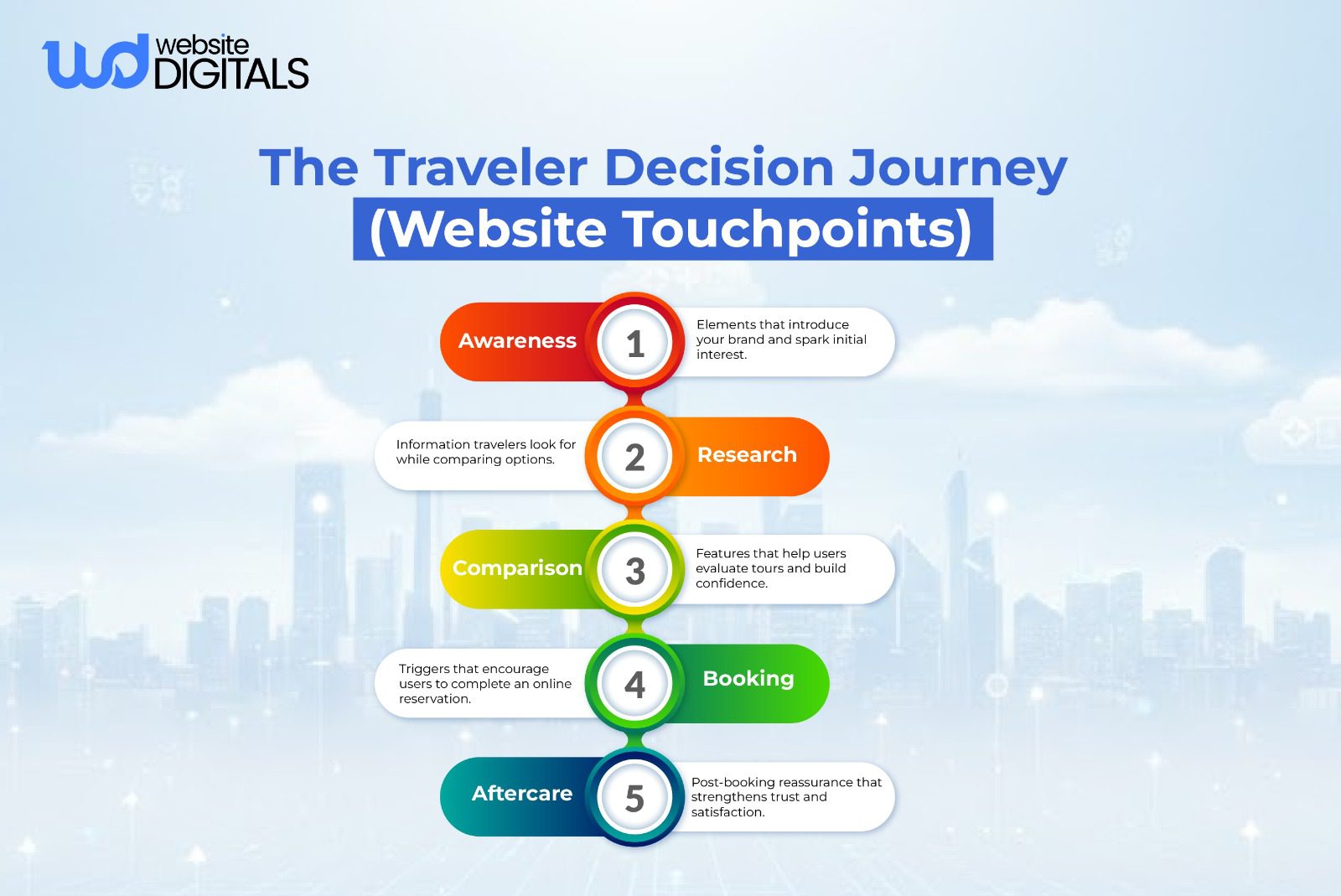
Where Custom-Coded Sites Fall Short
For most small to mid-sized travel agencies, the decision to pursue a custom-coded website carries disproportionate risks and costs.
-
Cost and Timeline Barriers in Custom Builds
The initial sticker shock of a custom website is usually just the beginning.
|
Barrier |
Impact on Travel Agency |
|
High initial development cost |
Diverts capital from marketing and operational growth. |
|
Long launch timelines |
Misses critical seasonal booking windows, slowing ROI. |
|
Scope creep and revisions |
The budget expands unexpectedly, and launch dates get pushed back repeatedly. |
This process is inherently slow and expensive, forcing agencies to wait 8, 12, or even 20 weeks before they can start selling effectively online.
-
Maintenance and Update Limitations
Once a custom site goes live, the workload simply shifts into ongoing maintenance.
Even small tasks, adding a new payment option, adjusting a custom travel web UI element, or applying a security patch, often require the original, high-cost developer.
This creates a bottleneck and leads to significant difficulty maintaining custom sites unless you have a full in-house technical team.
-
Performance Constraints in Custom Code
Custom code isn’t automatically faster or more efficient.
Without highly experienced developers, it often becomes bloated, slowing down performance and creating a frustrating user experience.
Many custom builds fail to meet the optimization standards already built into platforms like WordPress, Wix, Squarespace, and Webflow, which are designed for speed, stability, and clean code.
-
Travel Functionality Gaps in Traditional Development
Many general web design company teams don’t specialize in travel.
They can create basic pages or a contact form, but they struggle with the complex requirements of an itinerary planner or a full travel marketplace filtering system.
Warning:
|
This results in a serious lack of built-in travel features, the very elements that drive engagement and conversions for travel agencies. |
Real World Case Study:
|
When G Adventures redesigned its website, the focus wasn’t just on new visuals; it was on removing the friction travelers felt while browsing tours. By simplifying navigation, restructuring tour pages, and prioritizing UX clarity, they made it easier for users to compare trips and understand key details at a glance. This cleaner, more intuitive layout led to higher engagement and conversions, showing that thoughtful UX, often easier to achieve with a well-structured template, outperforms complex custom builds in real travel environments. |
Why Modern Travel Templates Are a Stronger Option
Modern travel web design template solutions, particularly those built on popular CMS platforms, solve the core pain points of cost, time, and functionality.
They represent a strategic shift from expensive, bespoke development to efficient, specialized deployment.
-
Faster Deployment With Minimal Development Work
Templates provide a ready-to-use structure that drastically shortens your time to market.
You can launch your entire tour package inventory and begin taking online reservations within days or weeks, rather than months.
This rapid deployment capability is crucial for capitalizing on time-sensitive travel trends.
-
Lower Setup and Lifecycle Costs
Templates provide a predictable, low upfront investment, which is ideal for any website setup for small business that can’t absorb the high cost of custom coding.
The total cost of ownership over the first three to five years is significantly lower because the major development work, the core coding, is already complete.
You minimize fees associated with custom code creation and debugging.
-
Travel-Focused Components Already Built In
The best templates are designed specifically for the travel industry.
This means that specialized features are native to the framework.
Elements like the tour package showcase, dedicated travel landing page template layouts, and essential travel-ready features are already built into the framework, giving you everything you need without starting from scratch.
-
Better Optimization for Speed and Mobile Use
High-quality templates are built with SEO best practices and responsive web design at the core.
They are optimized for speed, clean code, and perfect display across all screen sizes, directly addressing the critical need for a smooth mobile design experience.
-
Easy Management for Non-Technical Users
Most modern templates are managed through a user-friendly content management system (CMS).
This empowers your internal marketing team to manage updates, add new destinations, and adjust pricing without needing to rely on a developer, reducing the pain of difficulty maintaining custom sites and facilitating better long-term scalability.
Side-by-Side Comparison: Travel Templates vs Custom-Coded Websites
|
Comparison Point |
Travel Web Design Templates |
Custom-Coded Travel Websites |
|
Cost Differences That Impact ROI |
Low upfront investment; predictable costs; no custom build fees; faster ROI due to quicker launch |
High initial development cost; ongoing expenses for updates; slower ROI because launch is delayed |
|
Launch Timelines That Affect Sales |
Ready-made structure allows launch within days or weeks; immediate ability to publish tours |
Long development cycles (8–20+ weeks); delays impact seasonal sales and campaign timelines |
|
Travel Features Included vs Built From Scratch |
Comes with itineraries, package layouts, filters, maps, reviews, and booking forms |
Must be custom-built one by one; significant time and cost to implement travel-specific components |
|
SEO and Performance Outcomes |
Pre-optimized for speed, mobile UX, and clean code; faster indexation |
Inconsistent performance depending on developer skill; higher risk of bloated code and slow load times |
|
Long-Term Maintenance and Scalability |
Easy to update internally; scalable content structure for new tours, regions, and categories |
Requires ongoing, expensive developer time; scaling challenges are common when expanding the tour catalog. |
Addressing Common Concerns About Templates
While the benefits are clear, agencies still tend to have a few concerns about using a template.
-
Ensuring Brand Uniqueness With a Template
The fear of ending up with a “cookie-cutter” site is common, but modern templates are far from rigid.
They offer extensive template customization options, allowing your travel agency branding, colors, fonts, logo placement, and imagery to be applied uniquely.
A well-structured UI/UX template also gives you a proven, conversion-tested layout, which is often more effective than a fully custom design that confuses users.
-
Scaling Your Website as Your Tours Expand
A high-quality template built on a strong CMS such as WordPress is inherently scalable.
Its core structure can support hundreds of pages, new tour categories, and growing traffic without performance issues.
This creates a stable foundation for long-term growth, something a small, isolated custom code base typically struggles to offer.
-
Adding Custom Features Without Rebuilding
Templates also support modular development.
You can integrate third-party tools, chat widgets, advanced analytics, or request specialized landing page design services for WordPress without altering the core framework.
This flexibility allows you to expand your site’s functionality quickly and with minimal risk.
-
SEO Performance Using a Template Framework
Top templates follow best practices inspired by major brands like Expedia, TripAdvisor, and Booking.com.
With cleaner code and faster load times than most custom builds, they provide an immediate SEO advantage.
This ensures your destination marketing website is indexed accurately and stands a stronger chance of ranking well in search results.
How to Choose the Right Travel Web Design Template
Selecting the right template is a strategic decision that requires due diligence.
Look beyond aesthetics and focus on the engine underneath.
Technical Essentials to Look For
- Mobile Performance: Use tools like Google’s PageSpeed Insights to verify the template’s speed on mobile.
- CMS Integration: Ensure it is built on a platform that your internal team can easily manage (Wix, Squarespace, Webflow).
- Clean Code: A foundation that adheres to the standards advocated by the Nielsen Norman Group for accessibility and usability.
Must-Have Travel Modules and Layouts
Prioritize templates that explicitly offer:
- Dedicated tourism website template sections for destinations and activities.
- Pre-built layouts for a vacation booking site template that are distinct from standard e-commerce templates.
Conversion Elements That Drive Tour Bookings
The ultimate goal is a sale. The template must be designed with conversion in mind:
- Clear Calls-to-Action (CTAs): Visible ‘Book Now’ buttons that follow the user.
- Trust Signals: Integrated sections for testimonials and security badges.
- Intuitive Checkout: A simplified, multi-step booking form to minimize friction.
Pro Tip:
|
Build a site section dedicated to “Travel Styles”. It helps users self-identify: adventure, family, luxury, wellness, etc. It increases browsing time and leads to quality. |
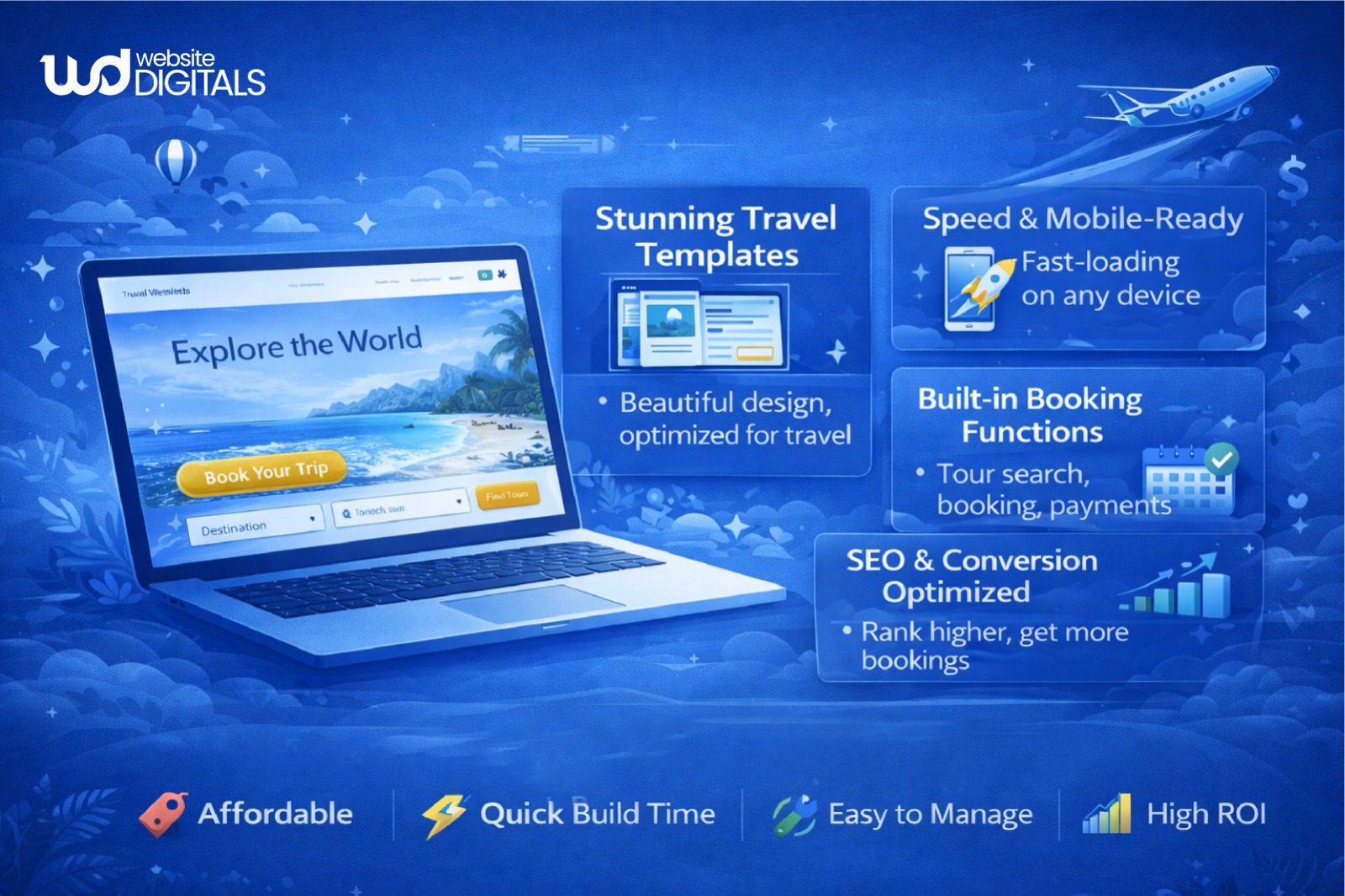
Conclusion — Choosing the Most Practical Build Approach
A custom-coded site often leaves agencies wondering how much does a business website cost when every feature requires additional development.
A strong travel web design template solves these issues with faster launch times, easier management, and the functionality agencies need to drive bookings.
It’s a smarter, more efficient way to build a site that actually supports your growth.
If you want expert help choosing or customizing the right template, our team at Website Digitals is ready to assist.
Reach us anytime at info@websitdigitals.com or call us at (646)-222-3598, and let’s create a travel website designed to convert.
FAQs
How does Website Digitals help travel agencies choose the right travel web design template?
Website Digitals evaluates your tours, booking flow, and brand positioning to recommend a travel web design template that fits your goals. We focus on speed, mobile UX, SEO, and travel-specific features so you launch quickly without sacrificing quality.
Can Website Digitals design a custom travel agency website if I need unique features?
Yes. While templates offer speed and structure, our team can extend them with tailored layouts, integrations, and UI enhancements. This gives you the best of both, a fast launch with the flexibility of custom functionality when needed.
What makes a good travel web design template?
A good template includes fast loading speed, clean navigation, mobile responsiveness, booking tools, and layouts designed to showcase tours clearly.
How do you design a travel agency website that converts?
Focus on clarity: strong visuals, simple navigation, trust indicators, clear CTAs, and a friction-free booking journey.
What are the best travel website layout best practices?
Use a visual hierarchy, short scannable sections, hero imagery, clear categories, and consistent spacing to guide users through the booking flow.
What features do travel web templates need?
They should support booking forms, itinerary modules, maps, reviews, pricing tables, and sections dedicated to destinations and packages.
How do travel websites improve booking conversion?
Fast load times, simplified forms, transparent pricing, social proof, and a smooth mobile experience all reduce drop-offs and boost conversions.
What are the best color palettes for travel website design?
Calm blues, nature-inspired greens, ocean tones, warm sunrise colors, and high-contrast accents work well because they match travel emotions and keep the interface readable.
What is a travel landing page?
It’s a focused page built to promote a single tour, offer, or destination, designed to guide visitors directly toward booking or inquiry.
What is a travel website template?
A travel website template is a pre-designed framework with built-in travel modules, allowing agencies to launch quickly with minimal development.